


Moody color-washed living rooms have a way of making everyday spaces feel intimate, layered, and quietly dramatic. Instead of relying on strong contrast, this look uses one dominant hue across walls, trim, shelving, and sometimes even the ceiling to create a soft, immersive effect. The result feels cozy, stylish, and thoughtfully collected without looking overly formal. Whether you love deep olive, stormy blue, earthy plum, or smoky charcoal, color washing can completely shift the mood of your room. It also works beautifully with natural wood, linen textures, vintage accents, and warm lighting. In this post, you’ll find ten practical ideas that show how to use this trend in a livable way. Each one is designed to help you create a living room that feels inviting, expressive, and visually wrapped in color from corner to corner, every single day.
Quick List:
- Drench the Room in Deep Olive
- Try a Soft Charcoal Cocoon
- Wrap the Space in Dusty Plum
- Use Stormy Blue on Walls and Trim
- Go for Earthy Brown-Gray Layers
- Create Drama With Ink Green
- Wash the Room in Muted Terracotta
- Choose a Smoky Aubergine Finish
- Layer Slate Blue With Warm Neutrals
- Paint the Ceiling to Match the Walls
Drench the Room in Deep Olive
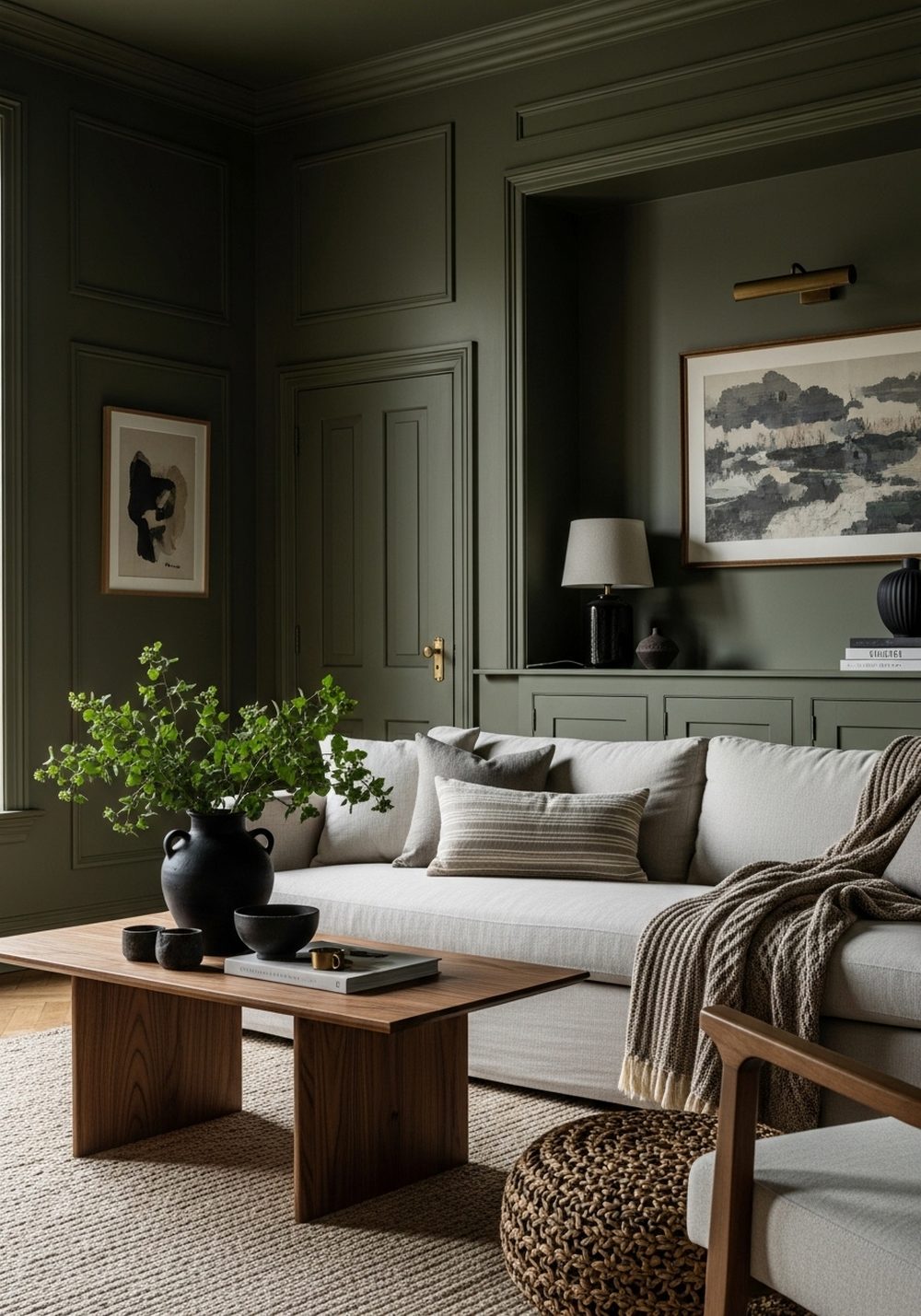
Deep olive creates a grounded, cocoon-like mood that still feels natural and relaxed. Color-wash the walls, trim, and built-ins in the same olive tone, then soften the look with oatmeal upholstery, walnut wood, and brushed brass accents. This palette works especially well in rooms with medium daylight because it shifts beautifully throughout the day. Add woven textures and a few dark ceramics to keep the space from feeling flat. The finished room feels rich, earthy, and calm without becoming too dark or visually heavy for most homes.
Best For: Nature-inspired homes that want depth without harsh contrast.
Where To Place It: Main living rooms, reading corners, or open-plan lounge areas.
Color Palette Tip: Pair olive with oatmeal, walnut, brass, and soft black.
Materials / Items Needed: olive paint, roller set, walnut table, linen sofa, brass lamp, woven basket, dark ceramic decor
Budget Level: Medium — Paint changes the mood fast, while furniture can stay simple.
DIY Difficulty: Easy — The impact comes mostly from color, not complicated installation.
Style It Like This: Add warm wood tones; use linen curtains; keep decor organic and minimal.
Common Mistake To Avoid: Using too many bright accessories that break the wrapped color effect.
Try a Soft Charcoal Cocoon
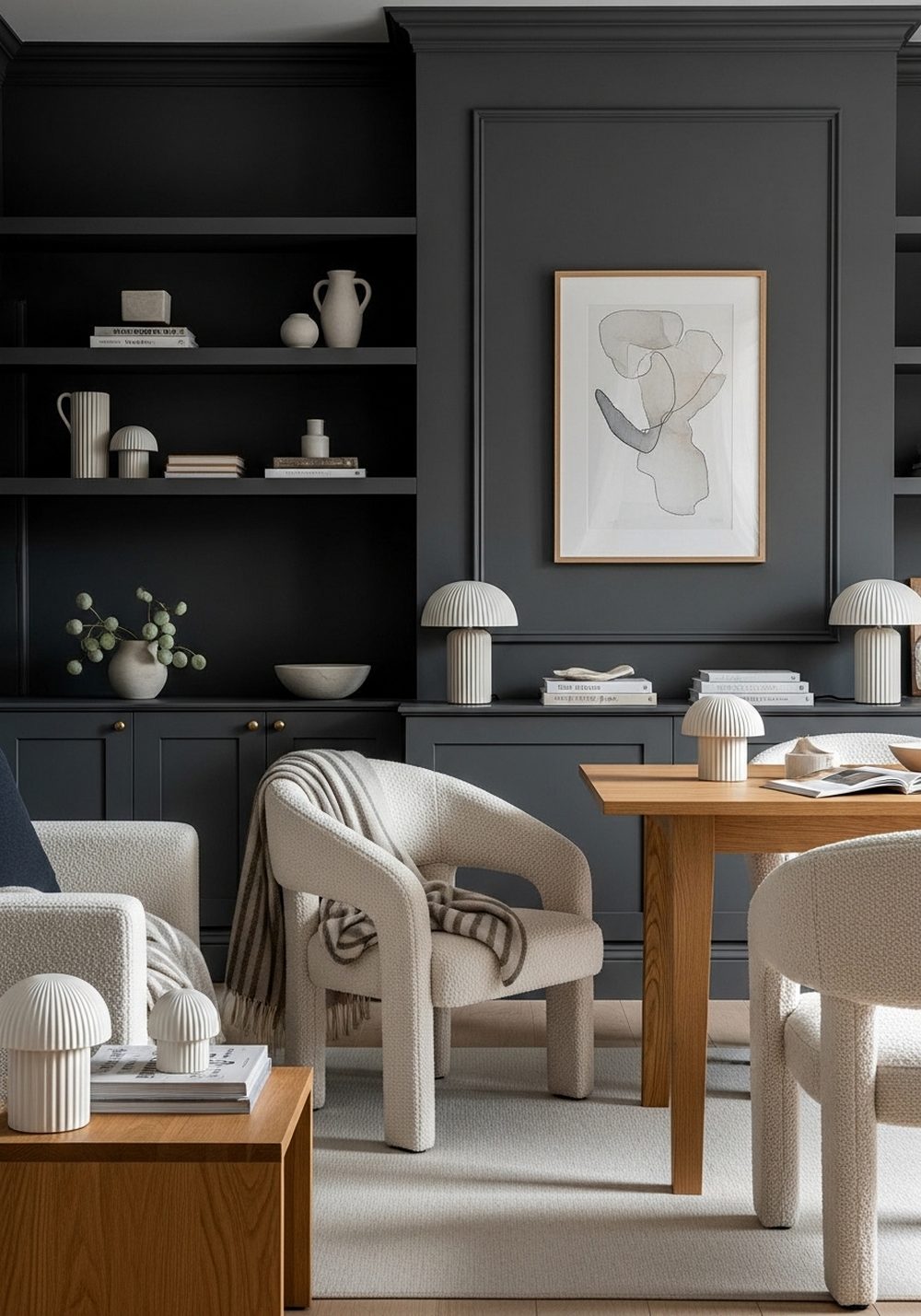
A soft charcoal wash gives the living room a refined, quiet drama that feels modern instead of gloomy. Paint walls, trim, and shelves in a muted charcoal with a velvety finish, then bring in cream boucle seating and warm oak accents for balance. Layering different textures is key because the near-monochrome palette needs softness and variation. Think wool throws, ribbed ceramics, and low warm lamps. This approach works beautifully in apartments and smaller rooms, where a darker shade can actually blur edges and make the layout feel more intentional.
Best For: Modern homes that want an elegant, hotel-like mood.
Where To Place It: Small living rooms, city apartments, or media-focused lounges.
Color Palette Tip: Mix charcoal with cream, warm oak, taupe, and matte black.
Materials / Items Needed: charcoal paint, cream boucle chair, oak coffee table, wool throw, ceramic vase, warm lamp
Budget Level: Medium — Most of the transformation comes from paint and texture swaps.
DIY Difficulty: Easy — Careful prep and even paint coverage matter most here.
Style It Like This: Use layered lighting; choose curved furniture; repeat soft fabrics across the room.
Common Mistake To Avoid: Making everything dark and hard-edged without any warm material contrast.
Wrap the Space in Dusty Plum

Dusty plum brings a moody, romantic richness that feels unexpected yet very livable. Use the shade across walls and trim, then support it with muted beige seating, vintage wood pieces, and soft off-white textiles. Because plum has both warm and cool undertones, it plays nicely with brass, smoked glass, and aged finishes. Keep artwork tonal rather than colorful so the room stays immersive. This look feels especially beautiful in older homes where architectural details can be painted the same shade, giving the entire room a seamless, enveloped character.
Best For: Vintage-inspired spaces with a soft dramatic edge.
Where To Place It: Formal sitting rooms, conversation areas, or cozy evening lounges.
Color Palette Tip: Combine dusty plum with beige, antique brass, smoked glass, and warm wood.
Materials / Items Needed: plum paint, beige sofa, vintage wood side table, brass sconce, linen drapes, smoked glass decor
Budget Level: Medium — Paint does the heavy lifting, while thrifted pieces add charm affordably.
DIY Difficulty: Easy — Focus on clean edges and matching trim coverage.
Style It Like This: Choose tonal art; mix old wood with soft textiles; add dimmable lighting.
Common Mistake To Avoid: Pairing plum with overly bright pinks or icy metallic finishes.
Use Stormy Blue on Walls and Trim

Stormy blue is perfect for anyone who wants moodiness with a calm, coastal-meets-classic feel. Paint the walls, trim, and bookcases in one medium-deep blue-gray tone, then add camel leather, natural linen, and antique brass for warmth. The color feels polished but not stiff, especially when paired with slightly relaxed furniture shapes. A large textured rug helps anchor the scheme and prevents the room from feeling too slick. In daylight, stormy blue feels airy and elegant; at night, it turns atmospheric and deeply comforting in a very subtle way.
Best For: Classic homes, transitional spaces, and relaxed tailored interiors.
Where To Place It: Family living rooms, book-lined lounges, or layered sitting areas.
Color Palette Tip: Pair stormy blue with camel, linen, brass, and muted ivory.
Materials / Items Needed: blue-gray paint, camel leather chair, linen curtains, textured rug, brass lamp, wood shelving
Budget Level: Medium — A few warm materials make the whole palette feel elevated.
DIY Difficulty: Easy — One-color drenching keeps the design process straightforward.
Style It Like This: Add leather accents; use large-scale rugs; keep metals warm and understated.
Common Mistake To Avoid: Choosing a blue that is too bright or too cool.
Go for Earthy Brown-Gray Layers

An earthy brown-gray wash creates a soft, shadowy backdrop that feels timeless and deeply restful. This shade works beautifully when you want mood without obvious color, making it ideal for minimalist or organic interiors. Paint the walls and trim in the same mushroom-toned hue, then layer in sand linen, clay ceramics, and dark wood for quiet contrast. The room starts to feel warm, collected, and architectural all at once. It is also a forgiving color for busy households because it hides marks better than pale paint and still looks elevated.
Best For: Organic modern homes and calm minimalist spaces.
Where To Place It: Everyday living rooms, open-plan lounges, or quiet retreat corners.
Color Palette Tip: Blend brown-gray with sand, clay, espresso wood, and soft cream.
Materials / Items Needed: mushroom paint, linen sofa, dark wood table, clay vase, textured rug, soft lamp
Budget Level: Low — Neutral accessories are easy to source and layer over time.
DIY Difficulty: Easy — The scheme is flexible and forgiving for beginners.
Style It Like This: Keep shapes simple; repeat earthy textures; use warm bulbs after sunset.
Common Mistake To Avoid: Letting the room feel flat by skipping texture and tonal variation.
Create Drama With Ink Green

Ink green feels bold, moody, and luxurious while still connecting beautifully to natural materials. Use it across walls, trim, and cabinetry for a dramatic color-washed effect, then offset the depth with a light area rug and creamy upholstery. Black accents can work here, but they should stay minimal so the room does not feel too severe. Bring in warm wood, sculptural lighting, and leafy shapes to keep everything balanced. This idea is especially striking in spaces with taller ceilings because the rich tone enhances height and adds instant intimacy.
Best For: Statement-making interiors that still want a grounded natural feel.
Where To Place It: Larger living rooms, tall-ceilinged lounges, or dramatic corner setups.
Color Palette Tip: Mix ink green with cream, walnut, soft black, and muted gold.
Materials / Items Needed: ink green paint, cream sofa, walnut media console, area rug, sculptural lamp, ceramic planters
Budget Level: Medium — A strong paint color gives high impact without a full renovation.
DIY Difficulty: Easy — Deep shades need careful priming and multiple even coats.
Style It Like This: Keep black accents limited; use curved lamps; add organic silhouettes.
Common Mistake To Avoid: Overloading the room with too many dark accessories.
Wash the Room in Muted Terracotta

Muted terracotta gives a living room warmth, depth, and a soft sunbaked feeling without reading too rustic. When used on walls, trim, and even shelving, it creates an enveloping backdrop that flatters wood tones, creamy fabrics, and handmade decor. This palette feels especially welcoming in homes that lean cozy, Mediterranean, or collected. Balance the earthy base with lighter upholstery and natural fiber textures so the room stays breathable. The result is moody in a warm way, with a layered softness that makes everyday lounging feel intentional and beautifully styled.
Best For: Cozy homes with earthy, collected, or Mediterranean-inspired decor.
Where To Place It: Sunlit living rooms, relaxed family spaces, or conversational seating zones.
Color Palette Tip: Pair muted terracotta with cream, tan, raw wood, and dusty beige.
Materials / Items Needed: terracotta paint, cream sectional, jute rug, raw wood stool, ceramic bowl, linen pillows
Budget Level: Low — This look can shine with simple materials and thrifted accents.
DIY Difficulty: Easy — The warmth of the paint does most of the work.
Style It Like This: Use woven textures; add handmade pottery; keep furniture low and relaxed.
Common Mistake To Avoid: Choosing an orange-heavy terracotta that feels too bright.
Choose a Smoky Aubergine Finish

Smoky aubergine offers a deeper, more mysterious take on purple that feels sophisticated and cocooning. Instead of reading overly colorful, it acts almost like a neutral when paired with taupe, charcoal, and aged brass. Cover walls and trim in the same shade to create continuity, then add plush seating, layered curtains, and a few dark wood pieces for visual weight. This scheme works best when the undertones stay muted and dusty. The overall effect is dramatic, editorial, and surprisingly serene, especially in rooms used mostly during the evening hours.
Best For: Evening lounges and elegant rooms with a dramatic personality.
Where To Place It: Formal living spaces, den areas, or low-light sitting rooms.
Color Palette Tip: Combine aubergine with taupe, charcoal, aged brass, and espresso wood.
Materials / Items Needed: aubergine paint, taupe sofa, layered curtains, brass floor lamp, dark wood table, textured pillows
Budget Level: Medium — Rich color plus soft furnishings creates the polished look.
DIY Difficulty: Medium — Dark purple tones need testing to avoid unwanted undertones.
Style It Like This: Use muted fabrics; add brass sparingly; keep art tonal and soft.
Common Mistake To Avoid: Choosing a purple that feels too glossy or overly bright.
Layer Slate Blue With Warm Neutrals

Slate blue gives a moody room a tailored, calming presence that feels easy to live with long term. Paint the room in this softened blue-gray shade, then build warmth through oatmeal textiles, honey wood, and antique-style lighting. Because slate blue is understated, it leaves plenty of room for texture to shine, from nubby upholstery to woven shades and vintage rugs. The color-washed approach helps all the architectural lines melt together, making the room feel cohesive and calm. It is an excellent choice for anyone wanting a softer path into darker interiors.
Best For: Homes easing into moody decor without going too dark.
Where To Place It: Multi-use living rooms, casual lounges, or reading-friendly spaces.
Color Palette Tip: Pair slate blue with oatmeal, honey wood, ivory, and antique brass.
Materials / Items Needed: slate blue paint, woven shade, oatmeal sofa, vintage rug, wood sideboard, brass sconce
Budget Level: Medium — Texture and lighting matter more here than expensive furniture.
DIY Difficulty: Easy — The tone is flexible and beginner-friendly.
Style It Like This: Add woven shades; use vintage rugs; warm the room with brass lighting.
Common Mistake To Avoid: Leaving the room too cool by skipping warm woods and fabrics.
Paint the Ceiling to Match the Walls
One of the easiest ways to make a moody color-washed living room feel complete is painting the ceiling the same color as the walls. This simple step removes visual breaks, softens corners, and creates a true cocooning effect. It works with nearly any moody shade, from olive to charcoal to stormy blue. To keep the room balanced, use furniture in lighter or warmer tones and choose layered lighting that glows upward in the evening. The result feels designer-led, immersive, and much more intentional than a room with a standard white ceiling.
Best For: Anyone wanting a stronger, fully wrapped color-drenched effect.
Where To Place It: Any living room, especially boxy spaces with visible ceiling lines.
Color Palette Tip: Match ceiling and walls, then lighten furnishings for contrast.
Materials / Items Needed: paint, extension roller, ceiling brush, drop cloths, warm lighting, lighter furniture, textured textiles
Budget Level: Low — It adds major impact without buying new decor.
DIY Difficulty: Medium — Ceiling work takes patience, prep, and clean rolling technique.
Style It Like This: Continue wall color overhead; add uplighting; balance with soft neutral upholstery.
Common Mistake To Avoid: Leaving the ceiling bright white and breaking the immersive mood.
Conclusion
Moody color-washing is one of the simplest ways to give a living room more depth, warmth, and personality. Whether you lean toward olive, charcoal, plum, or blue, the key is commitment to one immersive tone and enough texture to keep it feeling layered. Start with paint, then build in warmth through fabric, wood, lighting, and decor. Even small changes can make your space feel softer, richer, and beautifully pulled together every day.
FAQs
Q1: What does color-washed mean in a living room?
A: It usually means using one main paint color across walls, trim, shelves, and sometimes the ceiling.
This creates a softer, more immersive look with fewer visual breaks.
Q2: Will a moody paint color make my living room feel smaller?
A: Not always. Darker tones can actually blur edges and make a room feel more cohesive.
The trick is balancing them with texture, lighting, and some lighter furnishings.
Q3: Which moody colors are easiest to decorate with?
A: Olive, slate blue, charcoal, and brown-gray are usually the most flexible.
They pair well with wood, linen, brass, and neutral upholstery.
Q4: Should trim be painted the same color as the walls?
A: Yes, if you want a true color-washed effect.
Matching trim helps the room feel wrapped in color and more intentionally designed.
Q5: What materials work best with moody color-washed rooms?
A: Linen, boucle, wool, wood, brass, jute, ceramic, and smoked glass all work beautifully.
These materials add softness and dimension so the room never feels flat.