
Dark wood brings instant depth, warmth, and character to a living room, but styling it well takes balance. The goal is to let those rich tones feel inviting rather than heavy, polished rather than gloomy. With the right mix of textures, soft lighting, layered fabrics, and smart contrast, dark wood can turn an ordinary space into one that feels grounded, cozy, and beautifully collected. Whether your room leans modern, rustic, classic, or slightly moody, these ideas will help you highlight dark wood furniture, flooring, beams, or accent pieces in a way that feels fresh and livable. From wall styling to color palette choices and easy finishing touches, each idea below is practical, eye-catching, and easy to adapt. These dark wood living room decor ideas are designed to make your space feel warm, stylish, and thoughtfully pulled together every single day.
Quick List:
- Layer a Dark Wood Coffee Table with Texture
- Pair Dark Wood with Creamy White Walls
- Style a Dark Wood Media Console with Sculptural Decor
- Soften Dark Wood with Cozy Fabrics
- Add Warm Metallic Accents for Contrast
- Build a Gallery Wall Above Dark Wood Furniture
- Bring in Greenery to Freshen the Room
- Use Layered Lighting to Warm Up the Space
- Ground the Room with a Light Area Rug
- Mix Dark Wood with Curved Shapes
Layer a Dark Wood Coffee Table with Texture

A dark wood coffee table becomes more inviting when it is softened with layered texture. Start with a woven tray, stack two or three linen-bound books, then add a ceramic vase or candle in a lighter tone. This mix keeps the wood visible while preventing the surface from feeling flat or too formal. The contrast between tactile decor and rich timber adds warmth without clutter. It is an easy styling move that works beautifully in both large family rooms and smaller living spaces alike easily.
Best For: Cozy living rooms that need simple styling depth.
Where To Place It: Center of the main seating arrangement.
Color Palette Tip: Use cream, taupe, sand, and muted black for balance.
Materials / Items Needed: woven tray, books, ceramic vase, candle, small decorative object
Budget Level: Low — Most pieces can be thrifted or reused from other rooms.
DIY Difficulty: Easy — This is mostly about arranging a few textured layers well.
Style It Like This: Keep one object tall, one stacked, and one organic. Leave some wood visible. Use odd-numbered groupings.
Common Mistake To Avoid: Covering the whole table so the dark wood disappears.
Pair Dark Wood with Creamy White Walls

Dark wood wall panels or exposed beams look striking when paired with creamy white walls. This contrast gives the room a brighter, more open feeling while allowing the wood to remain the visual anchor. Instead of fighting the darkness, you frame it with softness, creating balance and helping architectural details stand out. The result feels clean, timeless, and a little dramatic without becoming overwhelming. This approach works especially well if your living room gets natural light and you want a cozy mood that feels fresh.
Best For: Rooms with dark beams, trim, or wood panel details.
Where To Place It: On surrounding walls, ceiling trim, or fireplace backdrop.
Color Palette Tip: Choose warm whites instead of icy whites to keep the room soft.
Materials / Items Needed: warm white paint, paint samples, roller, painter’s tape, soft neutral decor
Budget Level: Medium — Paint makes a big impact without replacing furniture.
DIY Difficulty: Medium — Prep work matters if you want a clean finish.
Style It Like This: Test paint swatches in daylight. Repeat creamy white in pillows or curtains. Keep wood tones visible.
Common Mistake To Avoid: Using cool white paint that makes the wood feel too harsh.
Style a Dark Wood Media Console with Sculptural Decor

A dark wood media console becomes the most polished piece in your living room when styled with simple, sculptural accessories. Think matte pottery, framed art, stacked books, and one trailing plant to add movement. Keeping the decor minimal prevents the console from looking bulky, while shape variation adds visual rhythm. Choose pieces in warm neutrals, black, or muted olive to complement the wood grain. This creates a grounded focal point that feels intentional and elevated instead of overly decorated or crowded with too many accessories.
Best For: Modern, minimal, or collected living room styles.
Where To Place It: Under the TV or along the main focal wall.
Color Palette Tip: Stick to earthy neutrals with one muted green accent.
Materials / Items Needed: pottery, framed art, books, trailing plant, decorative box
Budget Level: Medium — A few quality accessories create the whole effect.
DIY Difficulty: Easy — The main skill is editing, not adding too much.
Style It Like This: Vary object heights. Lean one frame casually. Leave negative space between pieces.
Common Mistake To Avoid: Filling every inch with tiny decor items.
Soften Dark Wood with Cozy Fabrics

Dark wood can make a room feel cocooning, so layering soft fabrics is the best way to keep it welcoming. Add a chunky knit throw, velvet or boucle pillows, and a low-pile rug in warm neutral shades. These cozy materials soften the visual weight of wood furniture and help the room feel more relaxed. Mixing touchable textures with smooth timber also creates depth, especially in rooms with a simple layout. This idea is perfect for anyone who wants a moody space that still feels comfortable.
Best For: Moody rooms that need warmth without losing depth.
Where To Place It: On sofas, accent chairs, and under the seating area.
Color Palette Tip: Try oatmeal, camel, mocha, rust, or soft olive.
Materials / Items Needed: knit throw, boucle pillows, velvet cushions, area rug, soft drapery
Budget Level: Low — Textiles can refresh the room without new furniture.
DIY Difficulty: Easy — Layering fabrics is simple and flexible.
Style It Like This: Mix at least three textures. Keep tones warm and quiet. Repeat one accent color twice.
Common Mistake To Avoid: Using only flat fabrics with no texture variation.
Add Warm Metallic Accents for Contrast

Warm metallic accents can instantly lift dark wood decor and add a refined glow to the room. Brass floor lamps, antique gold frames, or bronze candleholders catch light beautifully and stop deeper wood tones from feeling too flat. The metal does not need to dominate; a few well-placed pieces are enough to create warmth and elegance. This pairing feels especially rich in the evening when lamps are on. If your living room needs a touch of luxury, metallic details are easy upgrades around dark wood.
Best For: Traditional, luxe, or transitional living rooms.
Where To Place It: Near lighting zones, mantels, shelves, and side tables.
Color Palette Tip: Pair dark wood with brass, bronze, cream, and deep green.
Materials / Items Needed: brass lamp, gold frame, bronze candleholder, mirror, metallic tray
Budget Level: Medium — A few statement accents go a long way.
DIY Difficulty: Easy — Swap in metallic details without changing your layout.
Style It Like This: Use metals in two or three spots only. Mix matte and shine carefully. Keep surrounding decor neutral.
Common Mistake To Avoid: Overusing shiny gold so the room feels flashy.
Build a Gallery Wall Above Dark Wood Furniture
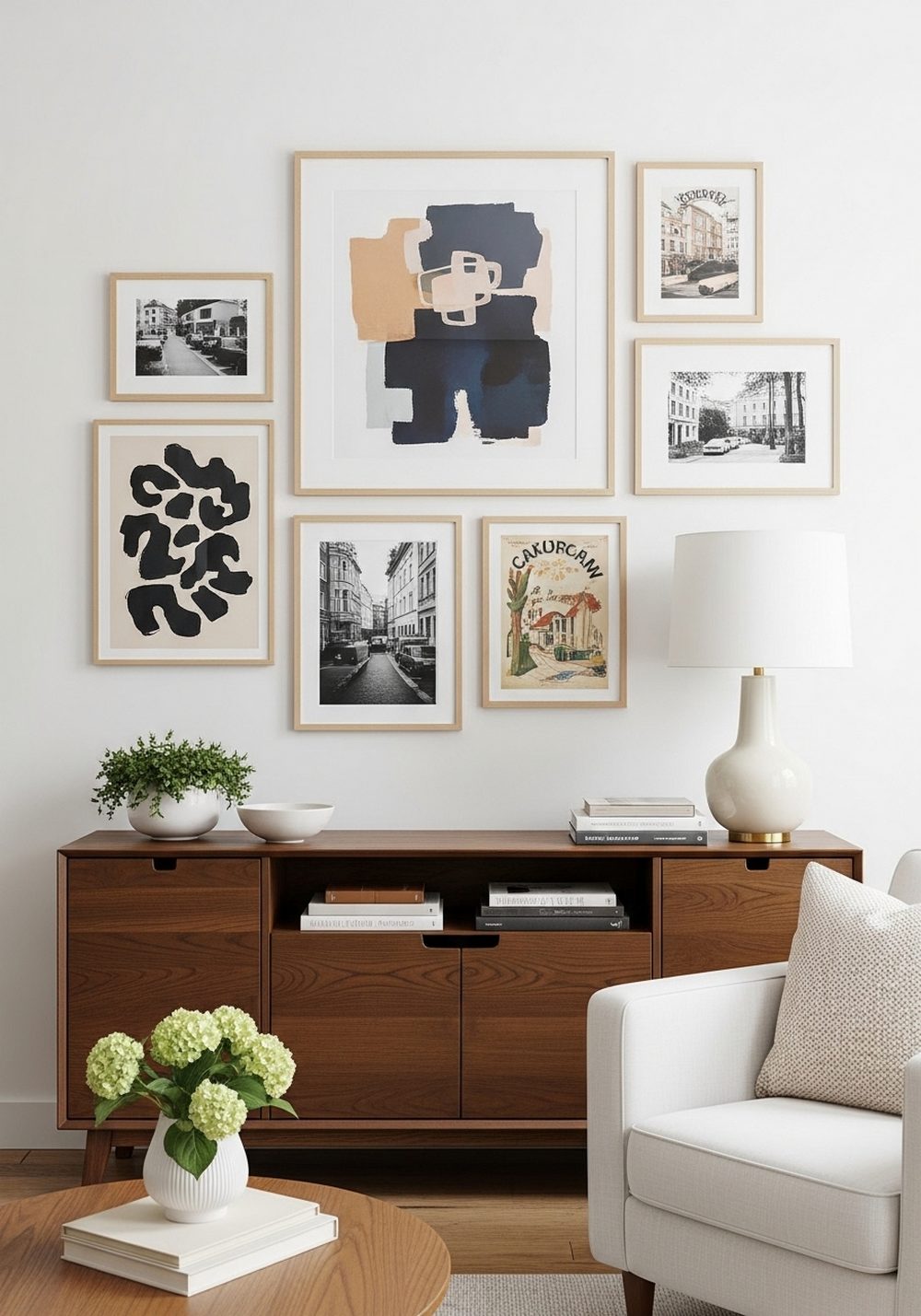
A gallery wall above dark wood furniture helps break up visual heaviness and adds personality at eye level. Choose a mix of abstract art, vintage-inspired prints, or black-and-white photography in light frames for contrast. This gives the room a layered, collected look while drawing attention upward, making the entire space feel taller and more dynamic. Keep spacing consistent so the arrangement looks calm rather than chaotic. It is a smart way to personalize a dark wood living room without changing major furniture pieces or overspending.
Best For: Living rooms that need personality and vertical interest.
Where To Place It: Above a console, sofa, or dark wood sideboard.
Color Palette Tip: Use light mats and soft-toned frames to brighten the wall.
Materials / Items Needed: framed prints, measuring tape, hooks, paper templates, art ledges
Budget Level: Medium — Printable art and thrifted frames keep costs manageable.
DIY Difficulty: Medium — Layout planning makes the final result look polished.
Style It Like This: Lay frames on the floor first. Keep gaps even. Mix larger anchors with smaller pieces.
Common Mistake To Avoid: Hanging pieces too high above the furniture.
Bring in Greenery to Freshen the Room
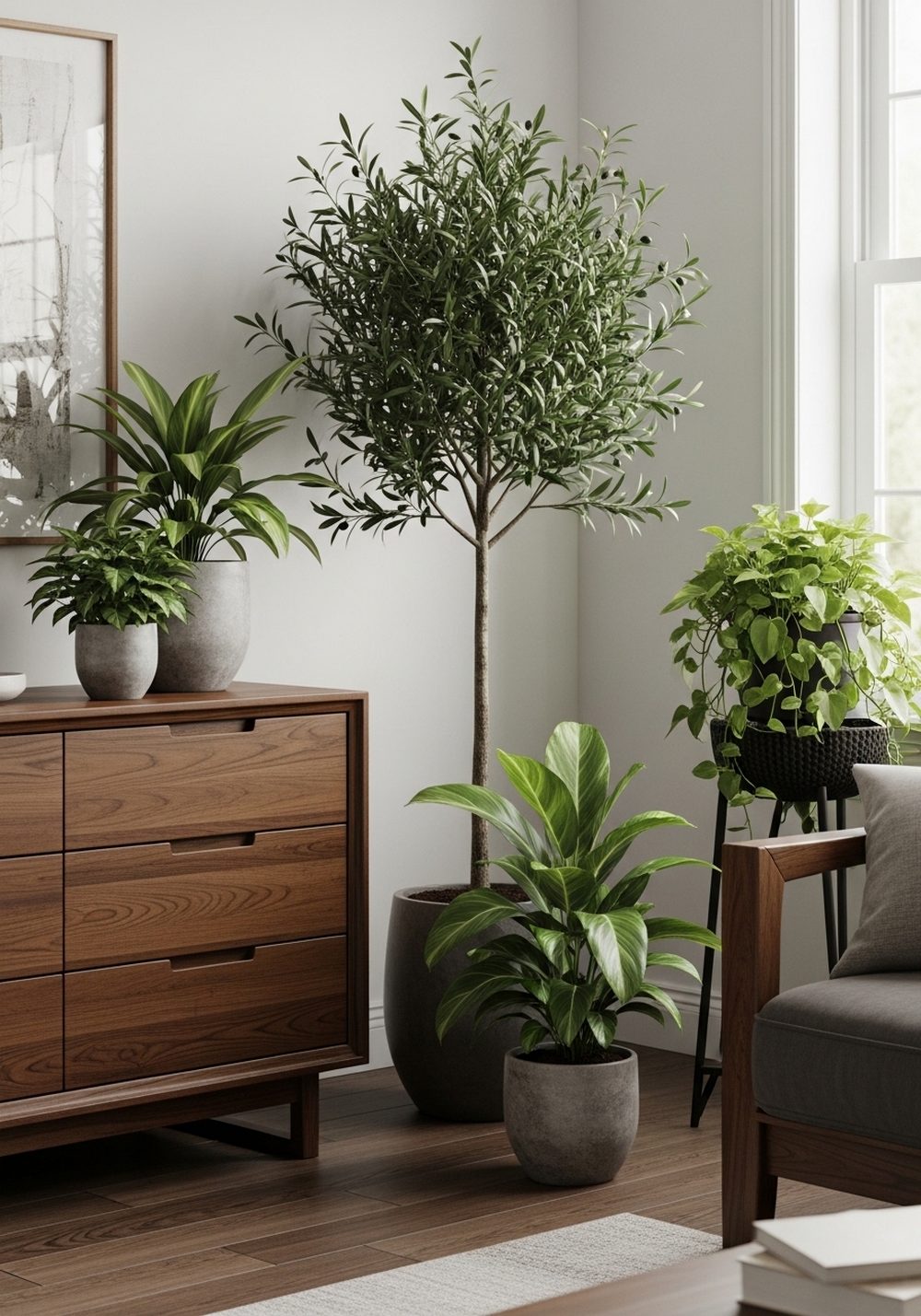
Dark wood and greenery are a naturally beautiful combination because leafy plants add freshness against deep, earthy tones. A tall olive tree, rubber plant, or even a cluster of smaller potted plants can soften hard edges and bring life into the room. The green tones make wood feel richer, while organic shapes keep the space from looking too structured. This works well in modern and rustic interiors alike. Even one statement plant near a dark wood cabinet can shift the room toward a relaxed mood.
Best For: Rooms that feel heavy, formal, or visually dry.
Where To Place It: Beside media consoles, near windows, or in empty corners.
Color Palette Tip: Pair plant greens with warm browns, clay, and soft beige.
Materials / Items Needed: potted plant, planter, plant stand, watering can, woven basket
Budget Level: Low — One good plant adds a lot of life for little money.
DIY Difficulty: Easy — Just choose the right plant for your light conditions.
Style It Like This: Use one tall plant and one smaller accent. Choose simple pots. Let leaves soften hard edges.
Common Mistake To Avoid: Using tiny plants that disappear against dark furniture.
Use Layered Lighting to Warm Up the Space

Lighting matters even more in a dark wood living room because it shapes how warm and inviting the space feels. Instead of relying only on overhead lights, layer table lamps, floor lamps, and wall sconces with warm-toned bulbs. This creates softer pools of light that highlight the wood grain and reduce harsh shadows. The room feels more intimate and styled. Thoughtful lighting also helps darker furniture appear richer instead of heavy. If your space feels dull at night, this idea can change the mood easily.
Best For: Dark or low-light living rooms that feel flat at night.
Where To Place It: At corners, beside seating, and near wood focal pieces.
Color Palette Tip: Warm bulbs pair best with amber, brown, cream, and bronze tones.
Materials / Items Needed: table lamp, floor lamp, sconce, warm bulbs, dimmer switch
Budget Level: Medium — Lighting upgrades create strong visual impact fast.
DIY Difficulty: Medium — Plug-in fixtures make this easier than it looks.
Style It Like This: Use at least three light sources. Keep bulb temperature warm. Highlight one wood feature intentionally.
Common Mistake To Avoid: Depending on one bright overhead light only.
Ground the Room with a Light Area Rug

A large area rug under dark wood furniture creates essential contrast and helps define the seating zone. Lighter rugs in oatmeal, taupe, muted rust, or soft pattern keep the room from feeling bottom-heavy while still blending beautifully with richer wood tones. The rug acts like a visual cushion, giving the furniture space to breathe. It also adds comfort and quiets the room acoustically. This is especially useful if you have dark wood floors and want to separate your furniture from the ground without losing atmosphere.
Best For: Rooms with dark floors or large dark wood furniture pieces.
Where To Place It: Under the main sofa and front legs of chairs.
Color Palette Tip: Choose soft beige, faded rust, or muted taupe patterns.
Materials / Items Needed: large area rug, rug pad, measuring tape, vacuum, furniture sliders
Budget Level: Medium — A quality rug changes the whole room visually.
DIY Difficulty: Easy — Proper sizing matters more than installation skill.
Style It Like This: Go larger than you think. Repeat rug tones in pillows. Use subtle pattern for softness.
Common Mistake To Avoid: Choosing a rug that is too small for the seating zone.
Mix Dark Wood with Curved Shapes

Dark wood decor looks especially beautiful when mixed with curved shapes that soften its strong lines. Try a rounded mirror, an arched floor lamp, a curved armchair, or a circular side table to balance the heavier structure of wood furniture. These gentle forms make the room feel more fluid and modern without losing warmth. The contrast between straight grain patterns and soft silhouettes creates a high-end, designed look. This idea works wonderfully if your living room feels too boxy and needs a relaxed visual flow.
Best For: Boxy living rooms with lots of straight furniture lines.
Where To Place It: In mirrors, chairs, side tables, and lighting shapes.
Color Palette Tip: Keep tones warm with camel, ivory, espresso, and muted olive.
Materials / Items Needed: round mirror, curved chair, arched lamp, circular table, soft decor accents
Budget Level: Medium — One curved statement piece can shift the room instantly.
DIY Difficulty: Easy — Focus on swapping shapes rather than everything else.
Style It Like This: Add one curved mirror first. Repeat rounded shapes twice more. Balance curves with simple styling.
Common Mistake To Avoid: Mixing too many unusual shapes that compete visually.
Conclusion
Dark wood living rooms feel richest when they are balanced with softness, contrast, and thoughtful styling. You do not need a full makeover to make the space feel warmer or more current. A lighter rug, better lighting, curved shapes, or one healthy plant can completely shift the mood. Start with one idea that suits your room, build slowly, and let the wood remain the foundation that gives your living space lasting depth and character beautifully.
FAQs
Q1: How do I keep a dark wood living room from looking too dark?
A: Use creamy wall colors, layered lighting, and lighter rugs or fabrics.
These elements brighten the room while still letting the wood feel rich and grounded.
Q2: What colors work best with dark wood in a living room?
A: Warm neutrals, muted greens, rust, camel, and soft whites work beautifully.
They balance the depth of the wood without making the room feel cold.
Q3: Can dark wood work in a small living room?
A: Yes, absolutely, as long as you create contrast and avoid overcrowding.
Use fewer but better pieces, brighter walls, and soft textures to keep it open.
Q4: Is dark wood more modern or traditional?
A: It can work with both styles depending on the shapes and accessories you choose.
Curved furniture, simple decor, and minimal styling can make it feel very current.
Q5: What is the easiest update for a dark wood living room?
A: Start with textiles, lighting, or a large rug for instant visual change.
These updates are practical, affordable, and easy to switch as your style evolves.