


An easy duck coop should be simple, safe, and comfortable for daily use. Ducks need shelter from weather, a clean resting area, good airflow, and a secure space away from predators. A practical coop does not have to be fancy. With wood, wire, straw, shade, and smart drainage, you can create a backyard setup that works well.
Why You’ll Love These Ideas
These duck coop ideas are useful for small backyards, homesteads, gardens, and simple outdoor spaces. They focus on easy cleaning, safe shelter, shade, storage, and practical layouts. Many designs can be made with basic materials, and each one can help keep your ducks more comfortable and your yard better organized.
Quick List
- Simple Wooden Duck Coop
- Raised Duck Coop with Ramp
- Duck Coop with Small Pond
- Pallet Duck Coop
- A-Frame Duck Coop
- Duck Coop with Covered Run
- Mobile Duck Coop
- Duck Coop with Storage Box
- White Farmhouse Duck Coop
- Duck Coop Under a Tree
- Small Duck Coop for Backyard
- Duck Coop with Easy Cleaning Door
- Duck Coop with Nesting Corner
- Duck Coop with Gravel Drainage
Simple Wooden Duck Coop
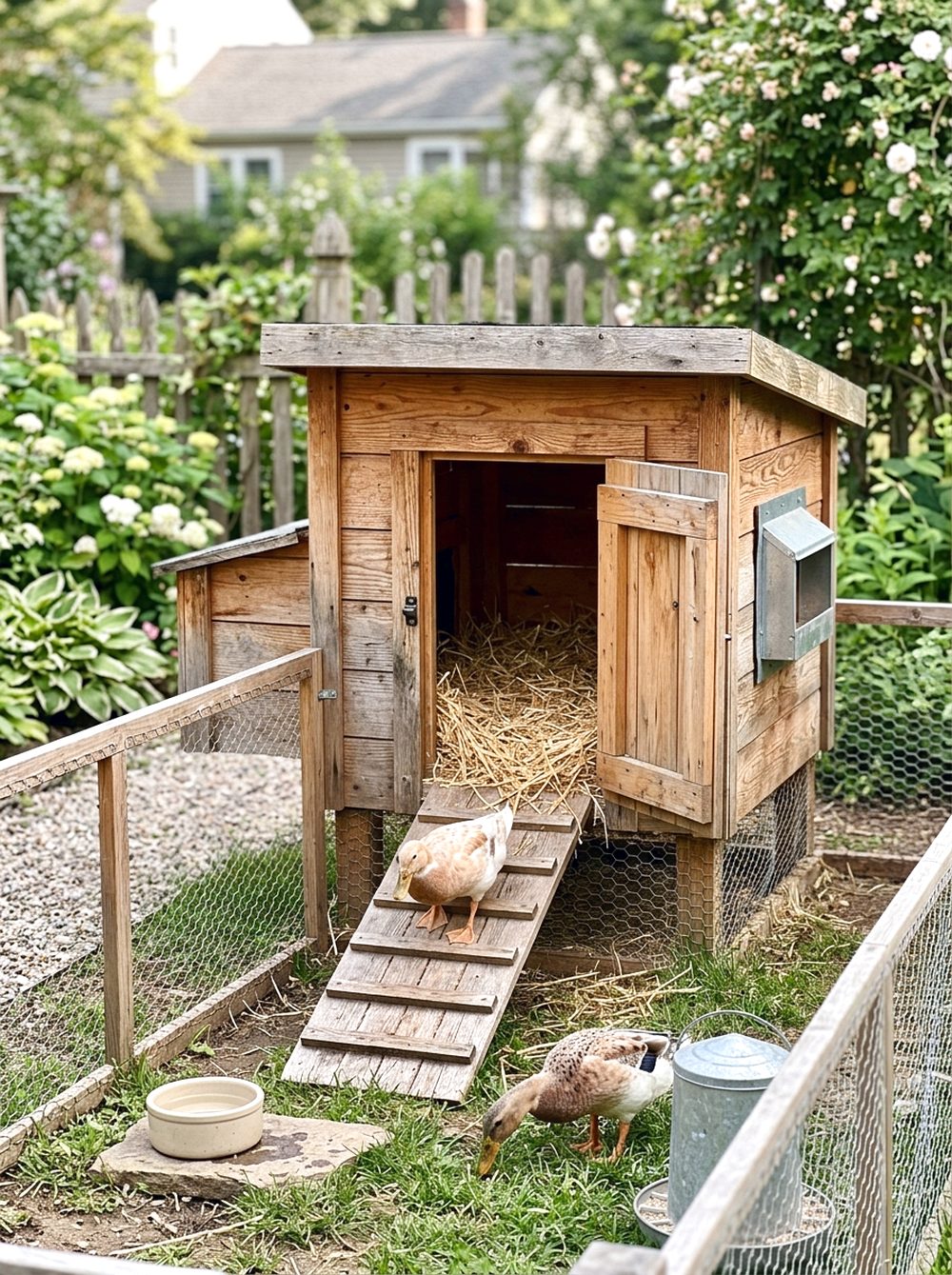
A simple wooden duck coop is a good choice for a beginner backyard setup. Use a low shelter with a wide door, straw bedding, and a small ramp if needed. Place it inside a fenced run for safety. Keep the design plain and easy to open so cleaning does not become a hard job.
Raised Duck Coop with Ramp
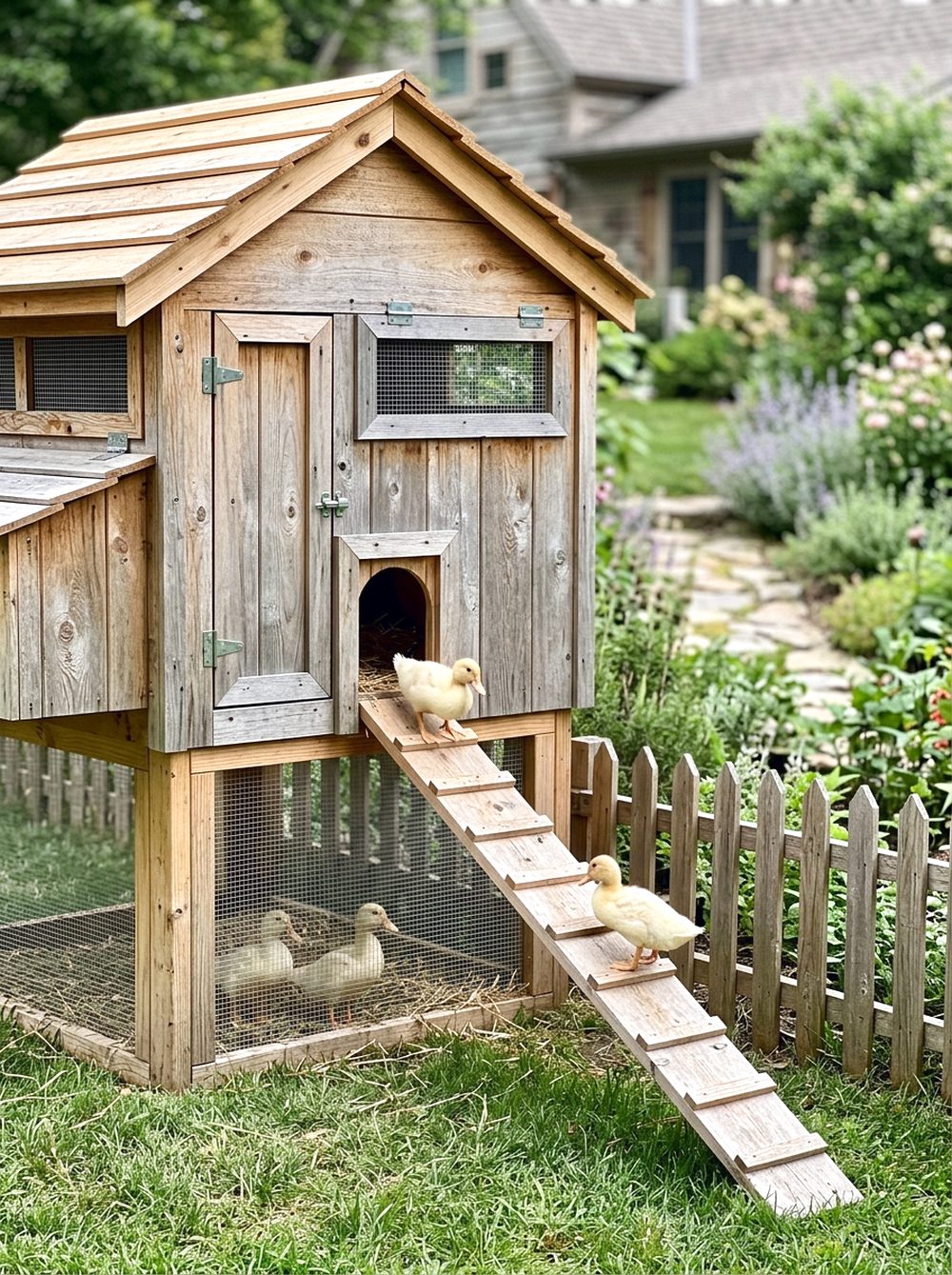
A raised duck coop helps keep the sleeping area drier and gives extra shaded space underneath. Add a gentle ramp because ducks do not climb as easily as chickens. Use a wide ramp with small grip strips. This design works well in yards where rain or muddy ground is a problem.
Duck Coop with Small Pond

A duck coop near a small pond or water area makes the setup feel natural and useful. Keep the pond edge lined with gravel or stones to reduce mud. Place the coop close enough for easy access but not where bedding gets soaked. A small pond can also make the yard look peaceful.
Pallet Duck Coop
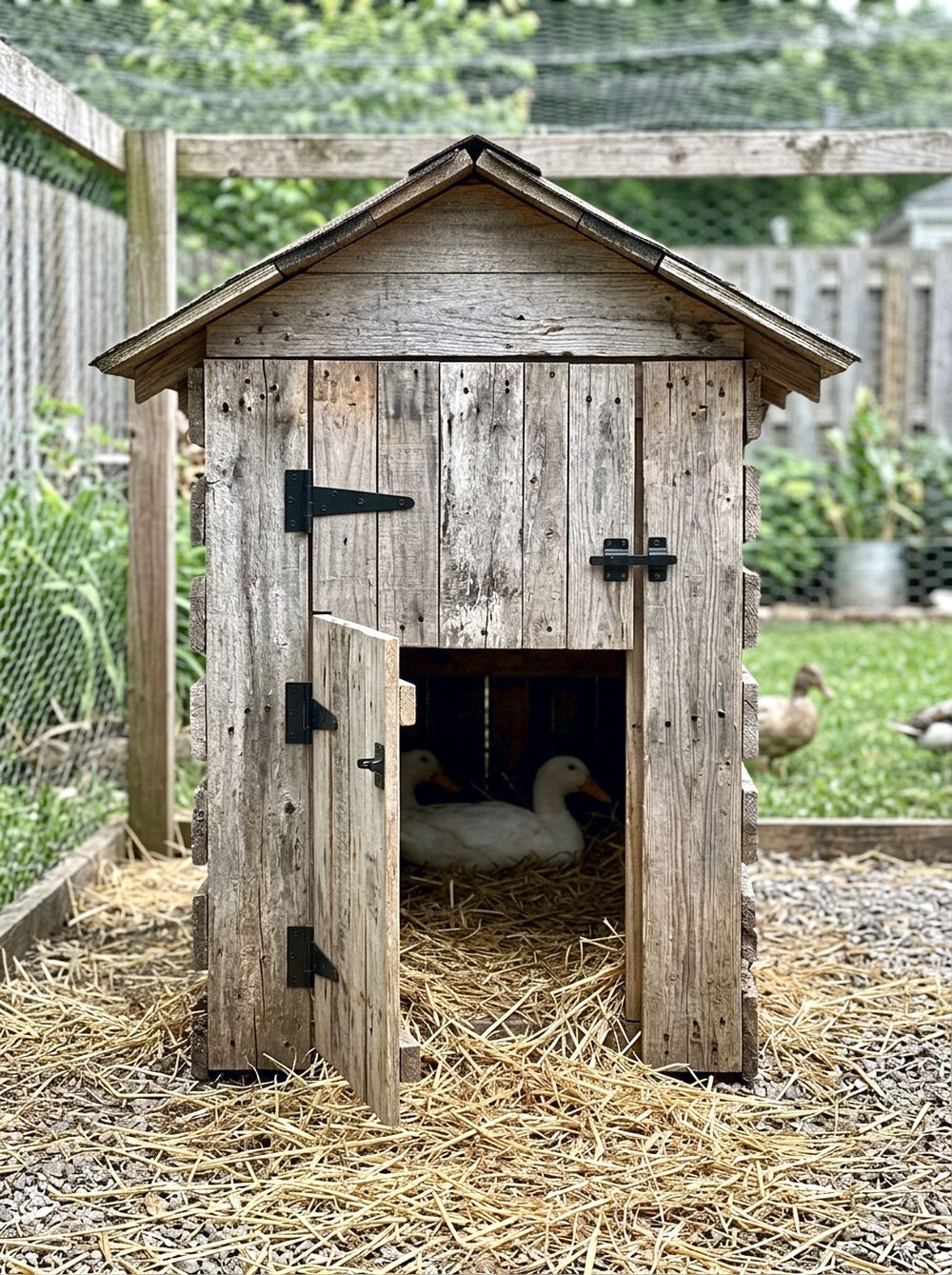
A pallet duck coop is a budget-friendly option if you want a rustic backyard look. Use strong pallets for the frame and cover gaps with safe wire or boards. Add a hinged door for cleaning and fresh straw inside. Sand rough edges so the coop is safer and easier to use.
A-Frame Duck Coop
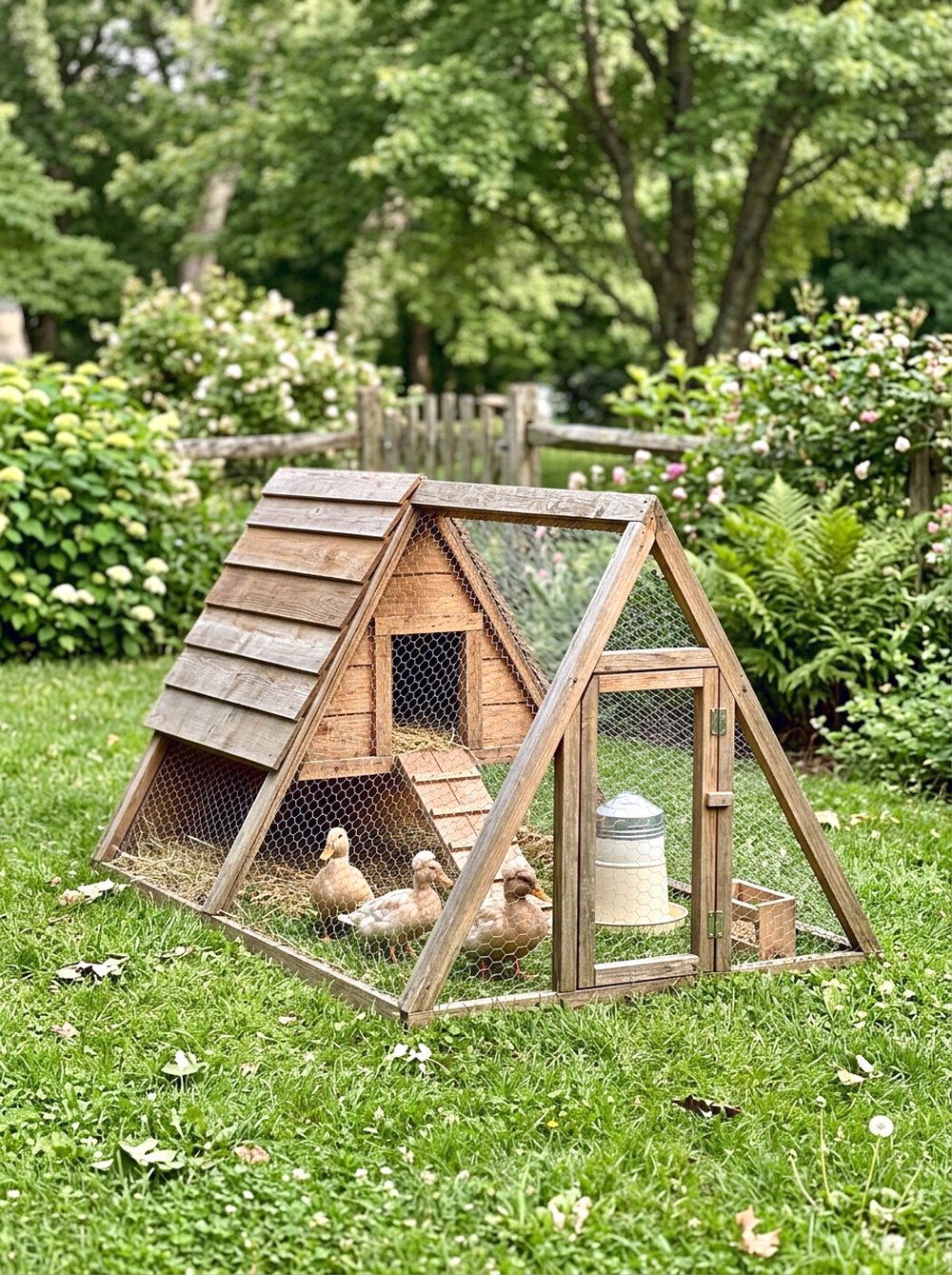
An A-frame duck coop is simple, compact, and easy to place in a grassy yard. The sloped shape helps rain run off and gives ducks a sheltered corner. Add wire panels on one side for airflow. Keep the inside low and open because ducks prefer simple floor-level spaces.
Duck Coop with Covered Run

A covered run gives ducks protection from sun, rain, and overhead predators. Use strong wire on the sides and a solid or shaded roof over part of the run. Place food and water outside the sleeping area if possible. This keeps the coop cleaner and gives ducks a safer daytime space.
Mobile Duck Coop

A mobile duck coop can be moved around the yard to give ducks fresh grass and reduce muddy spots. Add wheels, a lightweight frame, and a pull handle. Keep the coop sturdy enough to stay safe when parked. This idea works best for small flocks and open backyard lawns.
Duck Coop with Storage Box
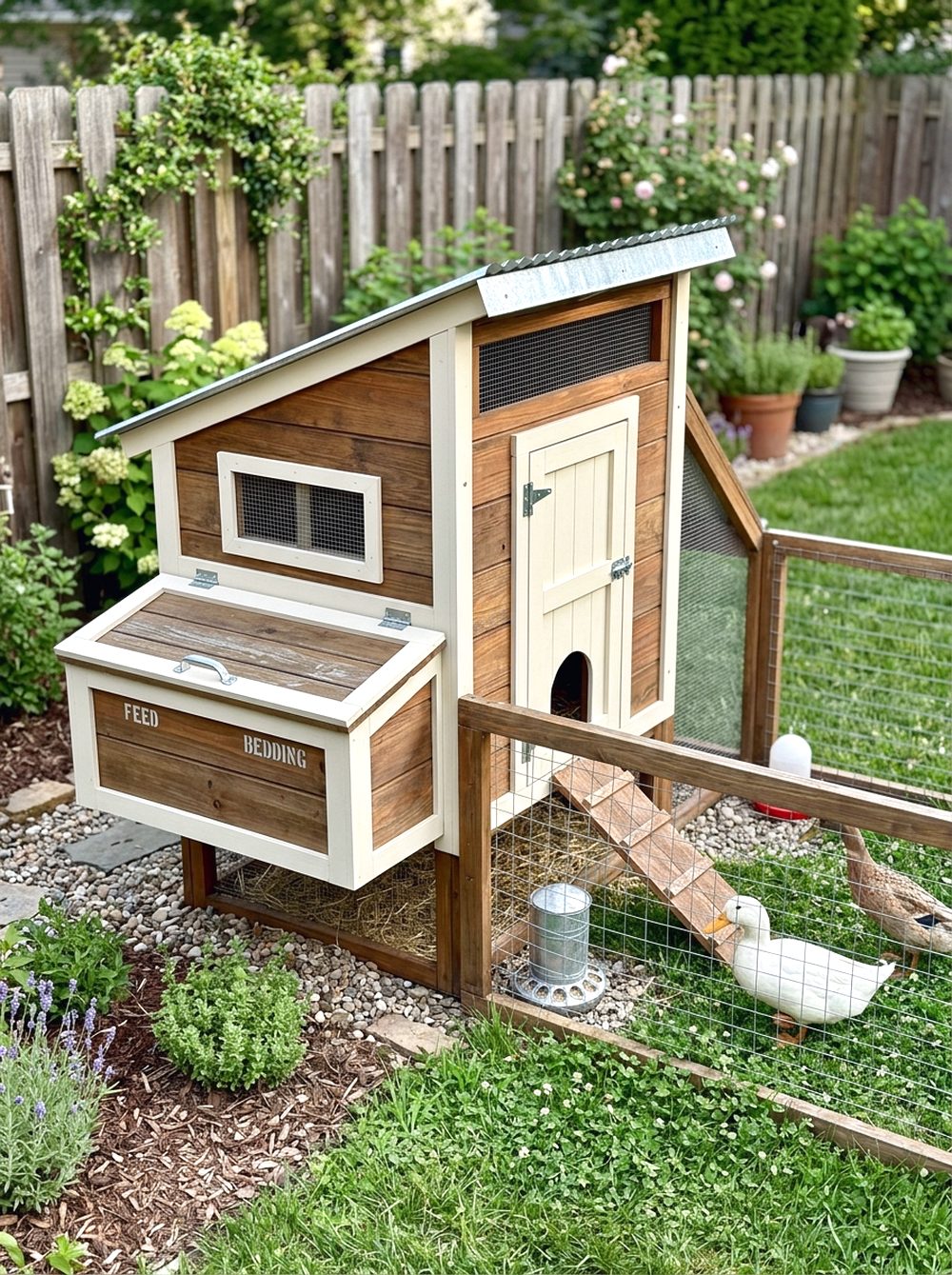
A storage box attached to the duck coop keeps feed, bedding, and cleaning tools close by. It makes daily care easier and keeps supplies organized. Use a weatherproof lid and keep food sealed from pests. This setup is helpful when the coop is far from a shed or garage.
White Farmhouse Duck Coop

A white farmhouse duck coop can look cute while still being practical. Use a simple wooden structure, black hinges, a low ramp, and straw bedding inside. Place it near flowers or a garden fence for a pretty backyard look. Choose washable paint so the coop stays easier to clean.
Duck Coop Under a Tree
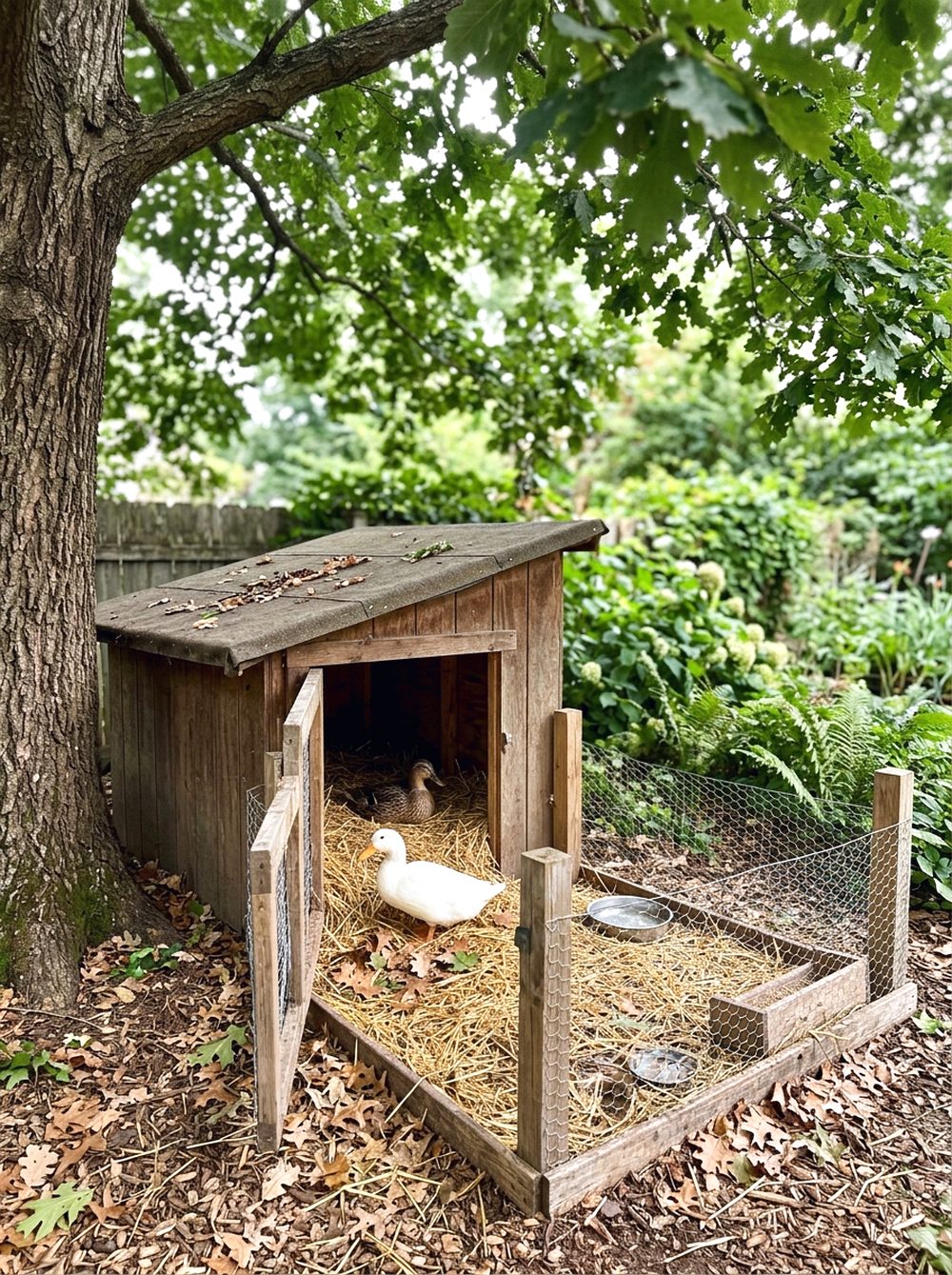
Placing a duck coop under a tree gives natural shade and helps keep the area cooler. Make sure the tree is healthy and does not drop unsafe branches. Add fencing around the coop and use straw or mulch on the ground. This cozy setup works well for warm climates.
Small Duck Coop for Backyard
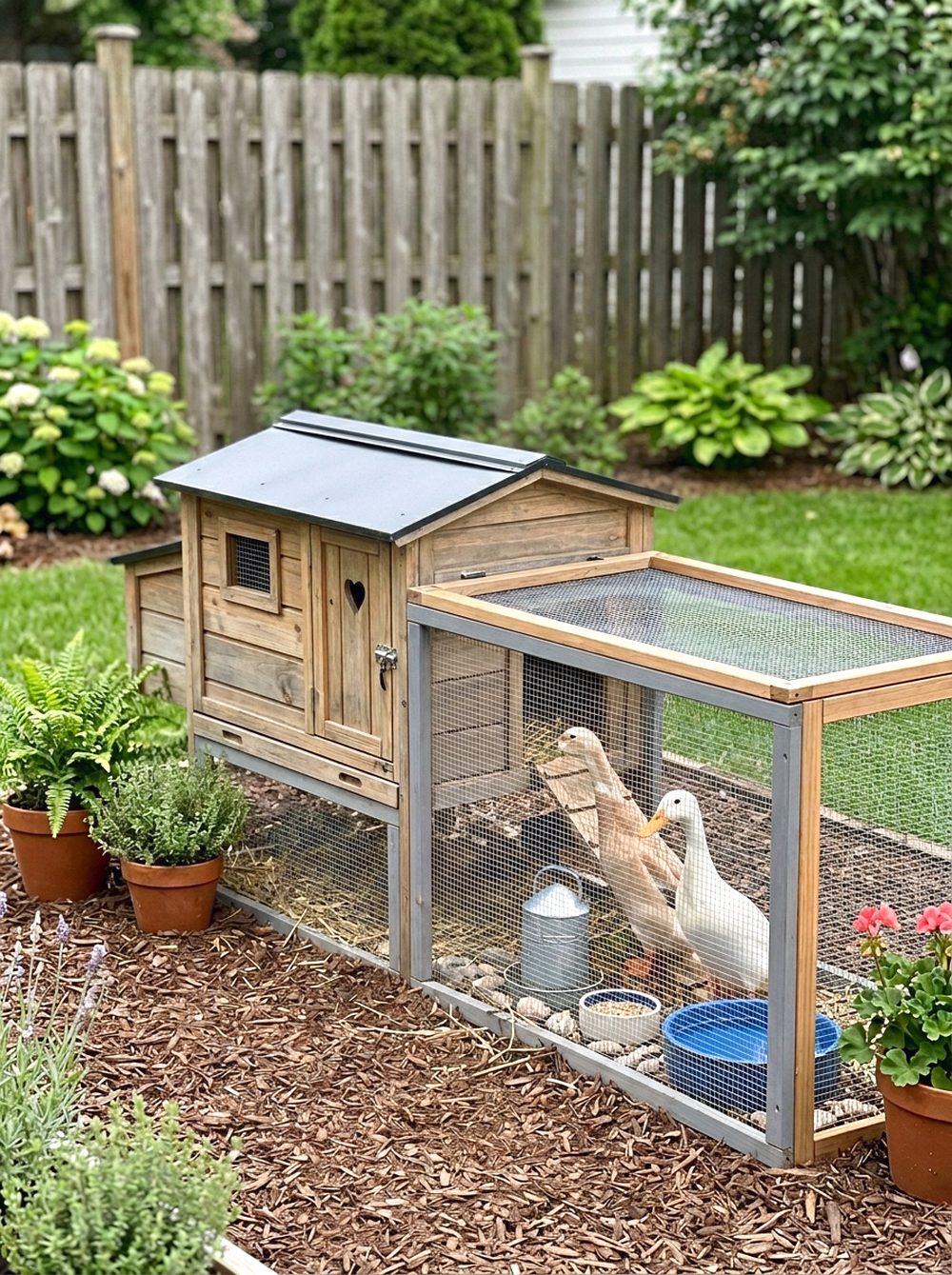
A compact duck coop can work well in a small backyard if the layout is neat. Use a low house, secure wire run, and a water area that is easy to refresh. Keep bedding dry and avoid overcrowding. Place the coop near a fence or corner to save space.
Duck Coop with Easy Cleaning Door

An easy-clean duck coop makes daily chores much simpler. Add a large hinged door or lift-up side so you can reach the bedding without crawling inside. Smooth floors are easier to scrape and sweep. Ducks are messy, so a cleaning-friendly design is one of the best choices.
Duck Coop with Nesting Corner
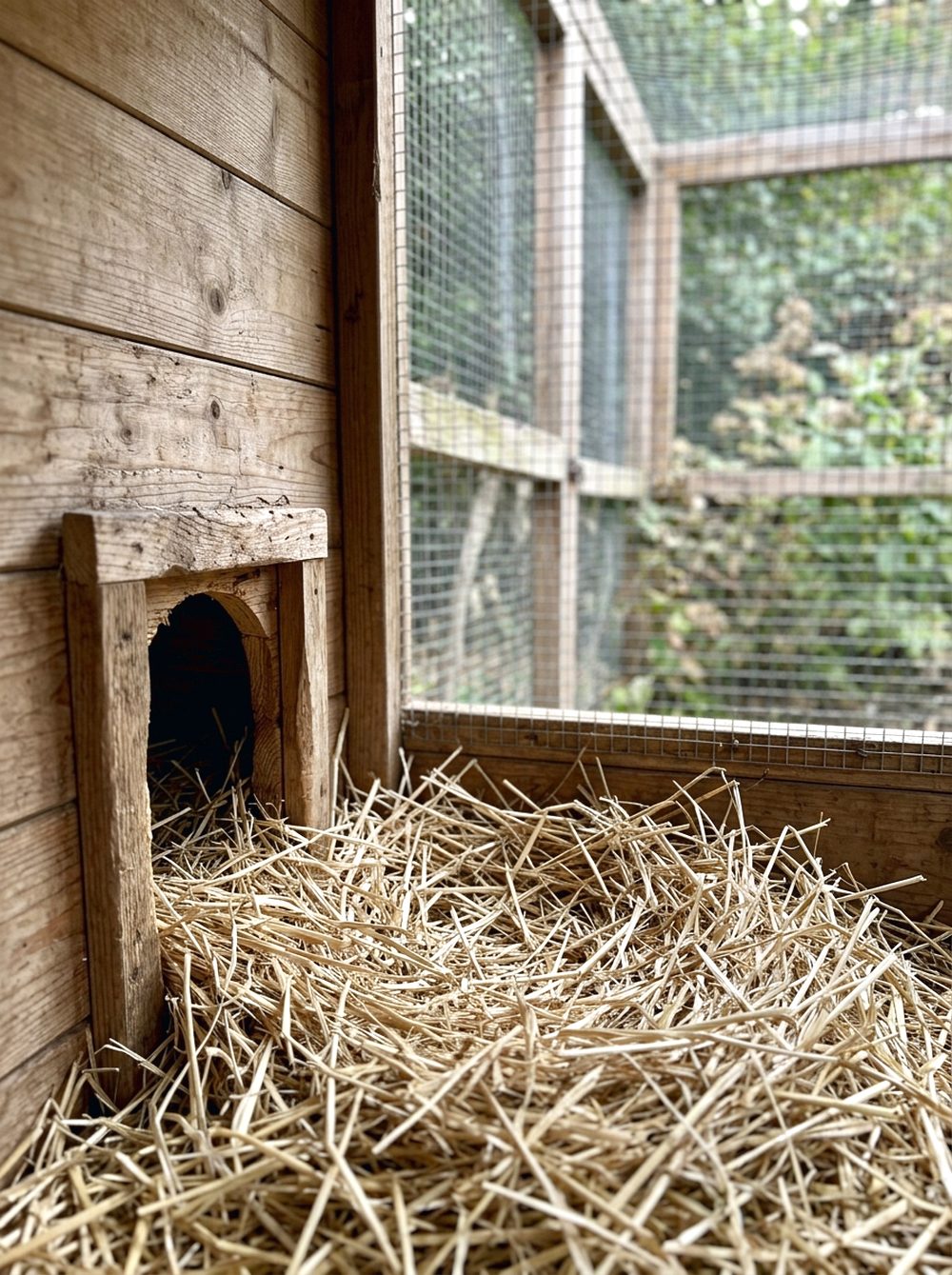
Ducks like a quiet, low nesting corner with soft bedding. Create a simple straw-filled area inside the coop, away from the main door if possible. It does not need to be high or fancy. Keep it dry, cozy, and easy to refresh so eggs stay cleaner.
Duck Coop with Gravel Drainage
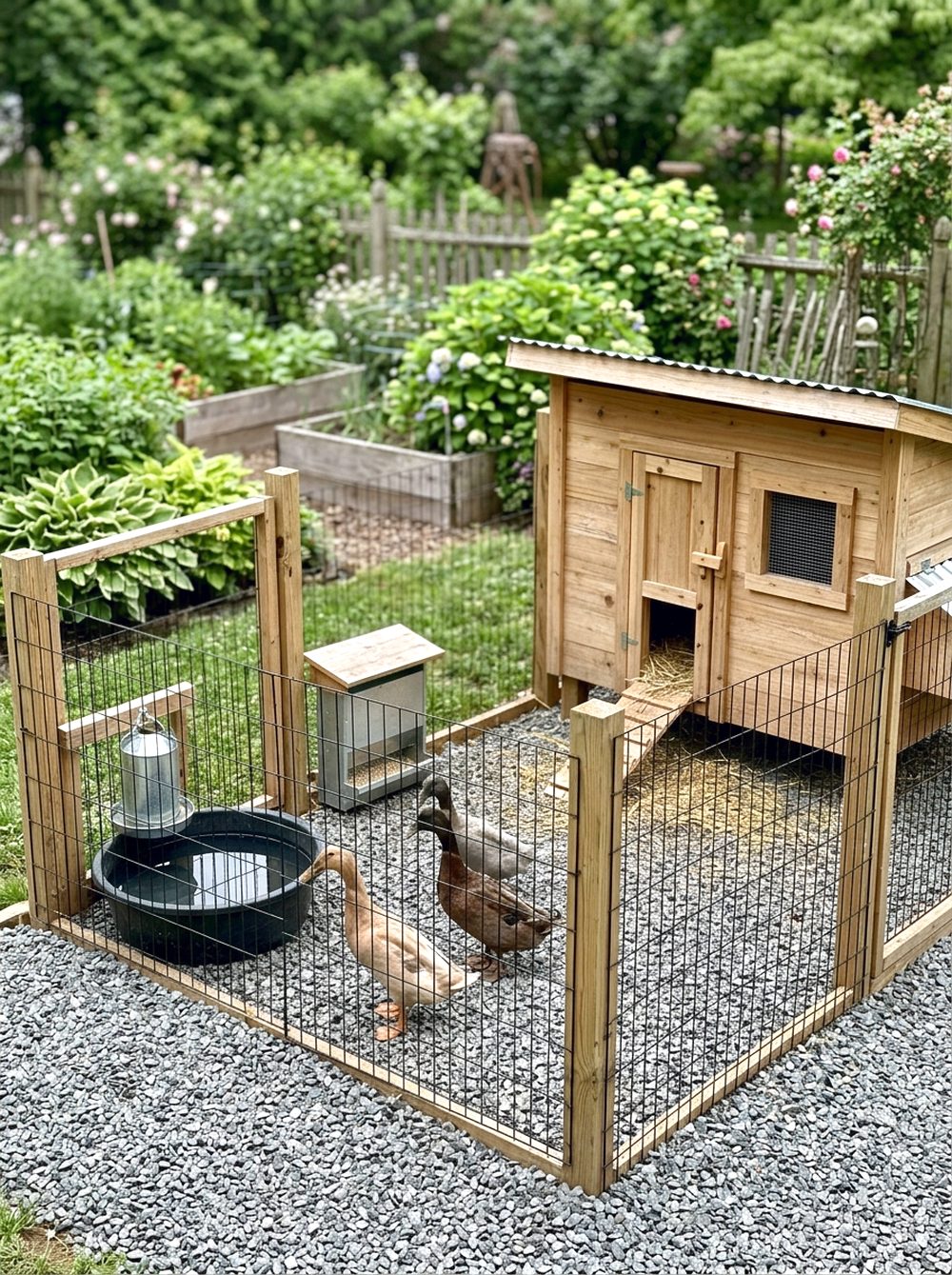
A gravel drainage base can help reduce mud around a duck coop. Use gravel in the run or around the water station so wet areas dry faster. Keep the sleeping area soft with straw or bedding. This idea is especially useful because ducks splash water and can make soil messy quickly.
Conclusion
An easy duck coop should protect ducks, stay dry, and be simple to clean. Focus on good airflow, secure fencing, soft bedding, shade, and smart drainage before adding decorative details. Whether you build with pallets, wood, wire, or a mobile frame, a practical layout will make duck care much easier.
FAQs
1. What does a duck coop need?
A duck coop needs safe shelter, soft bedding, good airflow, predator protection, shade, and an easy way to clean it.
2. Do ducks need a ramp for their coop?
Only if the coop is raised. Ducks need a wide, gentle ramp because steep ramps are harder for them to use.
3. Should water be inside the duck coop?
It is usually better to keep water outside the sleeping area because ducks splash a lot and can make bedding wet.
4. What is the best floor for a duck coop?
A smooth floor with straw bedding works well inside, while gravel or mulch can help manage wet areas outside.