

Pruning tomato plants helps keep them healthy, tidy, and easier to manage. By removing extra leaves, suckers, and weak growth, the plant gets better airflow and more light. This can also make watering, tying, and harvesting easier. These simple pruning ideas are useful for raised beds, pots, trellises, cages, and small backyard vegetable gardens.
Why You’ll Love These Ideas
These pruning ideas are practical, beginner-friendly, and helpful for keeping tomato plants from becoming too crowded. They can improve airflow, reduce messy growth, and make fruit easier to see. You do not need fancy tools for most pruning tasks, just clean hands, small snips, and a careful eye.
Quick List
- Removing Lower Tomato Leaves
- Pinching Tomato Suckers
- Pruned Tomato Plant on a Stake
- Caged Tomato Plant After Pruning
- Pruning Yellow Tomato Leaves
- Pruning Tomato Plants in Pots
- Opening Airflow Around Tomato Plants
- Pruning Before Tomatoes Ripen
- Tomato Trellis Pruning
- Pruning Overgrown Tomato Plants
- Composting Pruned Tomato Leaves
- Clean Tomato Plant After Pruning
Removing Lower Tomato Leaves

Removing lower tomato leaves keeps the base of the plant cleaner and less crowded. This is useful when leaves touch the soil or block airflow. Trim only the lowest leaves first and leave plenty of healthy growth above. Add mulch under the plant to reduce soil splash and keep the bed neat.
Pinching Tomato Suckers
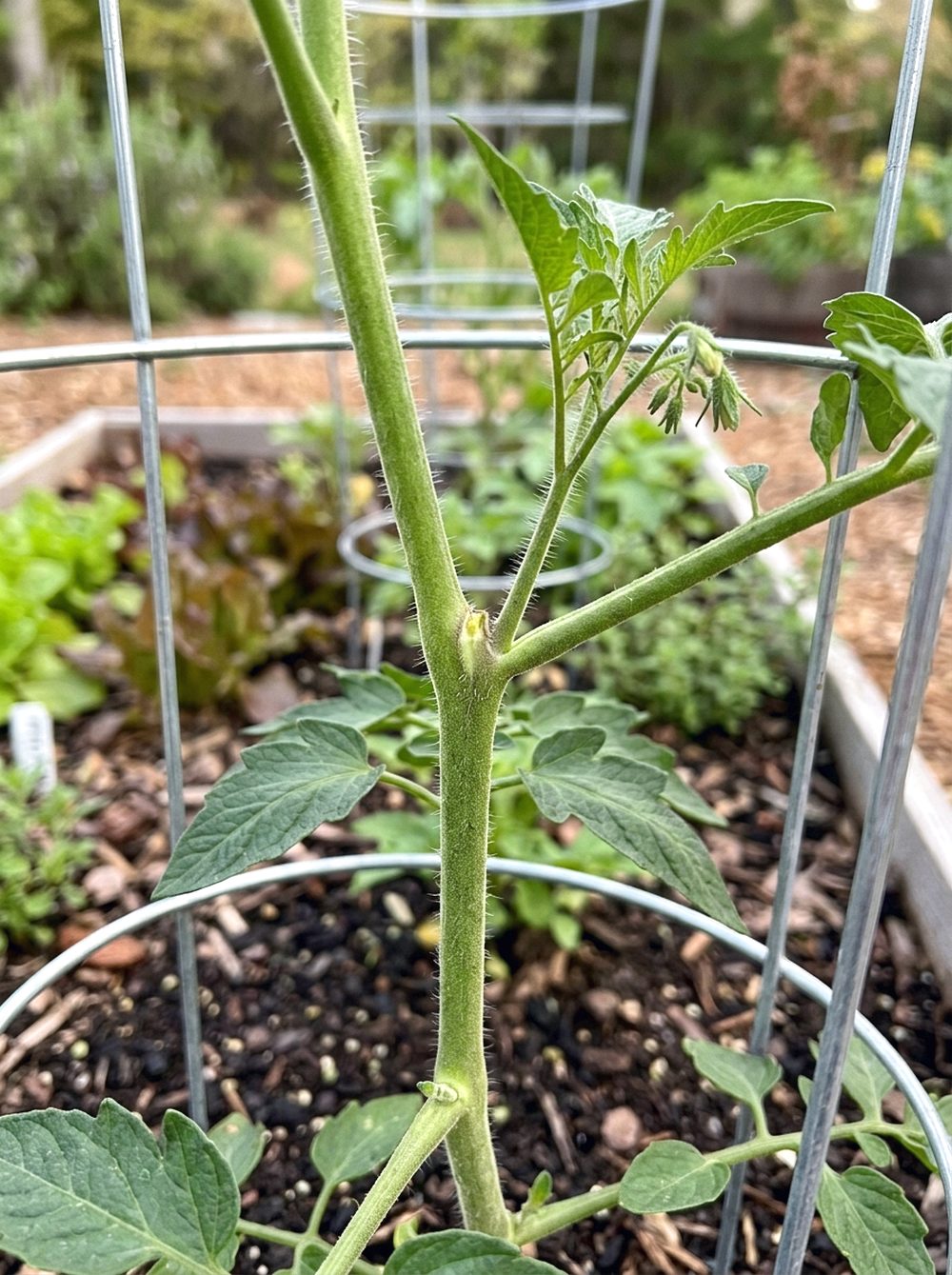
Tomato suckers grow in the small joint between the main stem and a leaf branch. Pinching some of them can keep tall tomato plants easier to train and support. Remove small suckers gently before they become thick. Leave enough leafy growth so the plant can still shade and feed the fruit.
Pruned Tomato Plant on a Stake
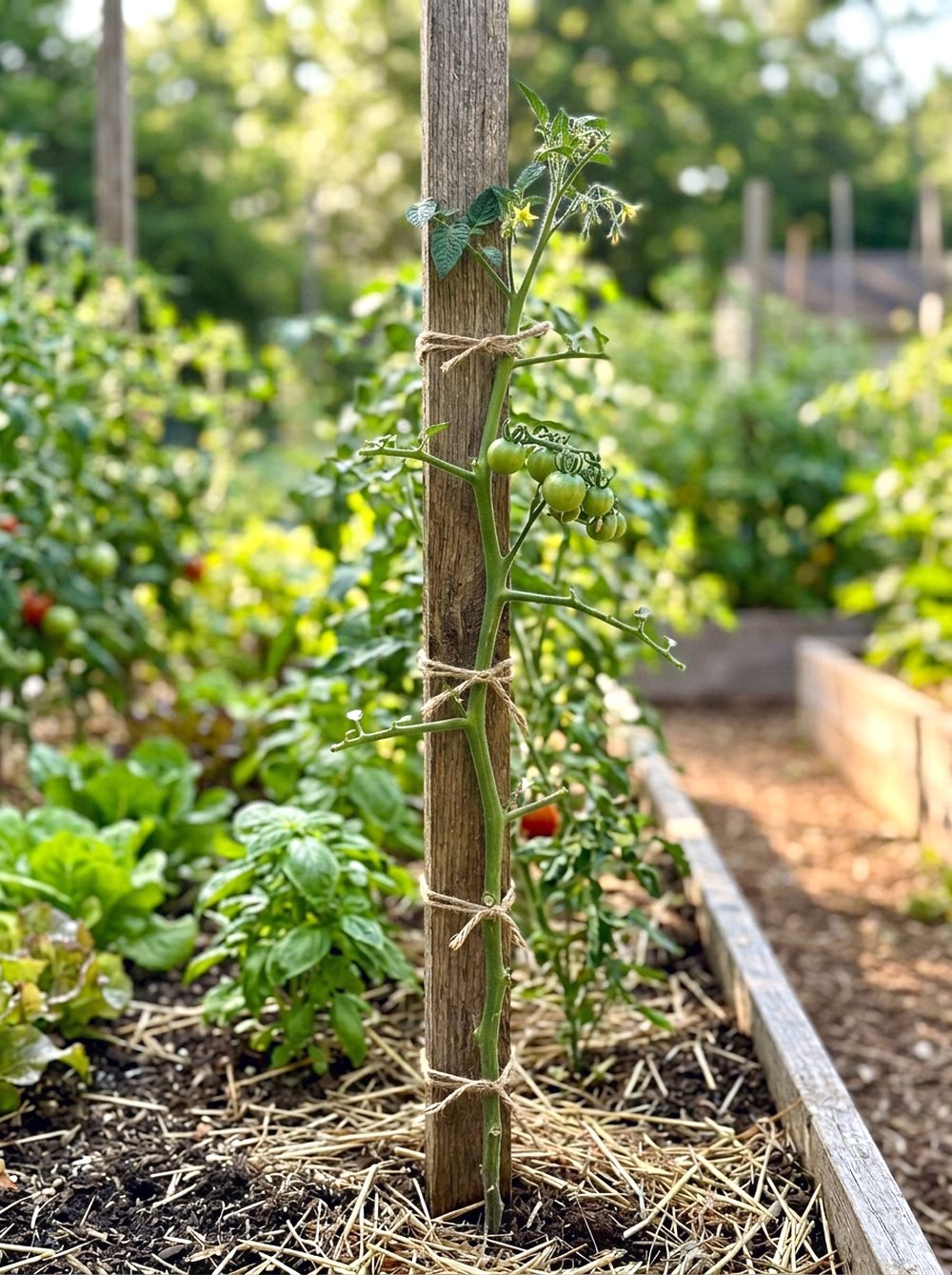
A staked tomato plant looks cleaner when extra side growth is lightly pruned. Tie the main stem loosely to the stake as it grows upward. This helps the plant stay upright and makes watering near the base easier. Keep the ties soft so they do not cut into the stem.
Caged Tomato Plant After Pruning

Caged tomatoes usually need light pruning, not heavy cutting. Remove crowded leaves inside the cage so air can move through the plant. Keep strong branches supported by the cage wires. This method works well when you want a fuller plant but still need it to stay neat and easy to harvest.
Pruning Yellow Tomato Leaves

Yellow or damaged tomato leaves should be removed early so the plant looks healthier and cleaner. Start with leaves near the bottom, especially if they are touching mulch or soil. Use clean snips if the stem is tough. Throw away any diseased leaves instead of leaving them around the garden bed.
Pruning Tomato Plants in Pots
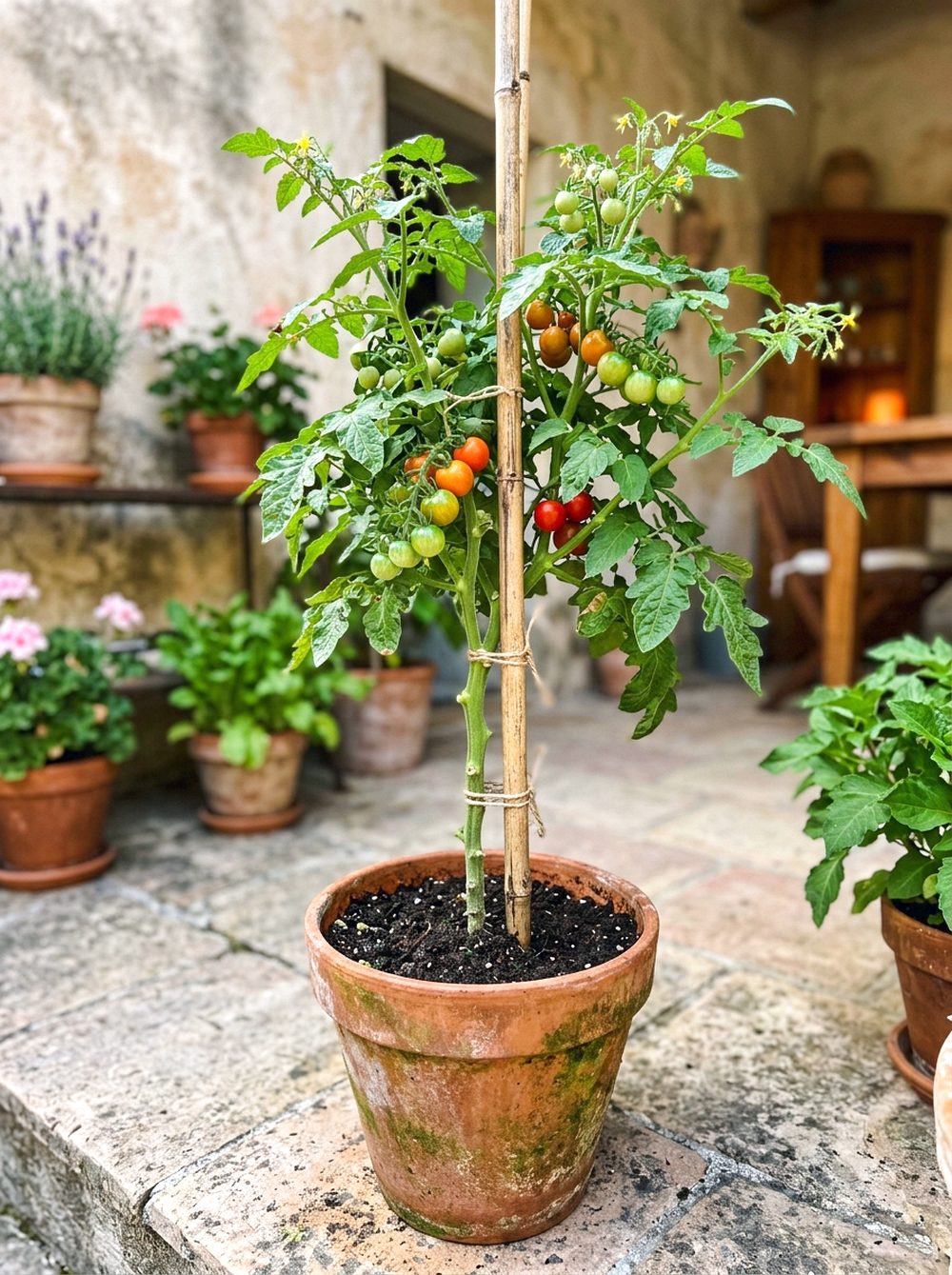
Potted tomato plants can become crowded quickly, so light pruning helps keep them manageable. Remove low leaves and small extra shoots near the base. Add a bamboo stake or small cage for support. Keep the center open enough for air, but do not strip too many leaves from a container plant.
Opening Airflow Around Tomato Plants

Good airflow helps tomato plants dry faster after rain or watering. Trim crowded leaves that press against nearby plants or supports. Leave space between stems so light can reach inside the plant. This is especially helpful in humid gardens, tight rows, or raised beds where tomatoes are planted close together.
Pruning Before Tomatoes Ripen
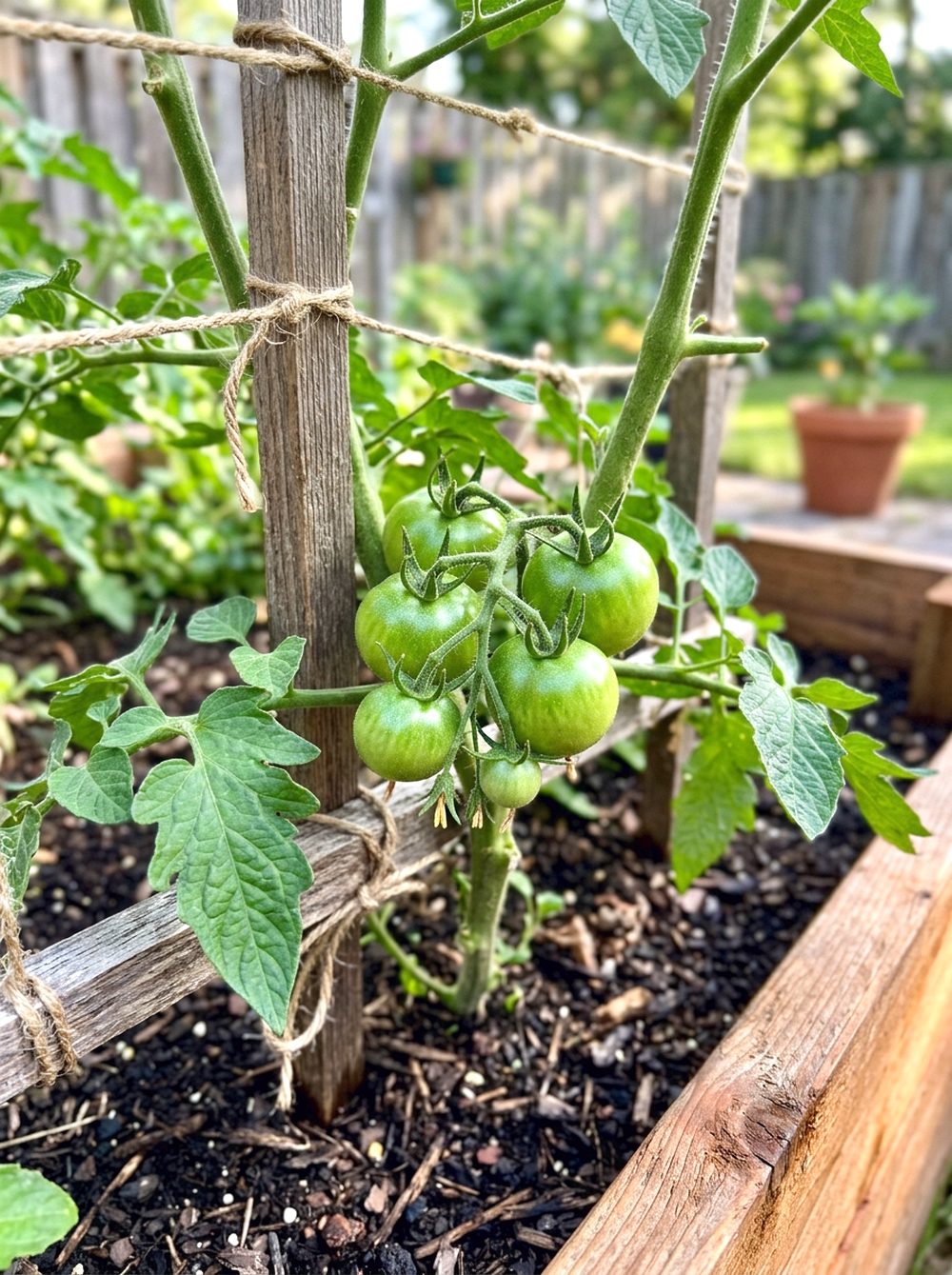
Light pruning around tomato clusters can help you see the fruit and harvest more easily. Remove only leaves that are crowded, damaged, or blocking airflow. Do not expose all the fruit to harsh sun, because some leaf cover protects it. Keep the plant balanced with both open space and healthy foliage.
Tomato Trellis Pruning
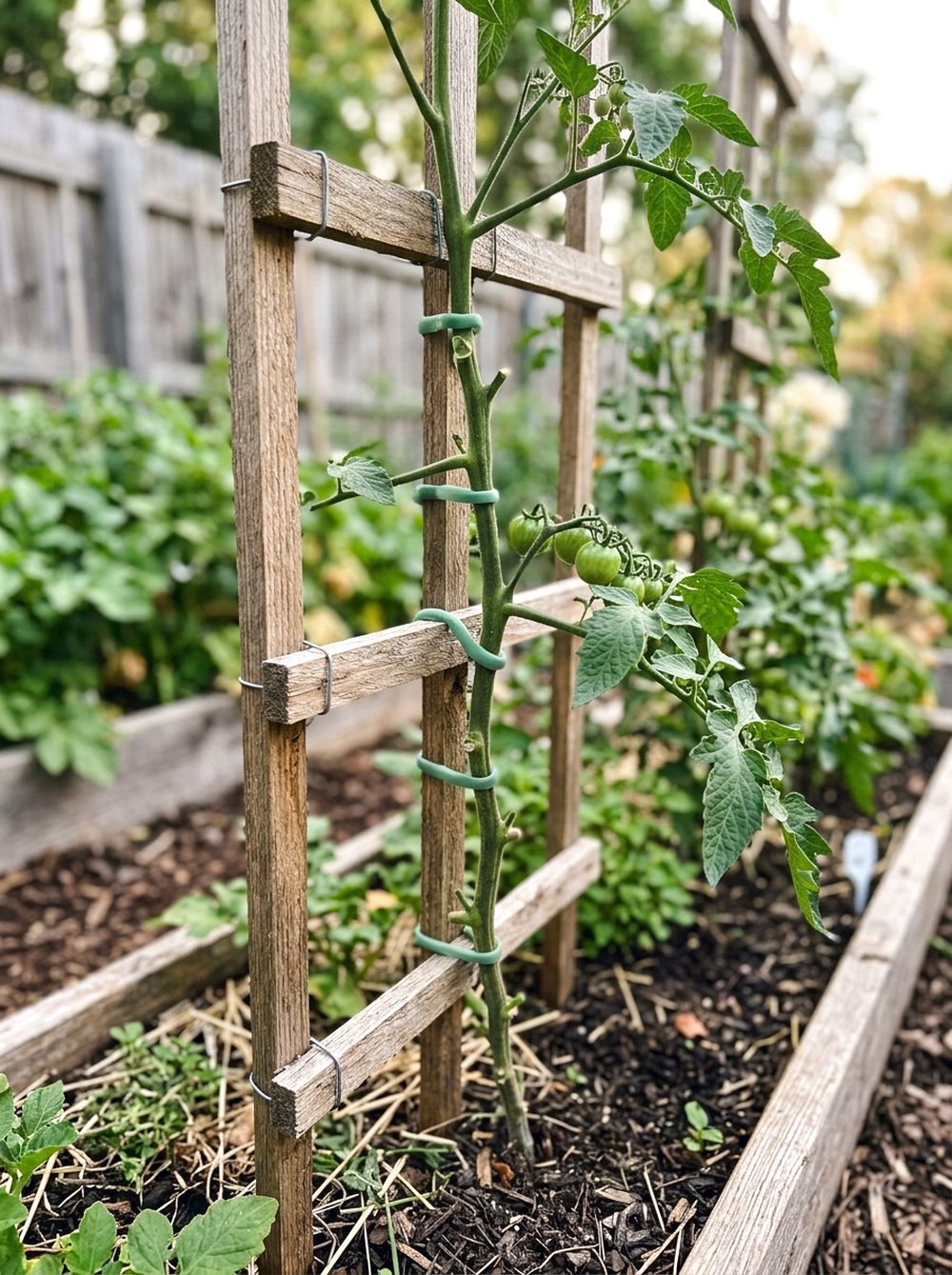
Trellised tomatoes often need regular pruning to stay upright and easy to train. Remove extra side shoots and tie the main vine gently to the support. This works well for indeterminate tomatoes that keep growing tall. Check the plant often so the stems do not become tangled or too heavy.
Pruning Overgrown Tomato Plants

Overgrown tomato plants should be pruned slowly instead of all at once. Start by removing dead, yellow, or tangled growth. Then trim a few crowded stems to open the plant. Avoid cutting away too much healthy foliage in one day, because the plant still needs leaves to support fruit growth.
Composting Pruned Tomato Leaves

Healthy pruned tomato leaves can go into compost if they show no signs of disease. Let them mix with dry leaves, grass clippings, or garden waste. If the leaves have spots, mildew, or pests, throw them away instead. Keeping removed plant material off the soil also helps the garden look cleaner.
Clean Tomato Plant After Pruning

A clean tomato plant after pruning should look open, supported, and still full of healthy leaves. The lower stem should be tidy, fruit clusters should be easy to spot, and airflow should be better. Add mulch around the base and keep watering low near the soil for a simple, healthy setup.
Conclusion
Pruning tomato plants is a simple garden habit that can make plants healthier and easier to manage. Start with lower leaves, yellow growth, and small suckers, then shape the plant slowly. Keep enough leaves for shade and plant strength. With light, regular pruning, tomatoes can look cleaner and grow more comfortably.
FAQs
1. Should all tomato plants be pruned?
Not always. Indeterminate tomatoes often benefit from pruning, while determinate tomatoes usually need only light trimming of damaged or low leaves.
2. When should I prune tomato plants?
Prune when plants are dry, healthy, and actively growing. Morning is a good time because cuts can dry during the day.
3. Can I remove too many tomato leaves?
Yes. Removing too many leaves can stress the plant and expose fruit to sunburn. Prune lightly and keep healthy foliage.
4. What should I do with pruned tomato leaves?
Compost healthy leaves, but throw away any leaves with disease, pests, mildew, or spots.