
Climbing greenery can change the mood of a room, turning blank walls into something soft, layered, and alive. If you love spaces that feel fresh, calm, and a little more collected, an indoor plant wall is one of the easiest ways to add that effect without overcrowding the floor. From trailing vines over shelves to structured trellis displays that feel almost architectural, there are plenty of ways to make greenery look intentional indoors. This list brings together practical ideas that work in real homes, whether your style leans clean and modern or warm and cozy. Some options are budget friendly and simple to set up, while others create more of a statement feature. No matter the size of your space, these climbing greenery ideas can help you build a home that feels brighter, softer, and beautifully lived in every day.
Quick List:
- Wooden Trellis Reading Corner
- Floating Shelf Vine Wall
- Ceiling Grid Green Canopy
- Flexible Pegboard Plant Wall
- Window-Framing Curtain Rod Vines
- Ladder Shelf Green Display
- Sculptural Moss Pole Plant Stand
- Vertical Row Wall Planters
- Greenery-Wrapped Indoor Arch
- Rail-and-Hook Plant Wall
- Mirror-Framed Climbing Greenery
- Full Corner Climbing Wall
Wooden Trellis Reading Corner
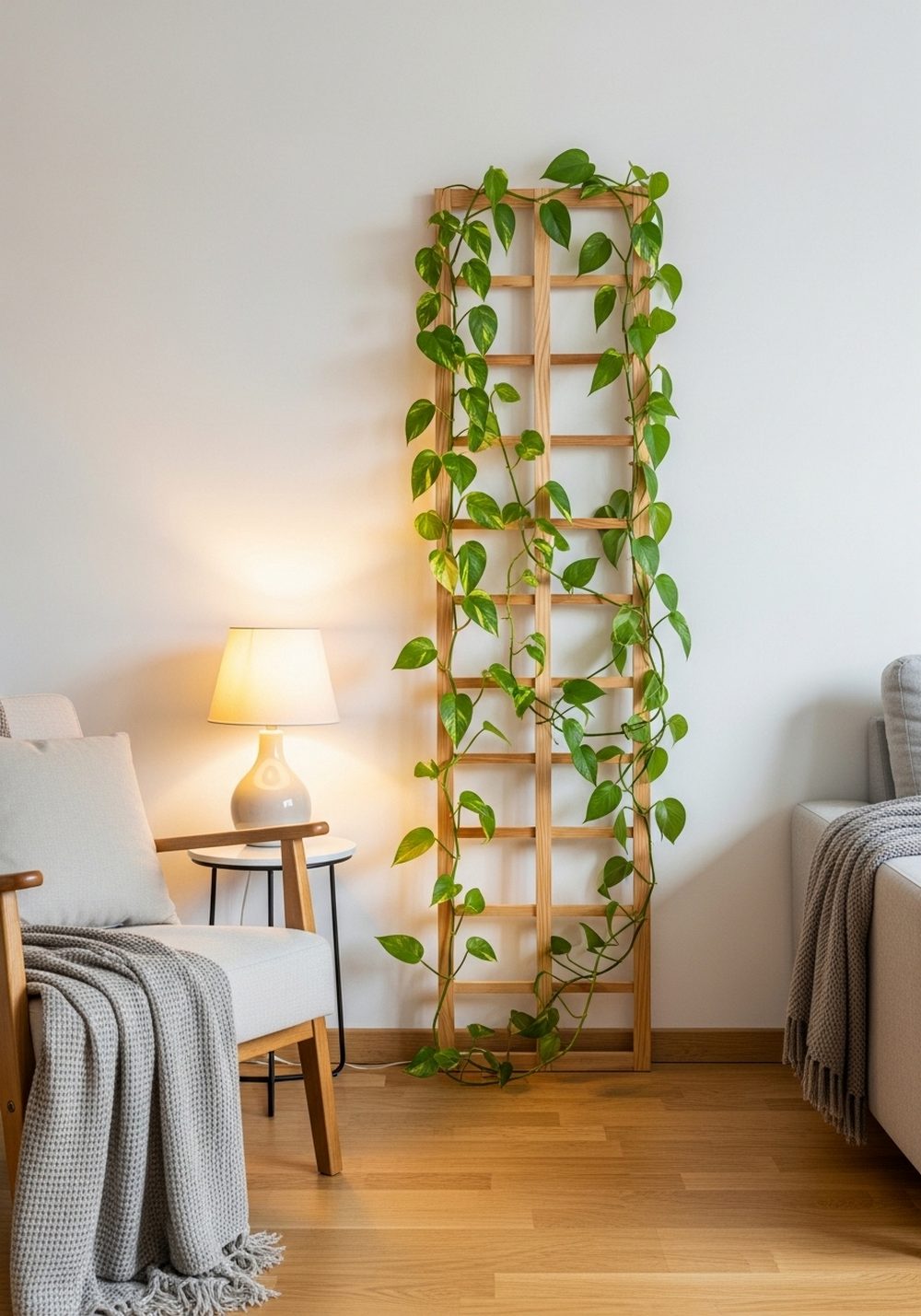
A slim wooden trellis mounted behind a reading chair gives climbing plants a clear path upward while keeping the floor open. Choose a lightweight design in oak, black, or white to match your room, then train pothos or heartleaf philodendron across the frame for a soft, layered look. This idea works especially well in apartments because it adds height without needing a large footprint. Add a small side table and warm lamp nearby, and the entire corner instantly feels calmer, greener, and thoughtfully styled indoors.
Best For: Cozy reading nooks, apartments, and quiet bedroom corners.
Where To Place It: Against a bright wall near a window or beside a lounge chair.
Color Palette Tip: Pair leafy green tones with cream, oak, beige, or matte black.
Materials / Items Needed: wooden trellis, wall anchors, pothos, philodendron, soft ties, accent chair, side table, lamp
Budget Level: Low to Medium — Simple materials keep the look stylish without feeling expensive.
DIY Difficulty: Easy — Basic mounting and gentle vine training make this beginner friendly.
Style It Like This: Add a linen throw; use one textured planter; keep nearby decor minimal and warm.
Common Mistake To Avoid: Do not overcrowd the trellis with too many plants too early.
Floating Shelf Vine Wall
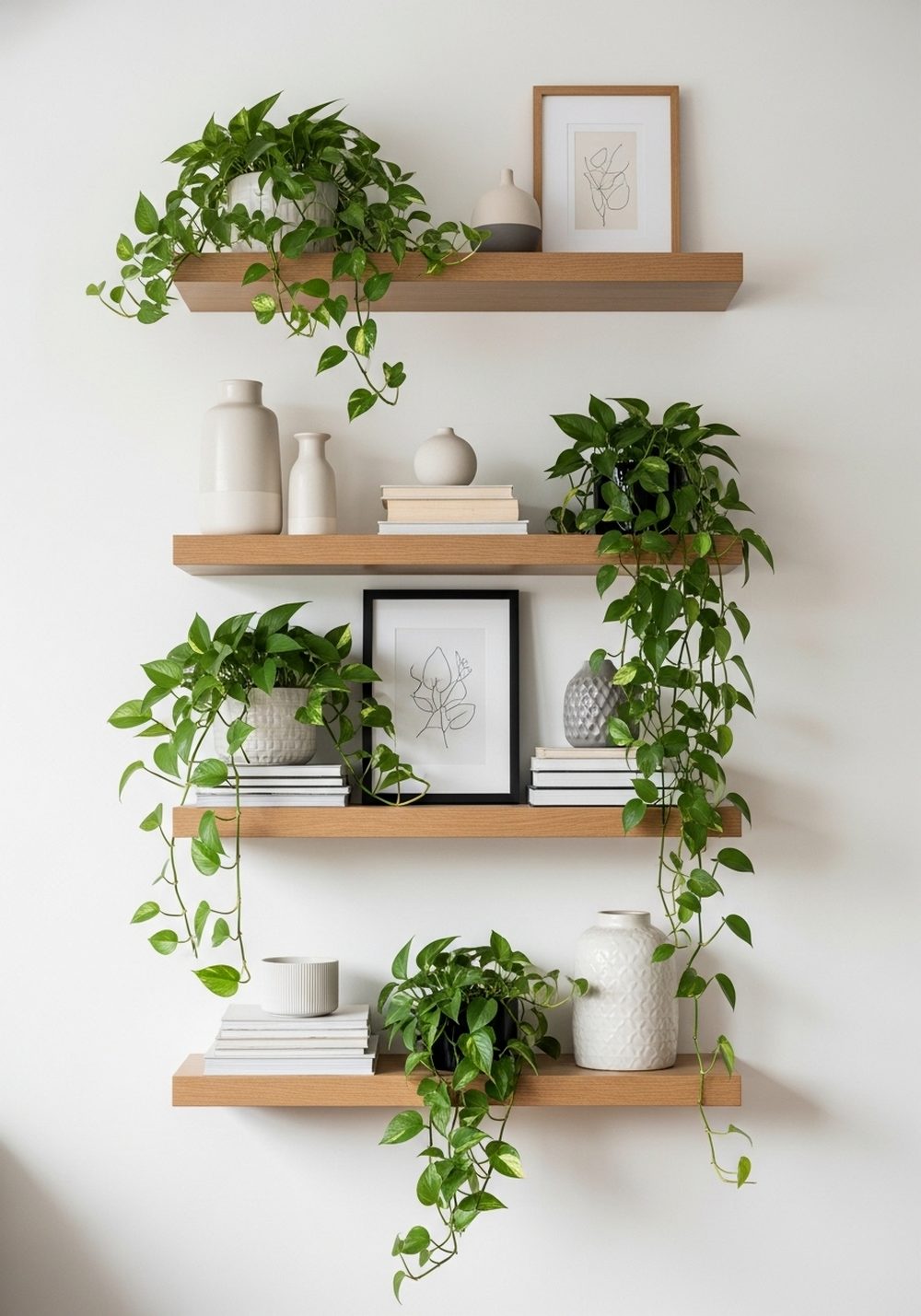
Floating shelves paired with trailing vines create a plant wall that feels curated instead of crowded. Place a few potted climbers on staggered shelves, then let each vine drape naturally between books, ceramics, and framed art. The mix of greenery and objects makes the wall feel personal while still looking tidy. This setup is ideal for living rooms or home offices where you want plants to blend into decor. Keep the shelf styling light, and allow the greenery to become the main texture in arrangement.
Best For: Living rooms, home offices, and styled gallery-style walls.
Where To Place It: On a main wall with steady indirect light.
Color Palette Tip: Use white, clay, wood, and muted green for a relaxed layered look.
Materials / Items Needed: floating shelves, planters, pothos, trailing philodendron, books, ceramics, framed art
Budget Level: Medium — Shelving costs more, but the finished result looks custom.
DIY Difficulty: Medium — Careful spacing and secure shelf installation matter here.
Style It Like This: Mix shelf heights; leave negative space; repeat one planter finish for consistency.
Common Mistake To Avoid: Avoid filling every shelf with decor and losing the greenery effect.
Ceiling Grid Green Canopy
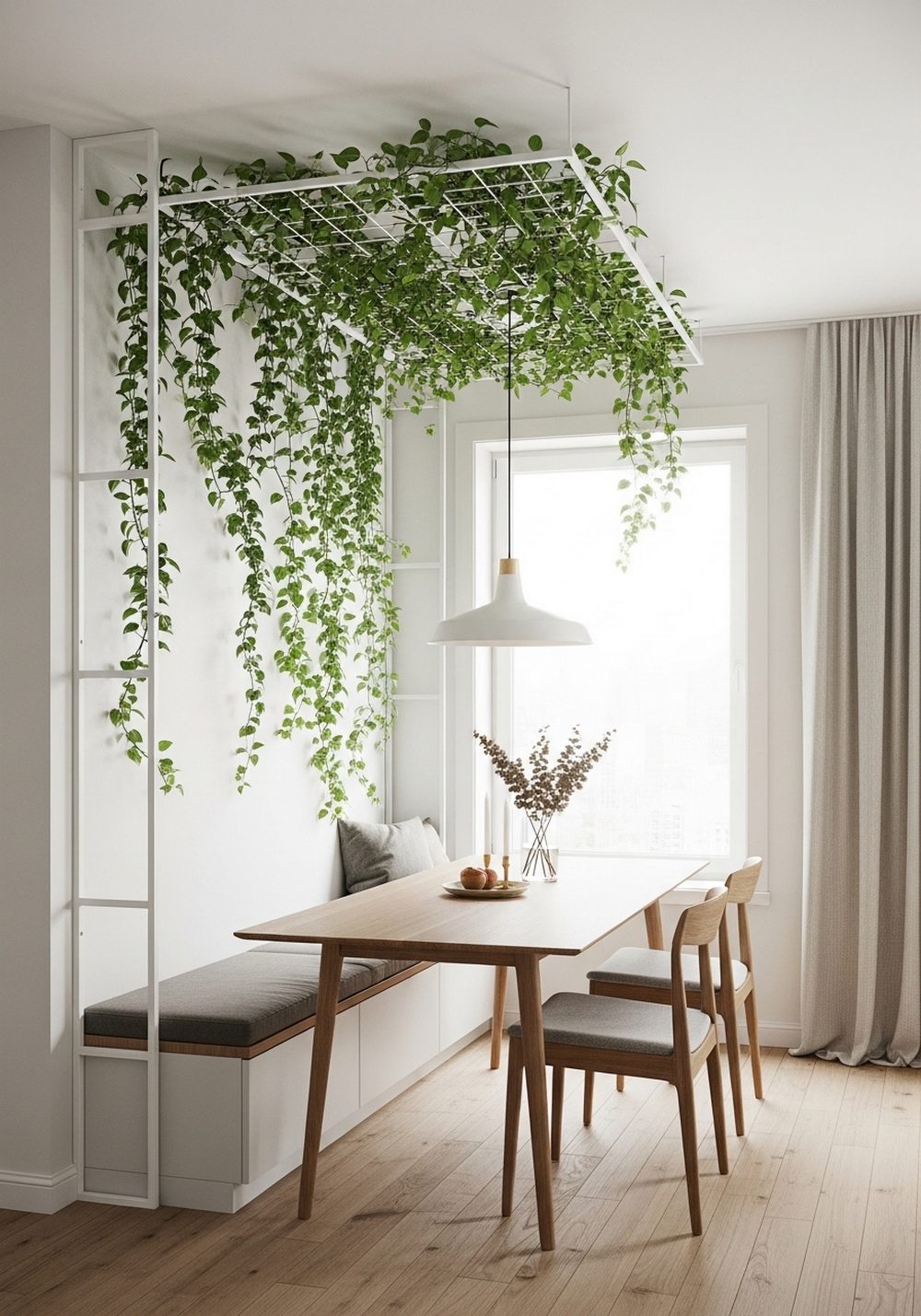
A ceiling-mounted grid lets climbing plants spread across a vertical and overhead surface, creating a dramatic indoor canopy effect. Secure a simple metal or wooden frame near a bright window, then guide vines upward with soft ties as they grow. This idea brings movement to plain walls and draws the eye higher, making the room feel larger. It is especially striking above a dining nook or small lounge area. With the right placement, the greenery feels lush and artistic without taking over the room indoors.
Best For: Dining corners, sunlit lounges, and design-focused plant lovers.
Where To Place It: Near a bright window where vines can grow upward with support.
Color Palette Tip: Keep the room light and neutral so the green canopy stands out.
Materials / Items Needed: ceiling grid, mounting hardware, climbing plants, soft ties, planters, ladder
Budget Level: Medium to High — The structure costs more but creates major visual impact.
DIY Difficulty: Hard — Ceiling installation needs precision and secure anchoring.
Style It Like This: Use one plant variety; keep furniture simple; repeat natural wood for warmth.
Common Mistake To Avoid: Do not place the grid in a dark area with poor airflow.
Flexible Pegboard Plant Wall
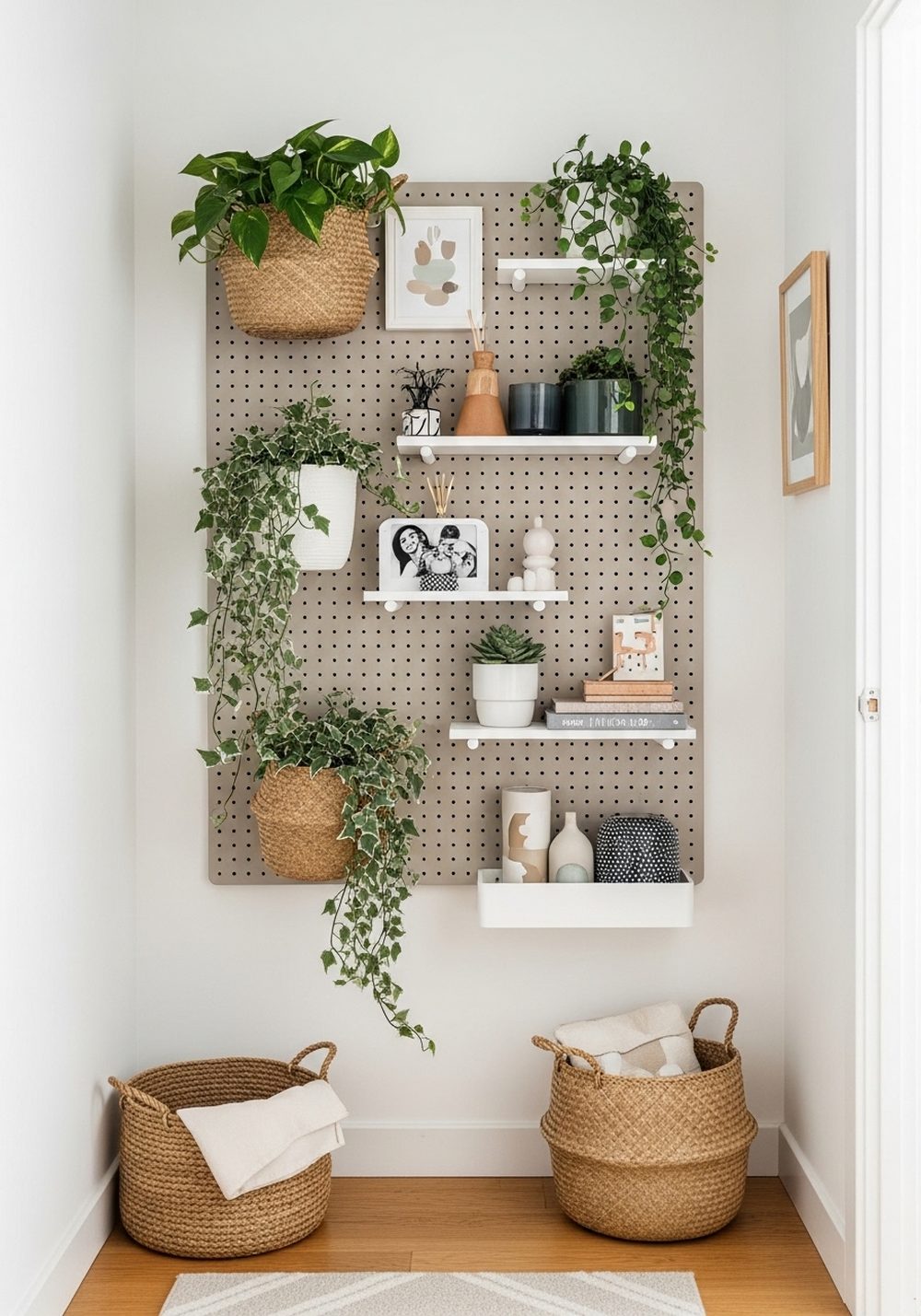
A pegboard plant wall gives you flexibility to move pots, hooks, and supports whenever your plants grow or your styling changes. Start with a sturdy wall-mounted pegboard in a neutral finish, then add baskets, mini shelves, and clips for lightweight climbers. This approach works beautifully in compact spaces because it turns a plain wall into functional decor. It also keeps your plant display feeling organized rather than messy. Use a small mix of trailing and upright greenery so the arrangement feels balanced, playful, and fresh.
Best For: Small apartments, creative corners, and flexible styling setups.
Where To Place It: In home offices, kitchens, or narrow hallway walls with light.
Color Palette Tip: Try white or sand backdrops with green leaves and natural wood accents.
Materials / Items Needed: pegboard, hooks, clips, mini shelves, baskets, climbing plants, planters
Budget Level: Low to Medium — You can build it gradually without buying everything at once.
DIY Difficulty: Easy to Medium — The setup is simple, but spacing matters.
Style It Like This: Use matching baskets; vary shelf heights; add one small framed print.
Common Mistake To Avoid: Avoid heavy pots that make the board feel cluttered or unsafe.
Window-Framing Curtain Rod Vines
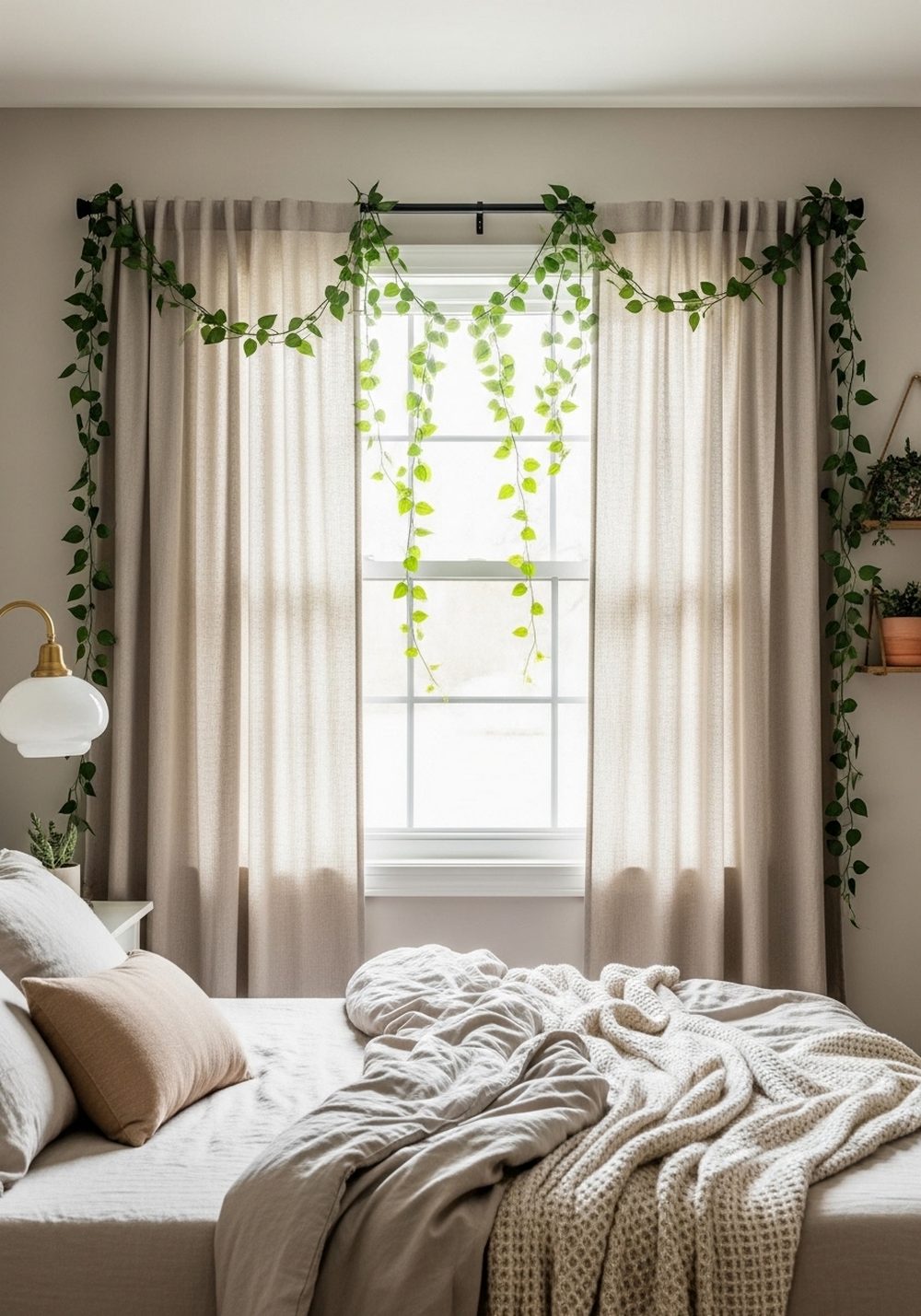
For a softer, more relaxed look, drape climbing plants across a curtain rod above a window or glass door. The vines frame the natural light beautifully and make the room feel instantly more lived in. Choose lightweight planters on nearby shelves or brackets, then gently train the stems outward so they spread evenly. This idea works well in bedrooms, breakfast corners, or sunrooms where daylight is already strong. The greenery adds shape around the window without blocking too much light or requiring an installation project.
Best For: Bedrooms, breakfast nooks, and bright sunrooms.
Where To Place It: Above a window or glass door with consistent daylight.
Color Palette Tip: Pair green vines with sheer white curtains and warm beige fabrics.
Materials / Items Needed: curtain rod, nearby shelf or bracket, lightweight planter, pothos, clips, soft ties
Budget Level: Low — This idea uses pieces many rooms already have.
DIY Difficulty: Easy — Gentle vine placement makes this simple to recreate.
Style It Like This: Keep curtains airy; use one trailing plant type; add a soft woven texture nearby.
Common Mistake To Avoid: Do not use heavy pots directly on a rod not built for weight.
Ladder Shelf Green Display
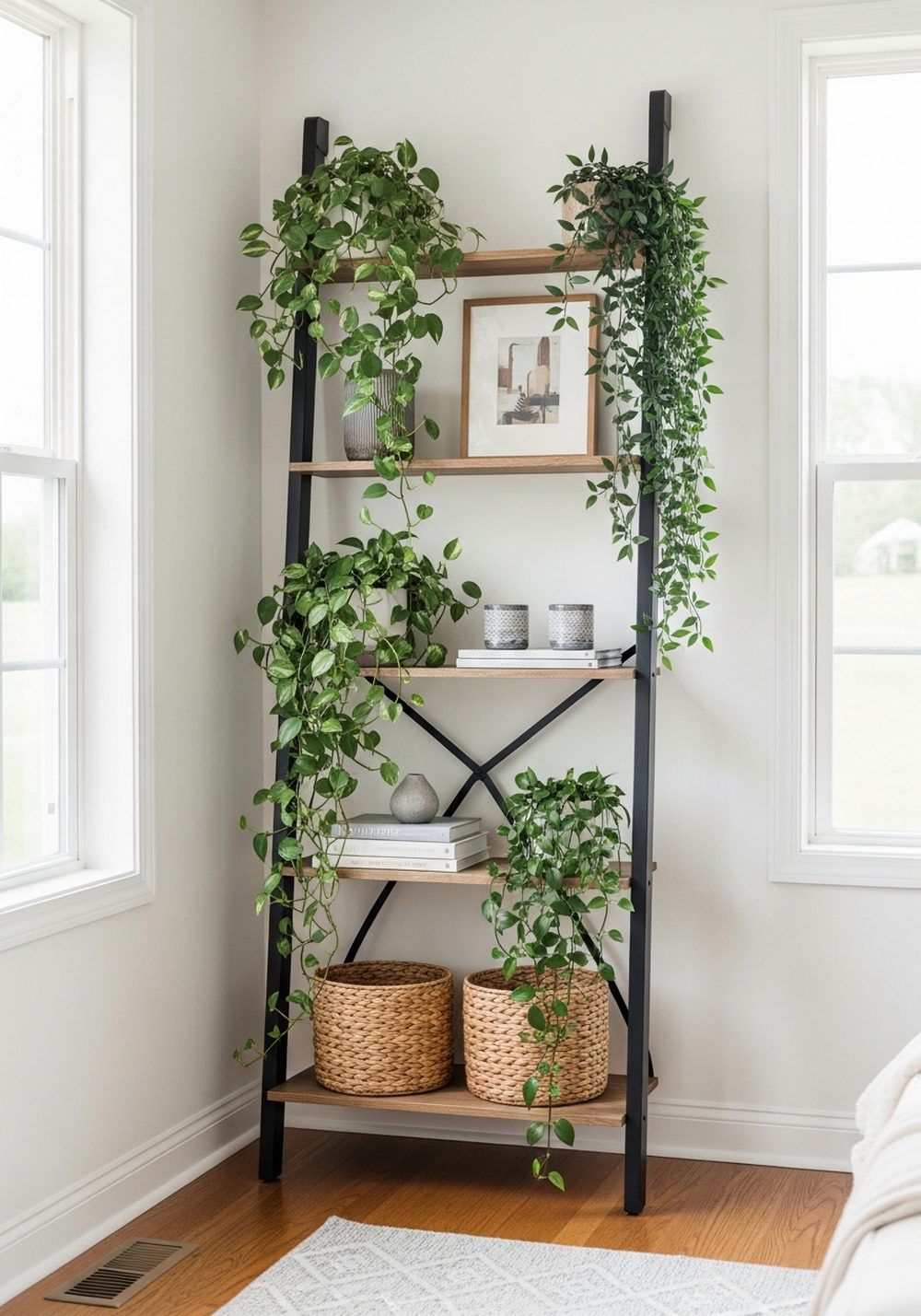
Using a ladder shelf as a plant wall gives you height, layering, and flexibility in one piece. Place climbing greenery on the upper shelves and trailing plants lower down so leaves can cascade naturally. The open design keeps everything airy, which helps if you want a greener room without a heavy visual feel. It is also renter friendly because you do not need to drill into the wall. Style the shelves with baskets or books, but keep empty space so plants stay central every day.
Best For: Renters, studio apartments, and easy-to-move decor setups.
Where To Place It: In living room corners, bedrooms, or beside a sunny wall.
Color Palette Tip: Use black metal, light oak, and deep green for contrast.
Materials / Items Needed: ladder shelf, climbing plants, trailing plants, baskets, books, ceramic pots
Budget Level: Medium — The shelf is the main cost, but it is highly versatile.
DIY Difficulty: Easy — No major installation makes this very approachable.
Style It Like This: Leave open shelf gaps; mix pot heights; use woven baskets sparingly.
Common Mistake To Avoid: Avoid stuffing every level and making the shelf feel heavy.
Sculptural Moss Pole Plant Stand
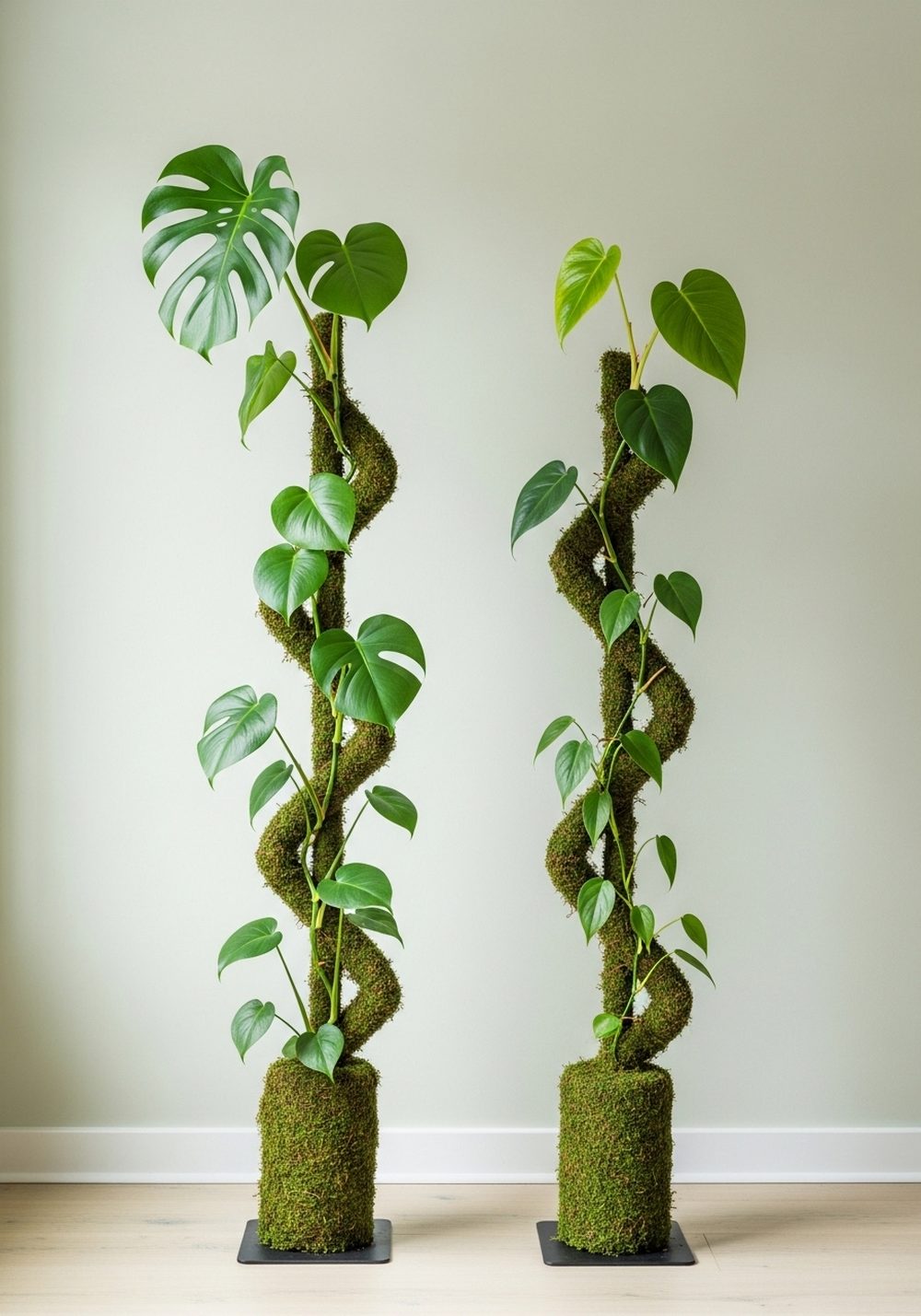
A narrow moss pole display makes even one or two plants look sculptural and intentional. Group climbing varieties like monstera adansonii or philodendron on matching stands, then train them upward for a cleaner, more vertical effect. This is a smart choice for minimalist homes because it highlights leaf shape and growth pattern without needing dozens of plants. Place the display against a pale wall so the greenery stands out. The finished look feels polished, modern, and surprisingly high impact for such a simple setup indoors.
Best For: Minimalist homes and clean, modern corners.
Where To Place It: Against a pale wall with bright indirect light.
Color Palette Tip: Stick with soft white, stone, sage, and black for a crisp finish.
Materials / Items Needed: moss poles, plant stands, monstera adansonii, philodendron, planters, ties
Budget Level: Low to Medium — A few strong pieces create a designer look.
DIY Difficulty: Easy — The styling is simple and the plant count stays small.
Style It Like This: Use matching pots; keep the wall bare; repeat vertical lines in nearby decor.
Common Mistake To Avoid: Do not mix too many plant types and lose the sculptural effect.
Vertical Row Wall Planters
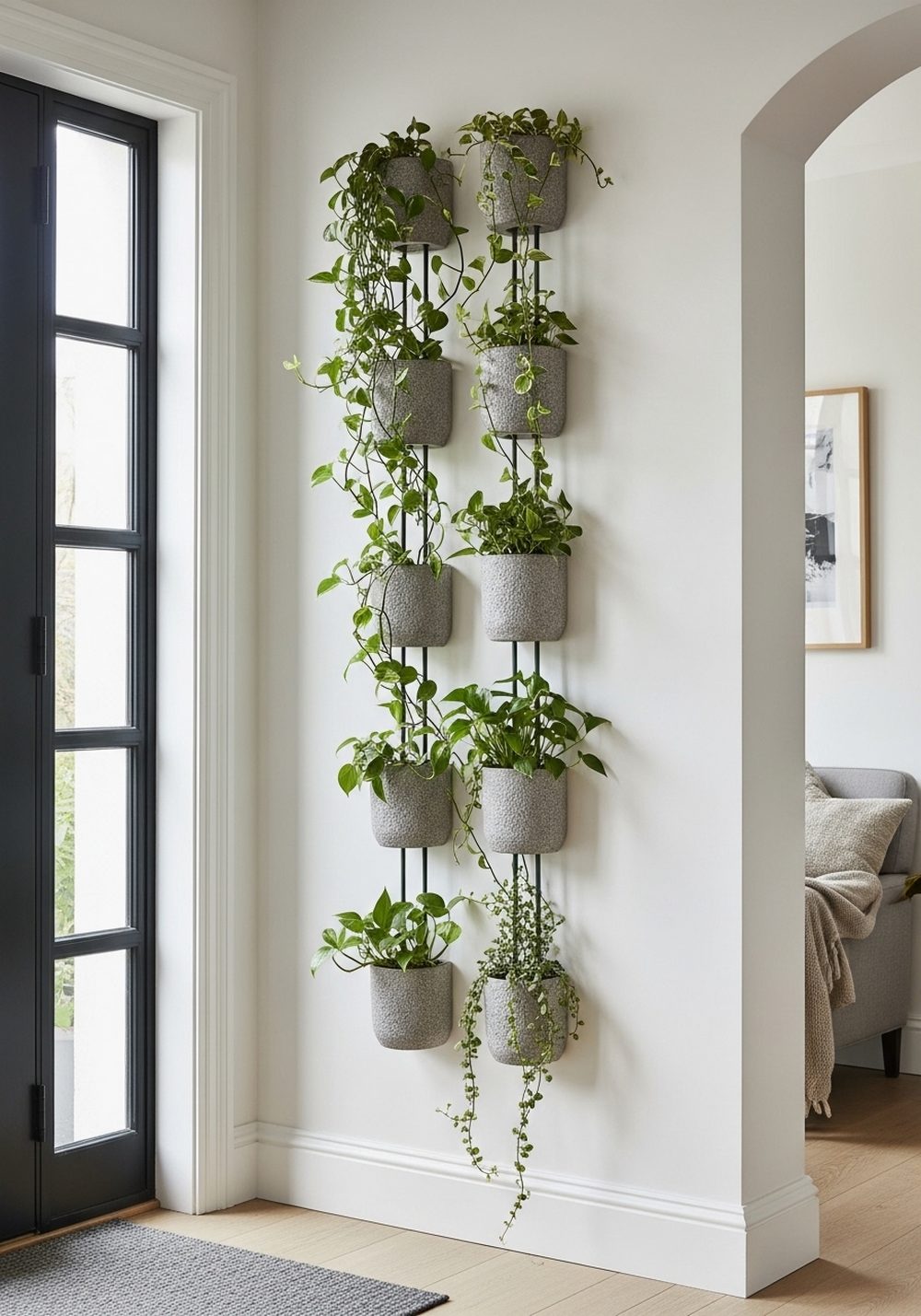
Mounting wall planters in a neat vertical row creates a structured plant wall that feels architectural. Use identical containers for a cleaner look, or mix textures if you want something more relaxed and organic. Choose climbers that can spill downward or be trained upward with thin supports, depending on the effect you want. This setup is great for entryways or dining spaces where you need a statement without taking up floor space. Keep the row aligned and the foliage trimmed, and it will look indoors.
Best For: Entryways, dining spaces, and narrow walls needing impact.
Where To Place It: On a wall that gets bright indirect light throughout the day.
Color Palette Tip: Use matte white, charcoal, terracotta, or sand-toned planters.
Materials / Items Needed: wall planters, anchors, climbing plants, thin supports, potting mix, clips
Budget Level: Medium — The repeated planters create a clean custom effect.
DIY Difficulty: Medium — Precise spacing is the key to getting it right.
Style It Like This: Keep planters aligned; repeat one finish; prune vines for a neater shape.
Common Mistake To Avoid: Avoid uneven spacing that makes the whole wall look accidental.
Greenery-Wrapped Indoor Arch
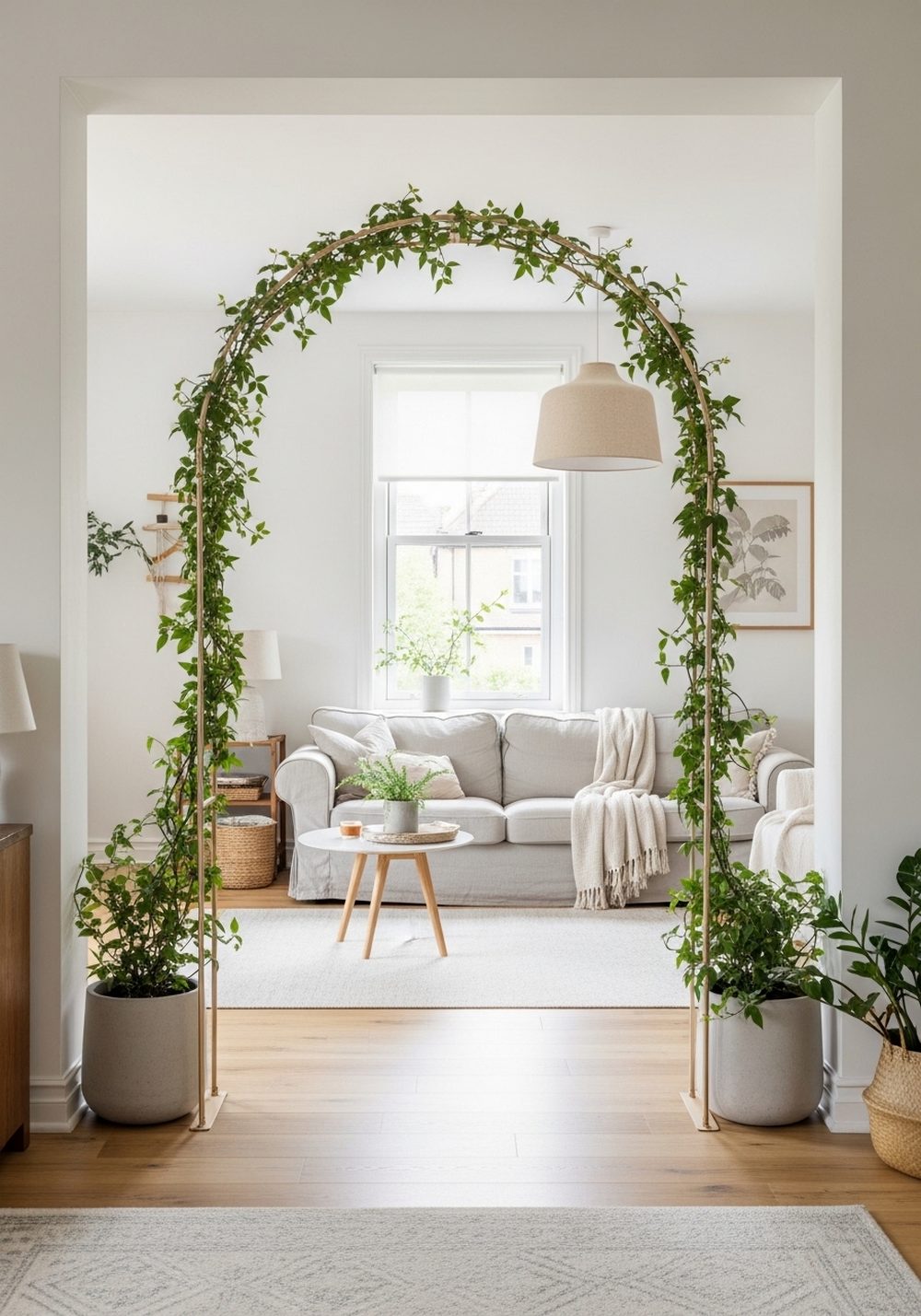
An indoor arch wrapped with climbing greenery turns a simple doorway or corner into a soft feature that feels almost garden inspired. Use a lightweight metal arch, place planters on either side, and guide the vines upward as they grow. Over time, the leaves create shape and movement that make the room feel more layered. This idea suits open-plan homes beautifully because it helps define areas without adding solid dividers. Pair it with textures like linen or wood to make the greenery feel effortless indoors.
Best For: Open-plan homes, lounge transitions, and decorative room zoning.
Where To Place It: Around a doorway, entry passage, or empty styled corner.
Color Palette Tip: Pair greenery with warm white, linen, honey wood, and muted clay.
Materials / Items Needed: lightweight arch, planters, climbing plants, ties, potting mix, support clips
Budget Level: Medium — The arch adds structure and makes the idea feel special.
DIY Difficulty: Medium — The setup is simple, but training the vines takes patience.
Style It Like This: Add linen curtains nearby; use matching pots; keep the arch shape visible.
Common Mistake To Avoid: Do not let vines cover the structure so much that the shape disappears.
Rail-and-Hook Plant Wall
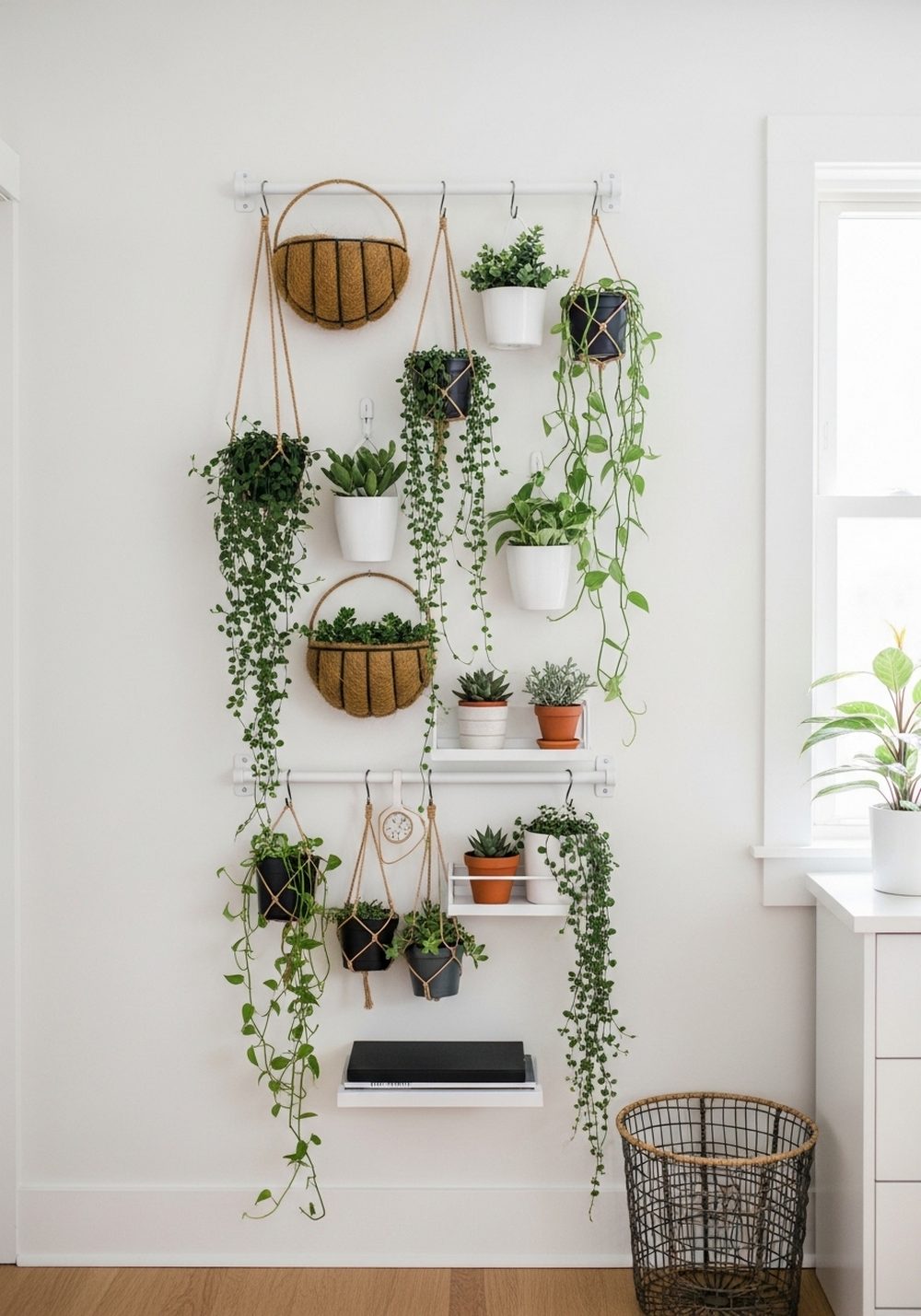
A rail-and-hook system is perfect if you want a plant wall that can evolve over time. Install a simple rail, then hang baskets, mini pots, or small shelves at different heights to build a layered green display. The result feels casual yet styled, especially when you mix trailing vines with a few compact upright plants. This idea works well in kitchens, studios, or home offices where flexibility matters. Because pieces can be moved around easily, it is one of the simplest ways to refresh greenery.
Best For: Kitchens, home offices, and flexible plant displays.
Where To Place It: On a practical wall where rearranging pieces will be easy.
Color Palette Tip: Black rails work beautifully with white walls and rich green leaves.
Materials / Items Needed: metal rail, hooks, baskets, mini shelves, pots, trailing vines, compact plants
Budget Level: Medium — The hardware lasts and allows easy restyling over time.
DIY Difficulty: Medium — Secure wall mounting matters for safety and balance.
Style It Like This: Vary the heights; mix round and rectangular pieces; keep the palette restrained.
Common Mistake To Avoid: Avoid hanging everything at the same height.
Mirror-Framed Climbing Greenery
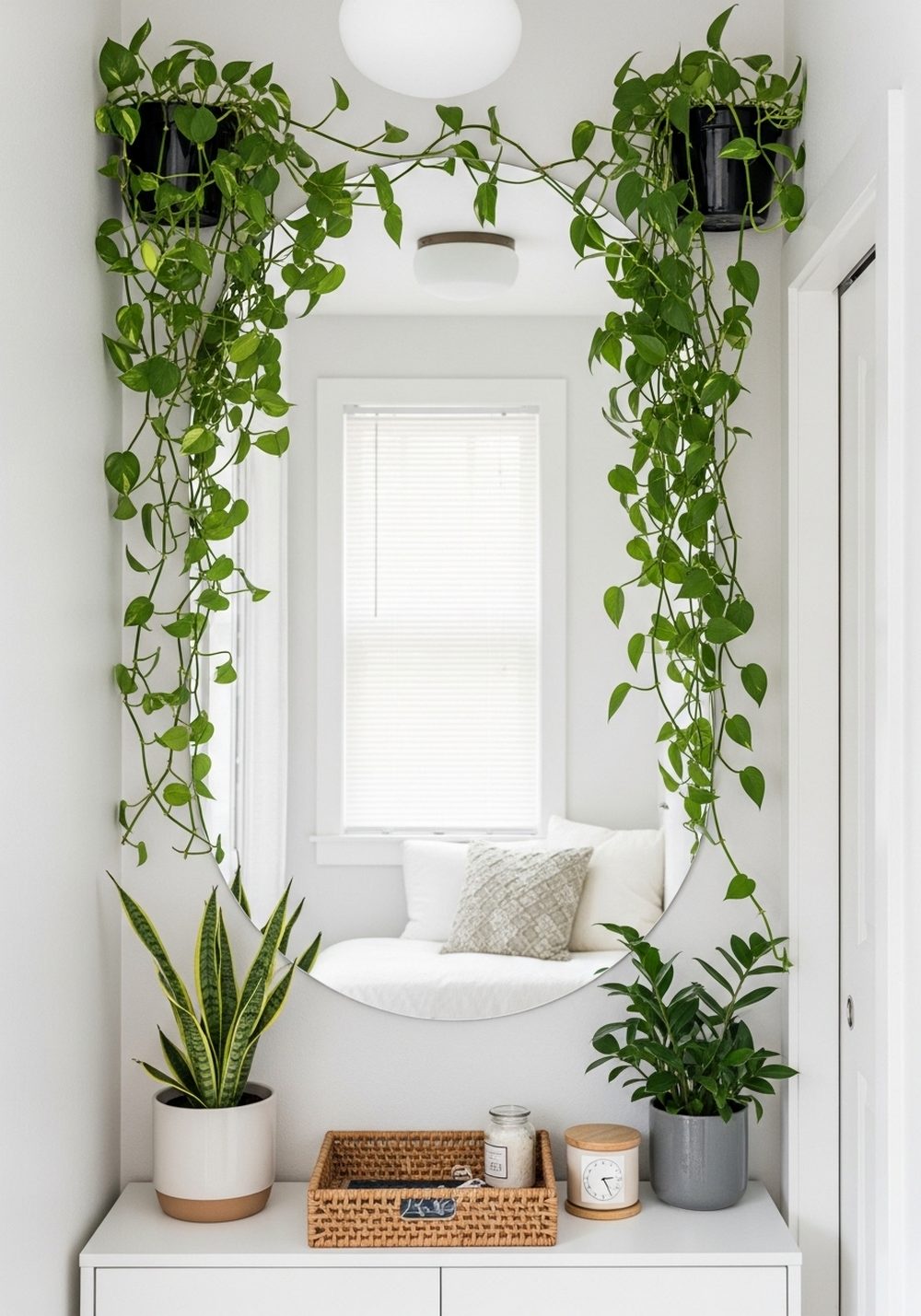
A mirror surrounded by climbing greenery helps bounce light around the room while doubling the impact of your plant wall. Start with a rounded or rectangular mirror, then place planters above, beside, or slightly below it so vines can frame the edges naturally. This setup makes rooms feel brighter and more open, especially if the plants reflect soft window light. It also adds a focal point without needing a lot of extra styling. Keep the mirror shape simple so the greenery remains eye-catching nearby daily.
Best For: Small rooms, entryways, and dim corners that need brightness.
Where To Place It: Across from a window or near gentle natural light.
Color Palette Tip: Use soft neutrals and clear glass to keep the look airy.
Materials / Items Needed: mirror, wall planters, climbing vines, anchors, clips, potting mix
Budget Level: Medium — The mirror adds function and a decorative upgrade.
DIY Difficulty: Medium — Proper wall placement and balance make the difference.
Style It Like This: Choose one mirror shape; keep frames slim; let vines softly outline the edges.
Common Mistake To Avoid: Do not use an ornate mirror that fights with the greenery.
Full Corner Climbing Wall
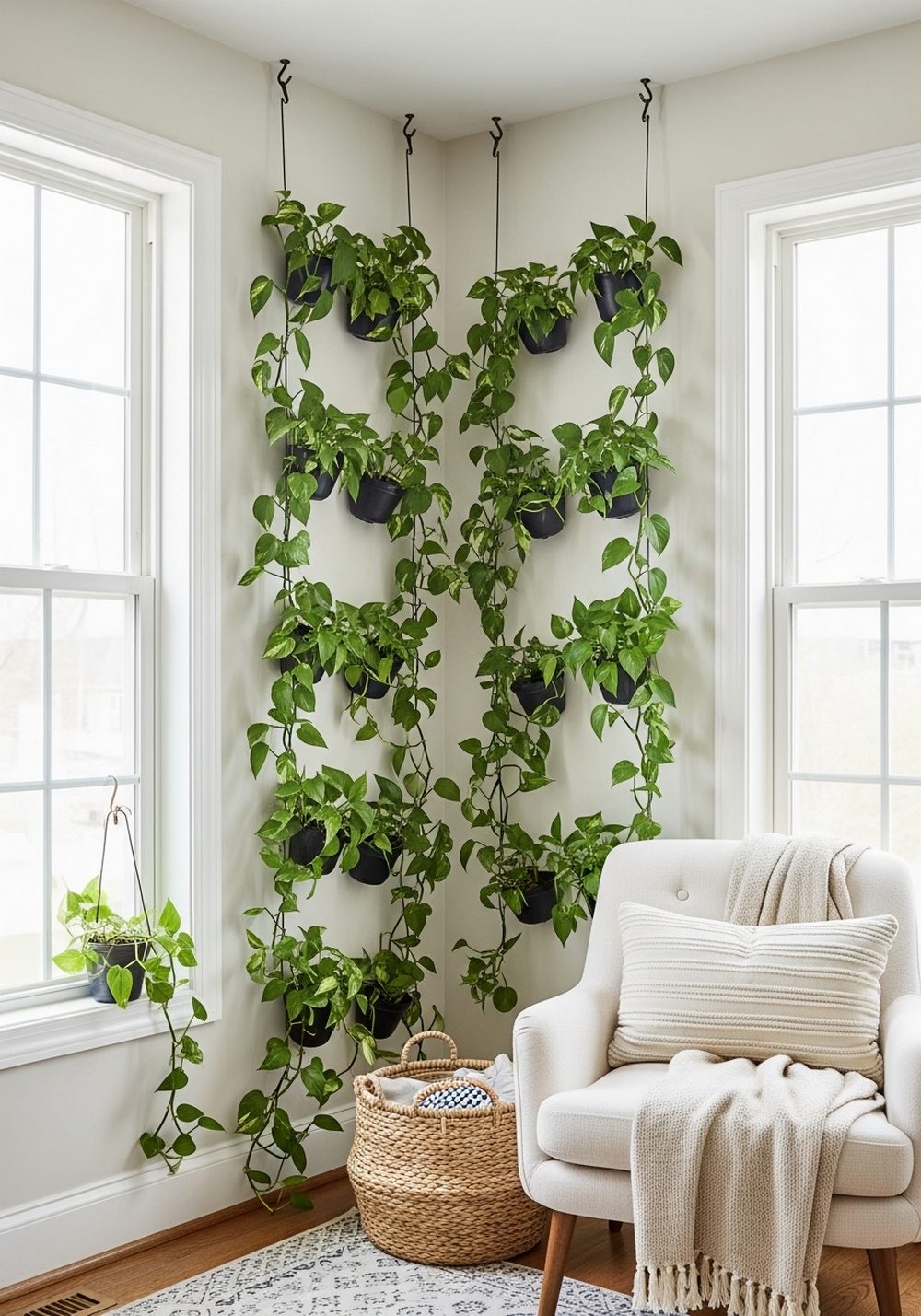
A corner climbing wall can make an underused area feel lush and intentionally designed. Add wall hooks, slim supports, or a corner trellis, then use a mix of pothos, ivy, or philodendron to build height and softness. Because the greenery follows two walls, it creates a wrapped effect that feels immersive without being overwhelming. This is a great solution for empty bedroom corners, office zones, or awkward living room layouts. Finish the area with a chair or bench, and the corner becomes a retreat comfortably.
Best For: Empty corners, office nooks, and underused bedroom spaces.
Where To Place It: In a bright corner with room for seating or a bench.
Color Palette Tip: Pair deep greens with soft taupe, cream, and natural wood.
Materials / Items Needed: corner trellis, hooks, supports, pothos, ivy, philodendron, chair or bench
Budget Level: Medium — It fills awkward space beautifully without major renovation.
DIY Difficulty: Medium — Planning the supports well makes the final result stronger.
Style It Like This: Add one cozy chair; layer soft textiles; keep surrounding decor simple.
Common Mistake To Avoid: Avoid mixing too many colors around the greenery wall.
Conclusion
Climbing greenery brings softness, height, and life into a home in a way that feels both decorative and calming. Whether you choose a simple shelf display or build a full corner wall, the best setup is one that suits your light, layout, and routine. Start with one easy idea, let your plants grow into the space, and style around them gradually. The result will feel layered, personal, and inviting without needing a complete room makeover.
FAQs
Q1: Which climbing plants work best for indoor plant walls?
A: Pothos, heartleaf philodendron, ivy, and monstera adansonii are great starting points.
They grow well indoors, look lush quickly, and are usually easier to train than fussier varieties.
Q2: Do indoor plant walls need direct sunlight?
A: Most climbing houseplants prefer bright indirect light instead of harsh direct sun.
A spot near a window with filtered daylight usually works better for healthy, steady growth.
Q3: How do I keep a plant wall from looking messy?
A: Limit the number of plant varieties and repeat similar pots or finishes.
Pruning vines regularly and leaving some empty space makes the whole display feel intentional.
Q4: Are indoor plant walls renter friendly?
A: Yes, many options are renter friendly, especially ladder shelves, moss poles, and removable supports.
You can still create height and greenery without drilling into every wall.
Q5: How often should I water climbing greenery indoors?
A: Watering depends on the plant type, light, pot size, and season.
Check the soil first, and avoid overwatering just because the wall looks full of foliage.