
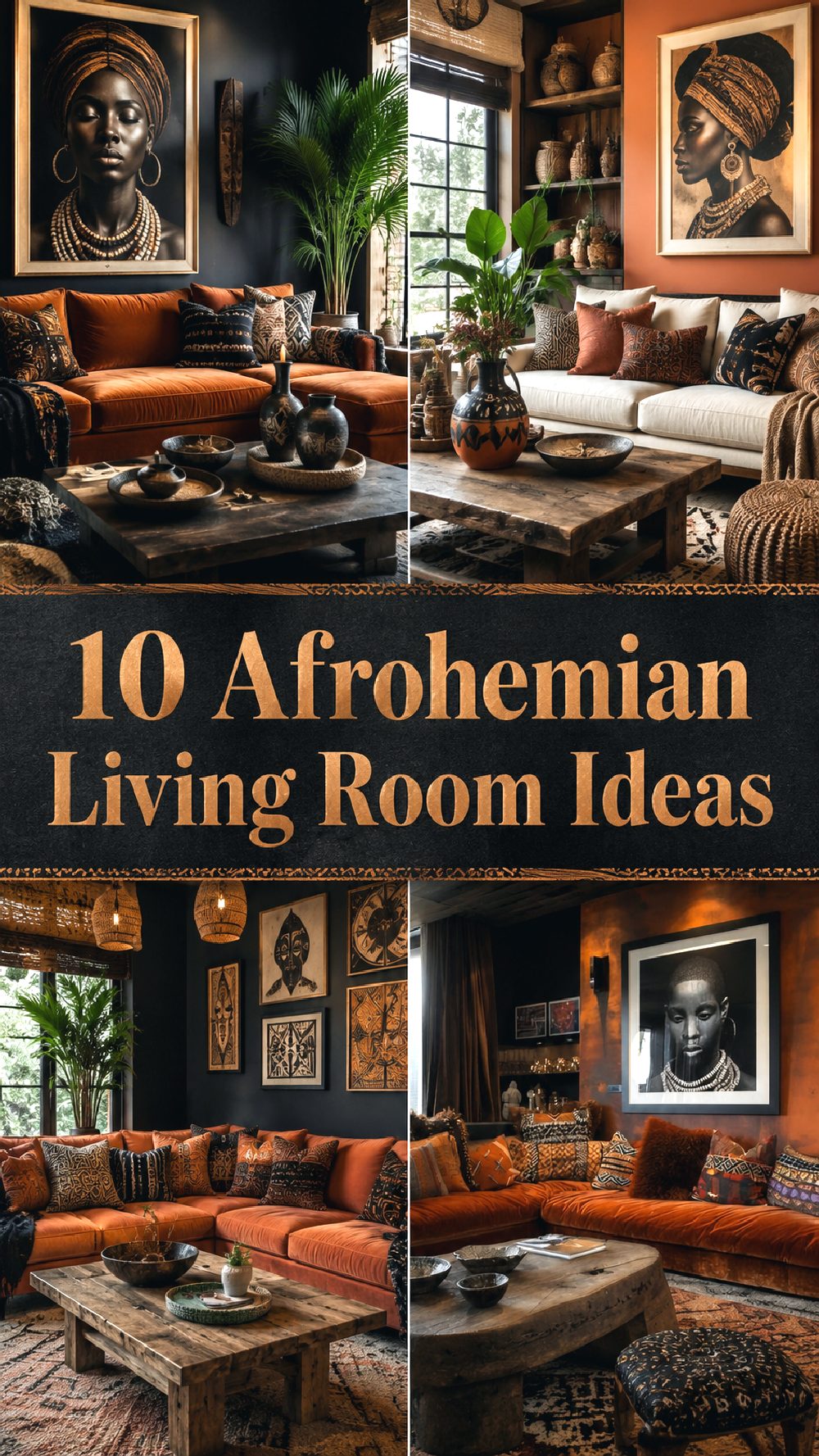

Afrohemian living rooms blend soulful texture, global character, and relaxed boho comfort in a way that feels deeply personal. This style celebrates handmade details, earthy color palettes, natural materials, and meaningful decor that tells a story without making the space feel overly styled. Think woven baskets, carved wood, rich textiles, vintage finds, and layered patterns that create warmth from every angle. The beauty of Afrohemian design is that it feels both expressive and grounded, mixing culture, creativity, and comfort in one inviting room. Whether you want a dramatic statement space or a softer everyday retreat, the right details can completely transform your setup. These Afrohemian living room ideas are designed to help you build a space that feels curated, cozy, and full of personality. Each one is practical, stylish, and easy to adapt to your own home and lifestyle with ease.
Quick List:
- Layer Earthy Textiles With Bold Tribal Patterns
- Style a Statement Wall With Woven Baskets
- Bring In Warm Wood and Handcrafted Furniture
- Mix Clay, Rattan, and Black Accents
- Create a Cozy Floor Seating Corner
- Use Oversized Plants for a Lush Afrohemian Feel
- Decorate With Collected Art and Cultural Pieces
- Add a Neutral Sofa With Rich Patterned Pillows
- Ground the Room With a Textured Natural Fiber Rug
- Light the Space With Soft Ambient Lantern Glow
Layer Earthy Textiles With Bold Tribal Patterns
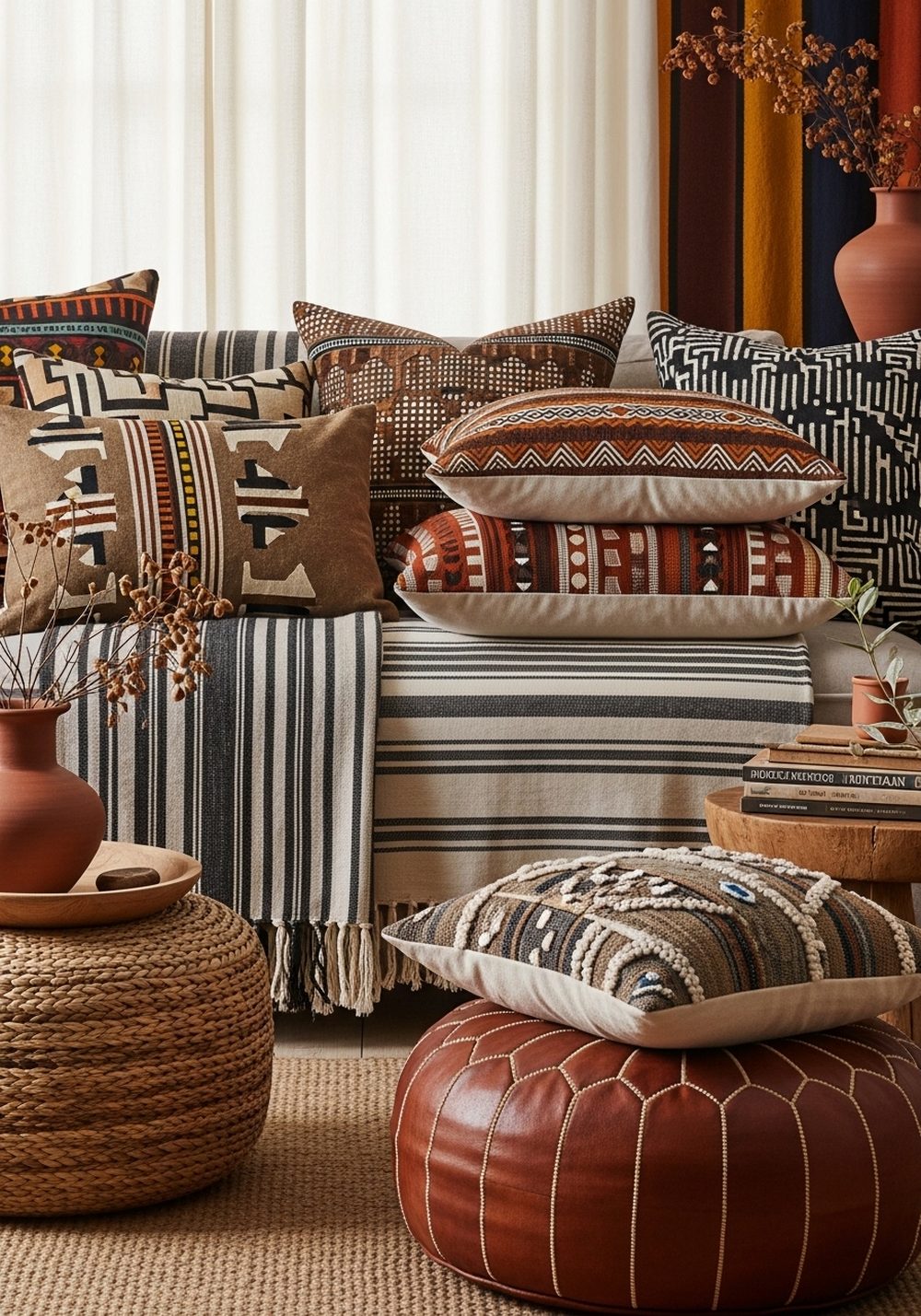
Start your Afrohemian living room with layered textiles that instantly add warmth and depth. Combine mud cloth prints, striped throws, textured cushions, and patterned ottomans in earthy tones like rust, sand, terracotta, and black. The goal is to make the room feel rich and lived in without looking chaotic. Use different scales of pattern so everything feels balanced rather than busy. This idea works especially well when your larger furniture pieces stay simple, allowing the fabrics to become the artistic focal point in a cozy, welcoming setting.
Best For: Homes that need warmth, personality, and easy visual impact.
Where To Place It: Sofa corners, accent chairs, benches, and ottomans.
Color Palette Tip: Mix warm neutrals with deep black and clay-red accents.
Materials / Items Needed: mud cloth pillows, woven throws, patterned poufs, linen cushions, textured blankets
Budget Level: Medium — A few standout textiles can transform the whole room.
DIY Difficulty: Easy — Layering fabric pieces is simple and flexible.
Style It Like This: Start with neutral seating; add three mixed-pattern pillows; finish with a draped throw.
Common Mistake To Avoid: Using too many equally bold prints without a calm base.
Style a Statement Wall With Woven Baskets
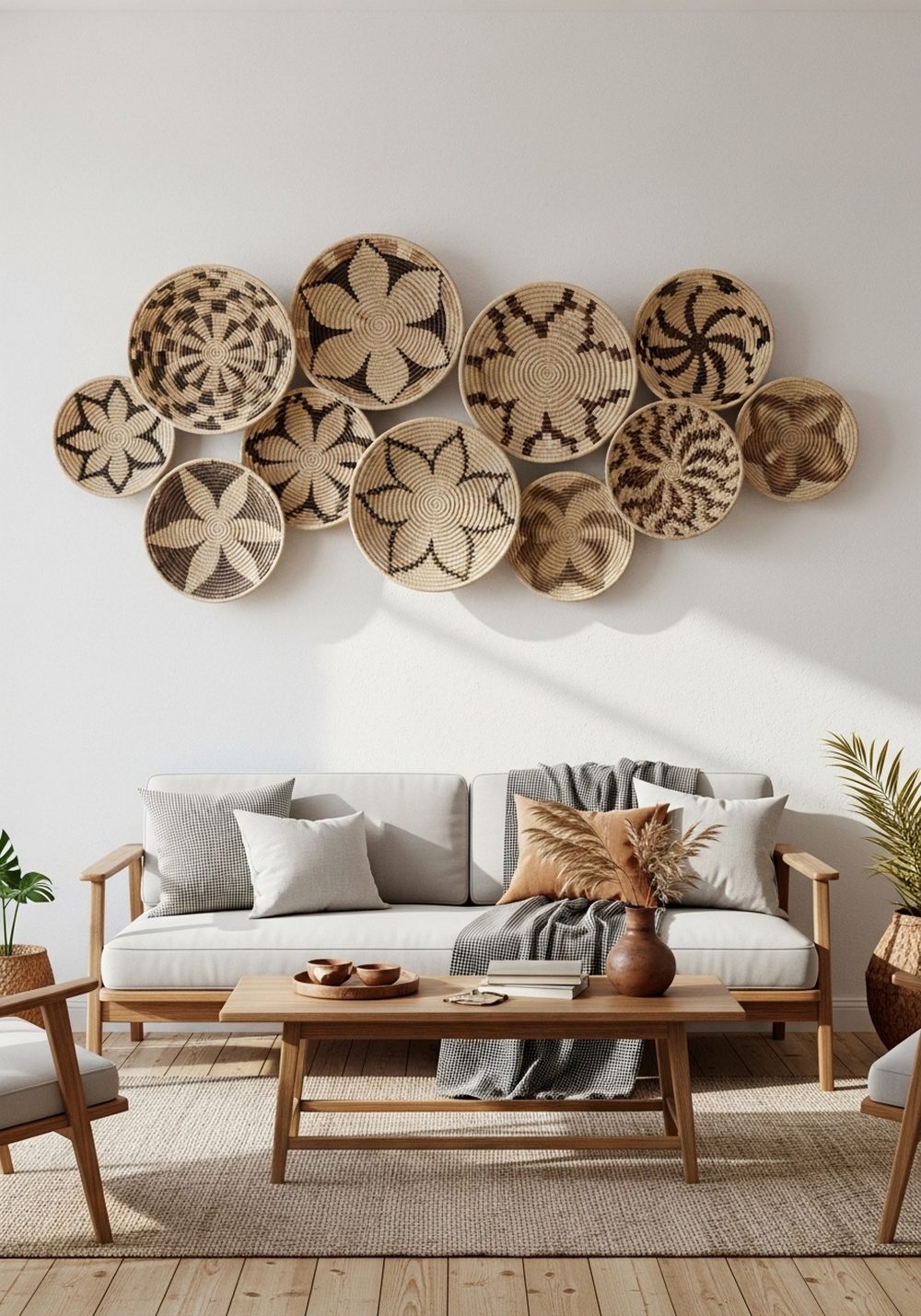
A woven basket wall is one of the easiest ways to bring Afrohemian charm into a living room. It adds texture, movement, and handmade character while filling blank wall space beautifully. Choose baskets in different sizes, patterns, and natural tones for a collected look that feels authentic rather than staged. Arrange them loosely instead of forcing a perfect grid. This relaxed styling makes the display feel more organic and artistic. Pair the wall with simple furniture below so the woven details stay visually prominent and naturally draw attention.
Best For: Empty walls that need texture without heavy artwork.
Where To Place It: Above the sofa, console table, or fireplace.
Color Palette Tip: Stick to tan, brown, black, and muted ivory tones.
Materials / Items Needed: woven baskets, wall hooks, nails, measuring tape, paper templates
Budget Level: Low to Medium — Thrifted and handmade baskets keep costs reasonable.
DIY Difficulty: Easy — Planning the layout is the main step.
Style It Like This: Mix shallow and deep baskets; keep spacing uneven; anchor with a low wooden piece.
Common Mistake To Avoid: Hanging baskets in a stiff pattern that feels too formal.
Bring In Warm Wood and Handcrafted Furniture
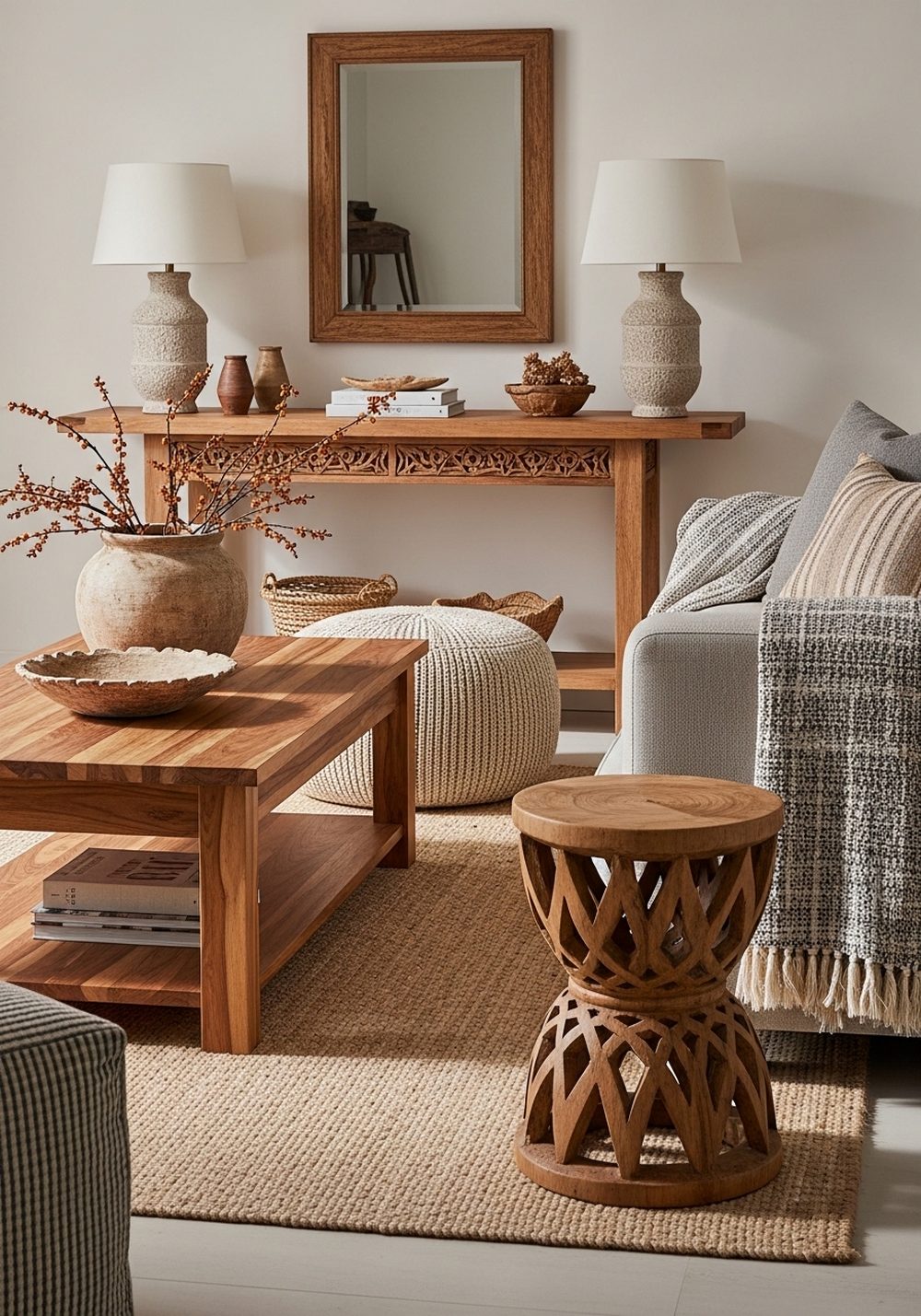
Furniture plays a huge role in making an Afrohemian living room feel grounded and soulful. Choose warm wood tones, hand-carved details, and pieces that look slightly imperfect in the best way. A coffee table with visible grain, a sculptural stool, or a handcrafted sideboard can instantly add authenticity. These elements keep the room feeling connected to nature and craftsmanship. Balance them with softer textiles and lighter walls so the wood never feels heavy. Even one or two artisan-inspired furniture pieces can completely shift the mood of your room.
Best For: Spaces that feel flat, cold, or overly modern.
Where To Place It: Coffee table area, side tables, media console, or storage wall.
Color Palette Tip: Pair honey, walnut, or espresso woods with soft beige and clay tones.
Materials / Items Needed: wooden coffee table, carved stool, handmade console, natural finish decor, woven storage
Budget Level: High — Quality wood furniture usually becomes a long-term investment piece.
DIY Difficulty: Medium — Sourcing the right pieces takes a little patience.
Style It Like This: Choose one hero wood piece; add woven accents; soften with linen or cotton textures.
Common Mistake To Avoid: Mixing too many different wood tones with no visual connection.
Mix Clay, Rattan, and Black Accents
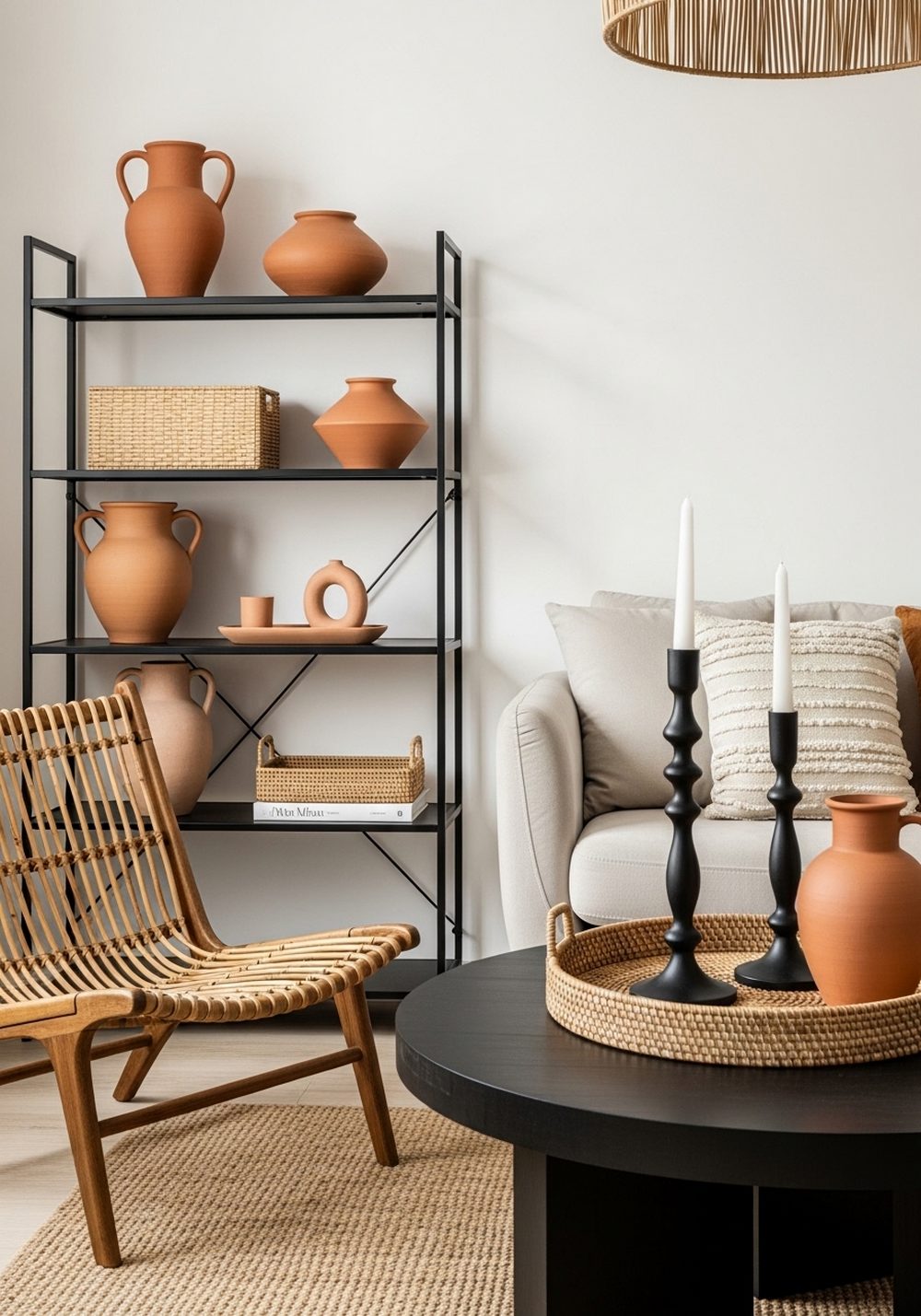
Afrohemian style looks especially beautiful when soft earthy materials meet bold contrast. Use clay-toned decor, rattan furniture, and small black accents to create a room that feels both warm and defined. Terracotta vases, woven chairs, black candleholders, and dark picture frames work together to keep the palette interesting. The natural materials make the room feel relaxed, while black details sharpen the overall look. This combination helps prevent an all-neutral space from feeling washed out. It is a simple styling formula that feels curated, modern, and deeply inviting.
Best For: Neutral rooms that need more shape and visual structure.
Where To Place It: Shelves, side tables, seating corners, and coffee table styling.
Color Palette Tip: Use clay, camel, sand, and matte black for balanced contrast.
Materials / Items Needed: terracotta vases, rattan chair, black frames, candleholders, woven trays
Budget Level: Medium — Smaller accessories can create a big style shift.
DIY Difficulty: Easy — Most of this look comes from thoughtful mixing.
Style It Like This: Repeat black accents three times; add rattan texture; finish with clay decor.
Common Mistake To Avoid: Overusing black so the room loses its softness.
Create a Cozy Floor Seating Corner
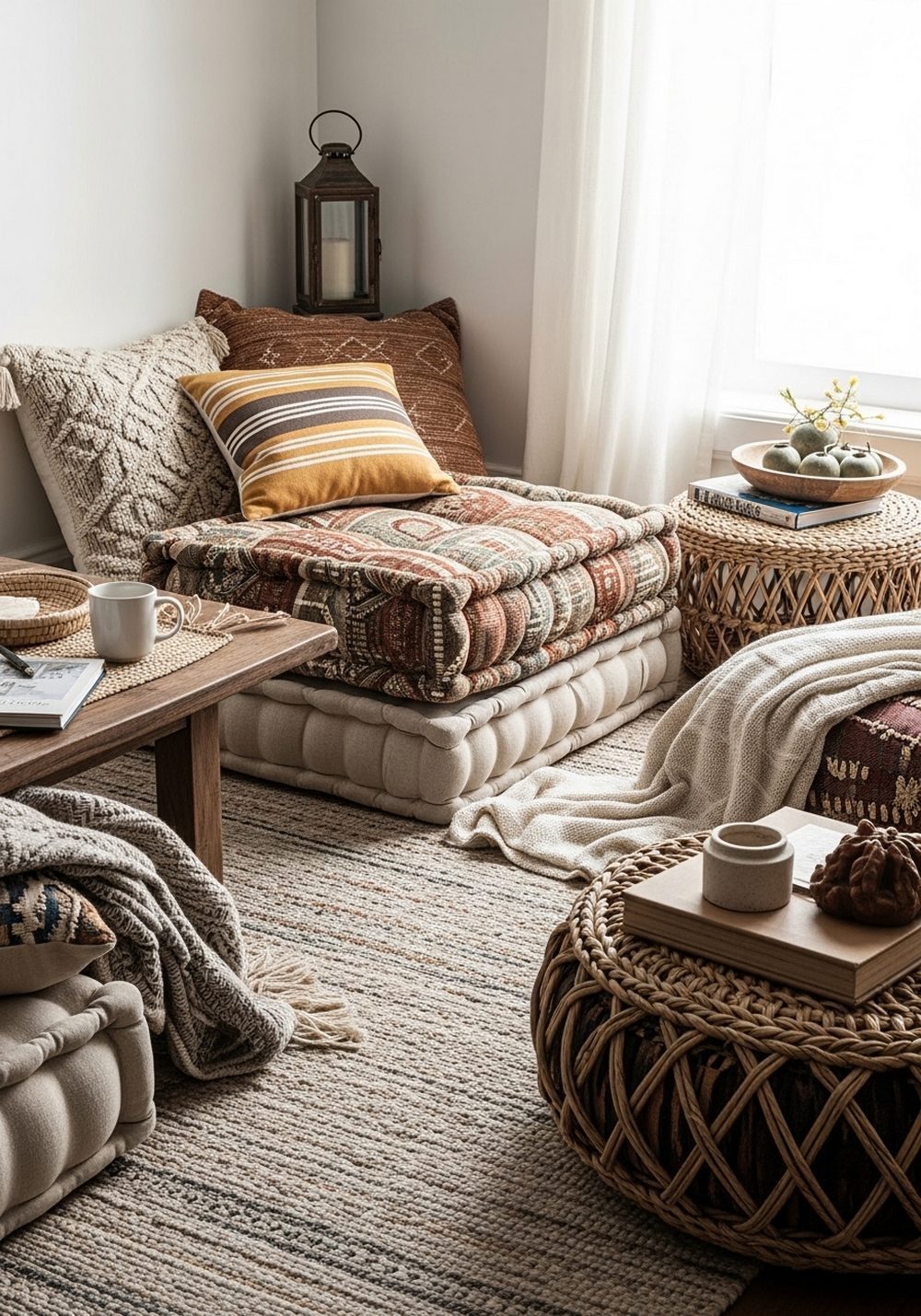
A floor seating corner brings a laid-back, intimate quality that fits Afrohemian design perfectly. Use layered floor cushions, a low table, soft throws, and a textured rug to create a space that feels welcoming and relaxed. This setup is ideal for reading, tea, casual conversations, or simply adding another styled area to the room. Choose cushions with earthy colors and subtle global-inspired patterns to tie everything together. Keep the arrangement soft and slightly informal so it feels comfortable instead of overly decorative. The result is warm, grounded, and effortlessly inviting.
Best For: Relaxed homes, small gatherings, and underused room corners.
Where To Place It: Near a window, beside a bookshelf, or in an open corner.
Color Palette Tip: Try rust, oat, cocoa, and muted olive tones.
Materials / Items Needed: floor cushions, low table, throw blankets, rug, lantern, pouf
Budget Level: Low to Medium — Soft furnishings make this look accessible.
DIY Difficulty: Easy — It is mostly about arranging cozy layers.
Style It Like This: Start with a rug; add two cushions and one pouf; include a lantern nearby.
Common Mistake To Avoid: Making the corner too crowded to sit in comfortably.
Use Oversized Plants for a Lush Afrohemian Feel
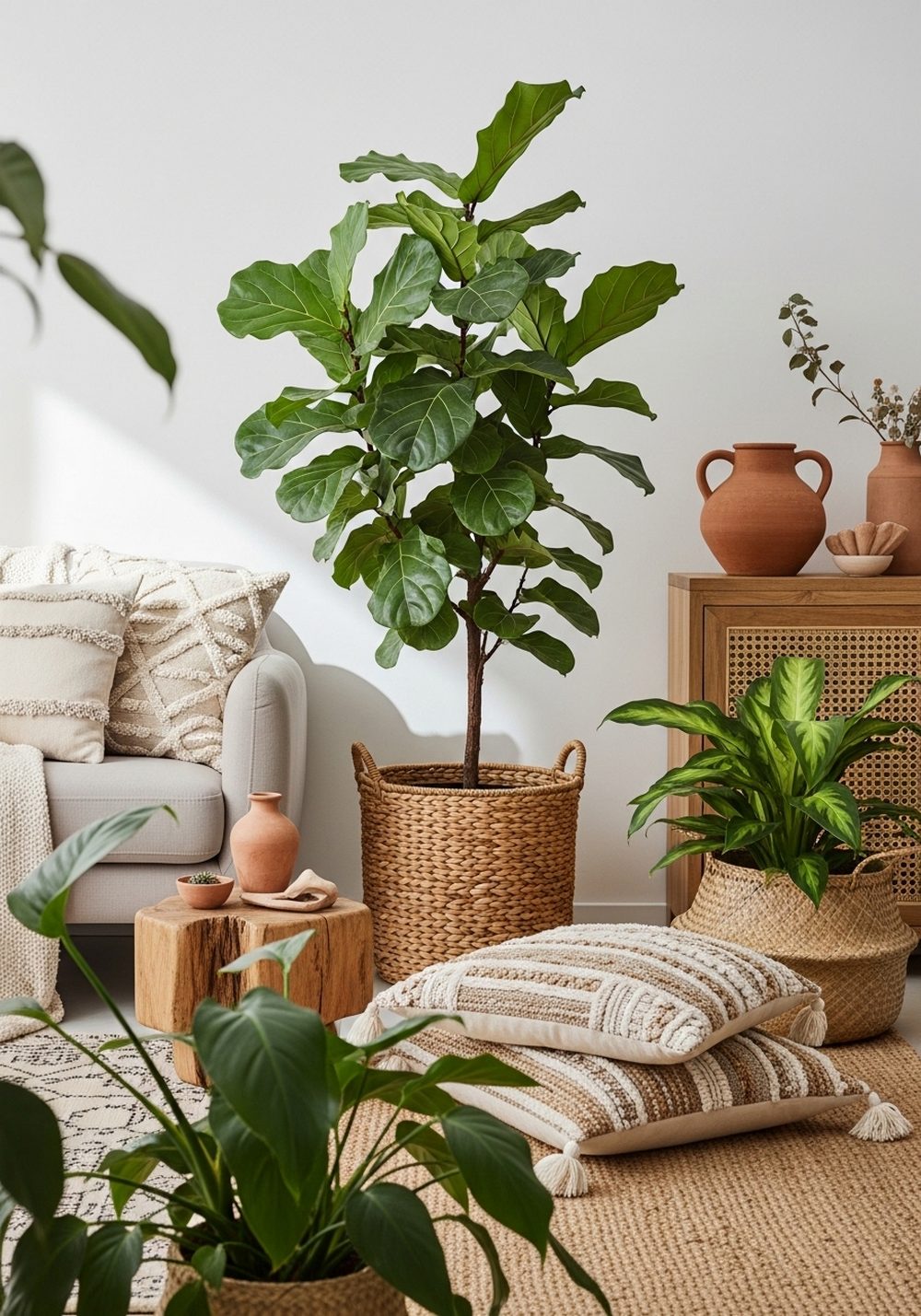
Large indoor plants instantly bring life, softness, and movement into an Afrohemian living room. They complement natural textures beautifully and help the room feel relaxed and organic. Choose statement plants with sculptural leaves, then place them in woven baskets, clay pots, or simple textured planters. The greenery breaks up wood, fabric, and patterned decor while adding freshness to the overall look. Even one oversized plant can make the space feel more layered and complete. For the best effect, place plants where they soften hard corners or frame your main seating area naturally.
Best For: Living rooms that need energy, height, and freshness.
Where To Place It: Empty corners, beside the sofa, or near natural light.
Color Palette Tip: Let green be the fresh contrast against warm earthy shades.
Materials / Items Needed: large indoor plant, basket planter, clay pot, plant stand, watering tray
Budget Level: Medium — One large plant can make a strong visual impact.
DIY Difficulty: Easy — Just choose the right plant for your light.
Style It Like This: Use one tall plant; pair with a woven planter; add a smaller plant nearby.
Common Mistake To Avoid: Choosing plants that do not suit your room’s light conditions.
Decorate With Collected Art and Cultural Pieces
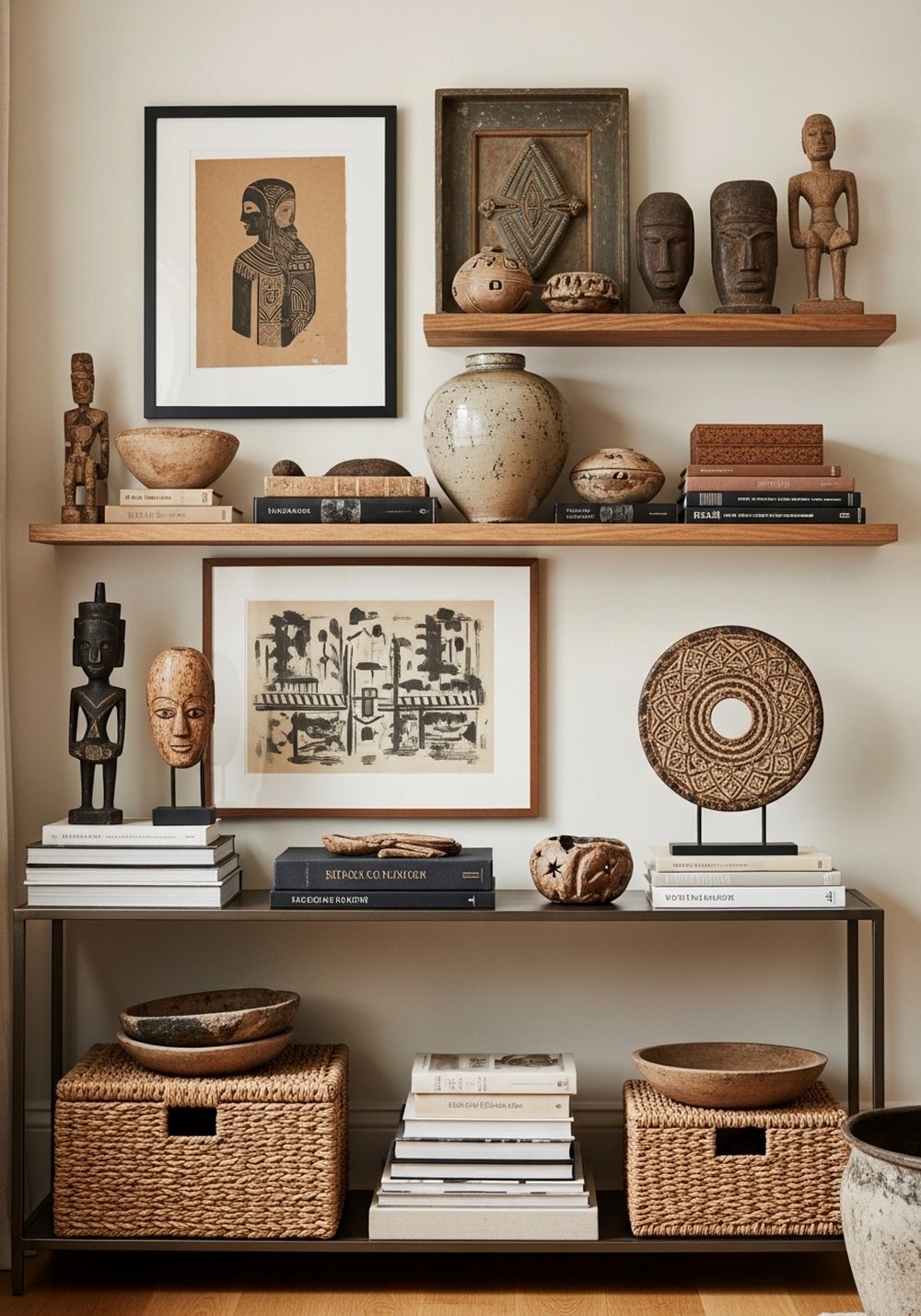
Afrohemian rooms feel most meaningful when the decor reflects story and identity. Instead of filling shelves with generic accessories, display collected art, handmade ceramics, carved objects, or framed cultural pieces that feel personal and intentional. The beauty comes from mixing items that have soul, texture, and visual history. Keep the arrangement edited so every piece has room to stand out. When styled thoughtfully, these details make the space feel layered and memorable without feeling cluttered. This idea turns your living room into something expressive, grounded, and far more interesting than trend-driven decor.
Best For: People who want a personal, collected, storytelling space.
Where To Place It: Shelves, mantels, consoles, gallery walls, and side tables.
Color Palette Tip: Keep the backdrop neutral so the pieces stand out naturally.
Materials / Items Needed: framed art, ceramics, carved decor, books, display stands, small sculptures
Budget Level: Medium — Collected pieces can be built over time.
DIY Difficulty: Medium — Styling with restraint is the real skill here.
Style It Like This: Group in threes; vary height; leave negative space between special items.
Common Mistake To Avoid: Filling every surface and losing the impact of each piece.
Add a Neutral Sofa With Rich Patterned Pillows
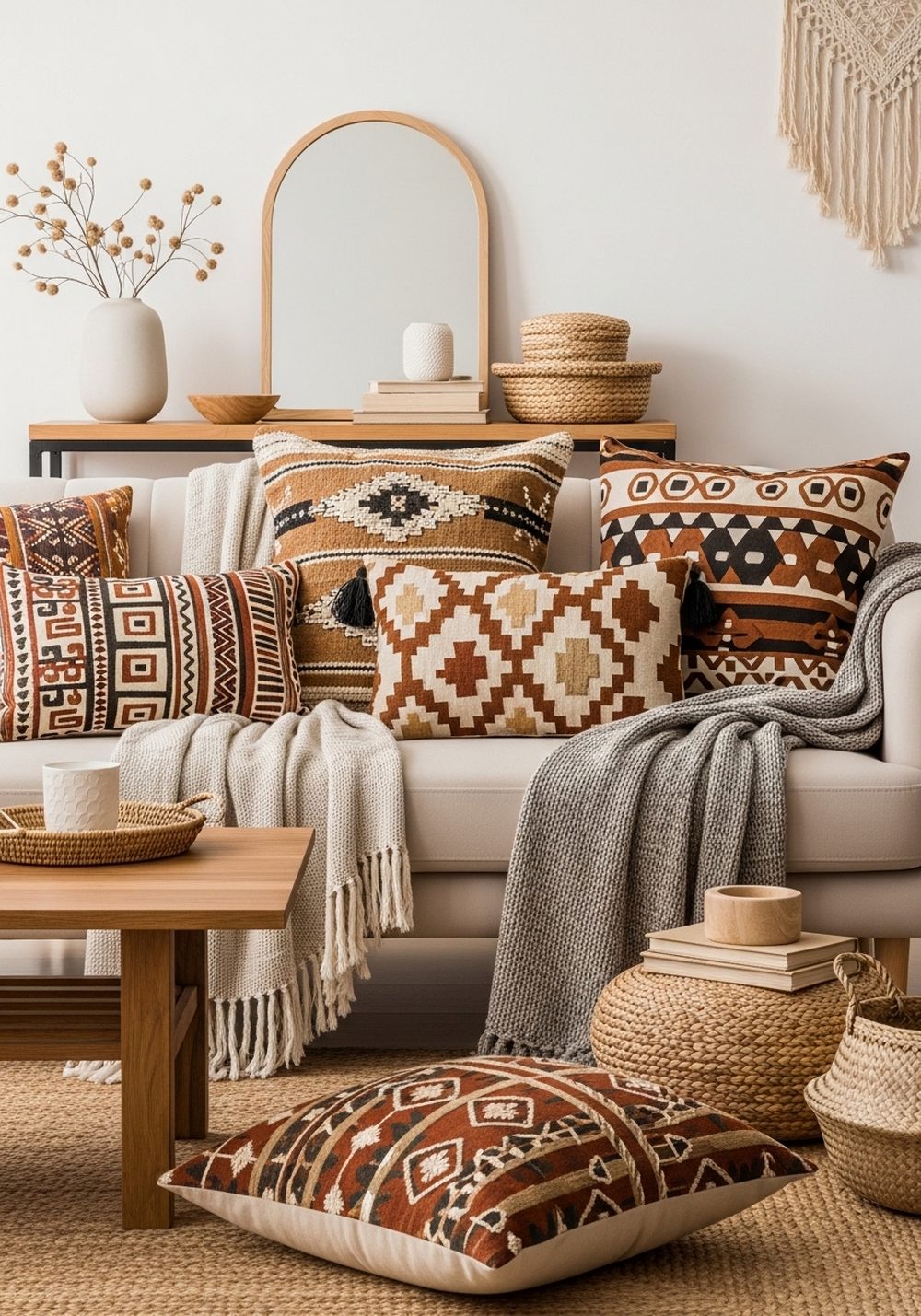
A neutral sofa gives Afrohemian style the perfect base because it lets layered accents shine without overwhelming the room. Choose beige, cream, taupe, or warm gray upholstery, then build character with richly patterned pillows in mud cloth, geometric, or woven designs. This creates a beautiful balance between calm and expressive. The sofa keeps the room grounded, while the pillows bring in culture, texture, and warmth. It is also one of the easiest ways to refresh your living room seasonally. You can swap covers anytime while keeping the main furniture timeless.
Best For: Anyone wanting a flexible base for layered styling.
Where To Place It: Main seating area as the room’s central anchor.
Color Palette Tip: Keep the sofa light and bring depth through darker accent textiles.
Materials / Items Needed: neutral sofa, patterned pillow covers, textured inserts, throw blanket, accent lumbar pillows
Budget Level: Medium to High — The sofa is the investment, pillows are the easy update.
DIY Difficulty: Easy — Pillows are simple to mix and refresh.
Style It Like This: Use odd-numbered pillows; mix one bold print with softer textures; add one throw.
Common Mistake To Avoid: Choosing pillows that all match too perfectly and look flat.
Ground the Room With a Textured Natural Fiber Rug
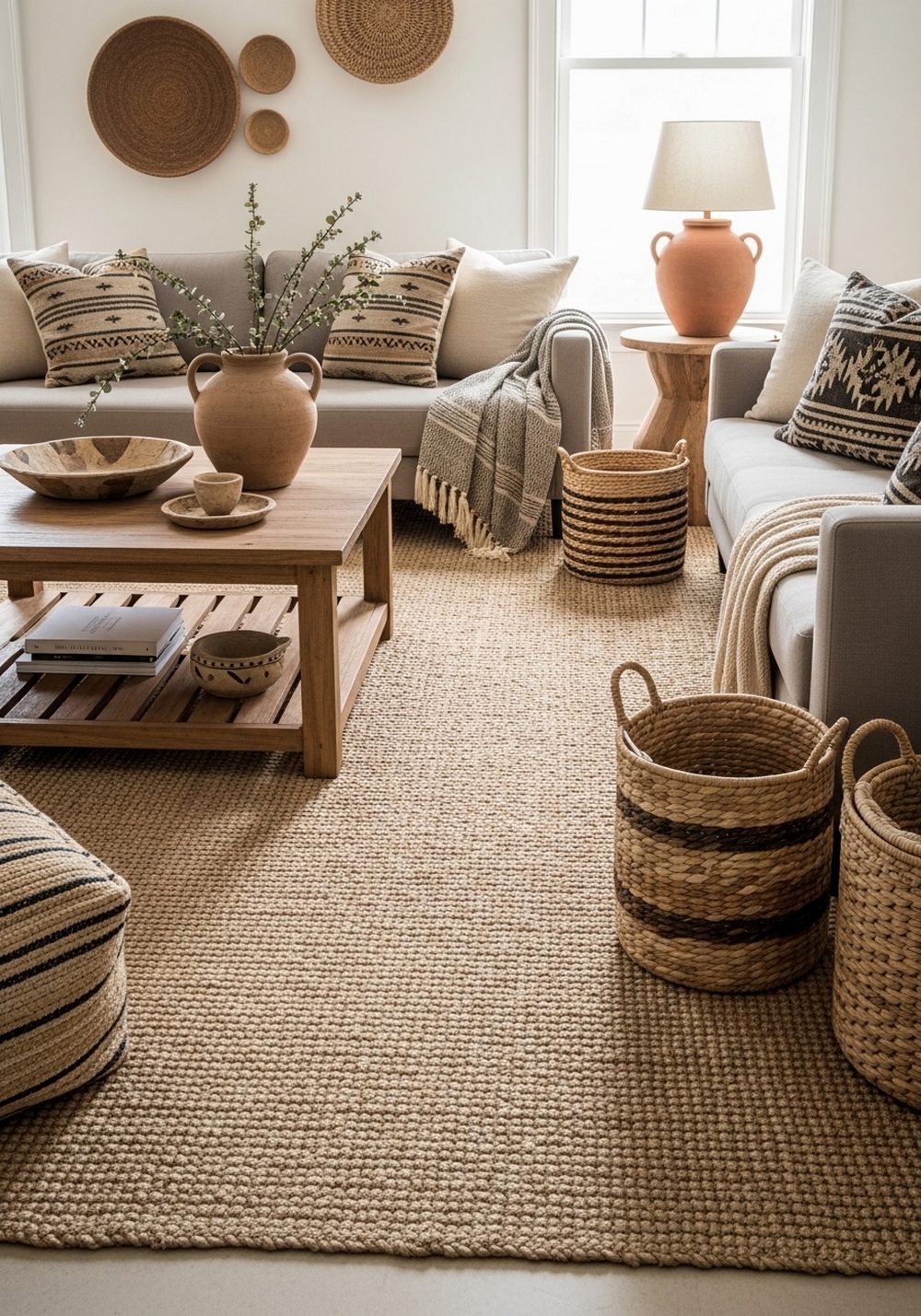
A natural fiber rug helps anchor an Afrohemian living room while adding essential texture underfoot. Jute, sisal, or a woven wool-blend rug brings an earthy foundation that supports bolder layers above it. This is especially helpful if your room already includes patterned pillows, baskets, and wall decor. The rug visually calms the space while still adding warmth and character. Choose a size large enough to connect the main furniture pieces so the room feels cohesive. A textured rug makes everything look more intentional, finished, and comfortably lived in from the start.
Best For: Rooms that need grounding and better visual flow.
Where To Place It: Under the main seating arrangement and coffee table.
Color Palette Tip: Choose sandy, flax, oat, or warm brown tones.
Materials / Items Needed: jute rug, sisal rug, rug pad, woven wool rug, vacuum-friendly underlay
Budget Level: Medium — A good rug makes the whole room feel more complete.
DIY Difficulty: Easy — The main challenge is selecting the right size.
Style It Like This: Go larger than expected; tuck front legs on; layer a smaller patterned rug if needed.
Common Mistake To Avoid: Picking a rug that is too small for the seating area.
Light the Space With Soft Ambient Lantern Glow
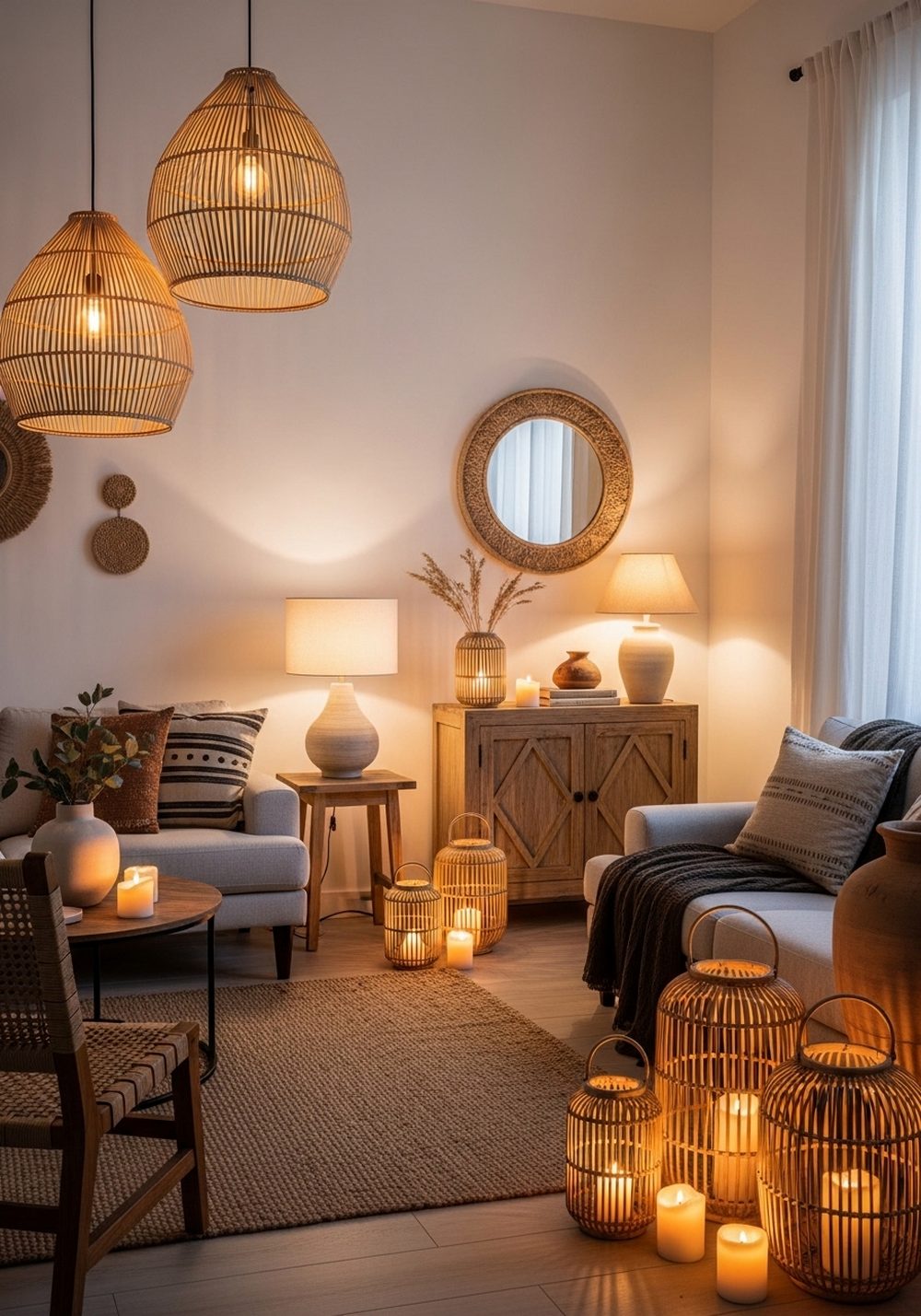
Lighting can completely change the mood of an Afrohemian living room, especially when it feels warm and atmospheric. Skip harsh overhead brightness and bring in lanterns, woven pendants, table lamps, and candlelight-inspired accents instead. These softer light sources highlight texture beautifully and make the room feel intimate in the evening. Look for natural materials, perforated finishes, or sculptural shapes that double as decor during the day. Layering different light sources creates a cozy, soulful glow that feels inviting and relaxed. It is one of the simplest ways to make the whole room feel special.
Best For: Spaces that feel flat, bright, or missing evening coziness.
Where To Place It: Side tables, corners, ceiling focal points, and shelves.
Color Palette Tip: Warm bulbs pair best with earthy materials and deep accents.
Materials / Items Needed: lanterns, table lamps, woven pendant, LED candles, warm light bulbs
Budget Level: Low to Medium — Lighting upgrades can be affordable but impactful.
DIY Difficulty: Easy — Most changes come from swapping and layering fixtures.
Style It Like This: Use one pendant, one lamp, and one lantern for balanced glow.
Common Mistake To Avoid: Relying only on a single overhead light source.
Conclusion
Afrohemian living room style is all about warmth, texture, story, and comfort layered together in a natural way. The best spaces do not feel overly perfect. They feel personal, soulful, and easy to live in every day. Start with one idea that speaks to you most, then build slowly through textiles, lighting, art, and earthy materials. That approach creates a room with depth, beauty, and a collected character that always feels welcoming.
FAQs
Q1: What does Afrohemian style look like in a living room?
A: It blends earthy bohemian comfort with African-inspired textures, patterns, and handmade decor.
The look usually includes woven accents, warm wood, layered textiles, and collected artistic pieces.
Q2: What colors work best for an Afrohemian living room?
A: Earthy shades work beautifully, including terracotta, sand, brown, rust, black, cream, and muted olive.
These colors create warmth while letting texture and pattern stand out naturally.
Q3: Can I create an Afrohemian living room on a budget?
A: Yes, start with pillows, baskets, throws, lighting, and a few handmade-looking accessories.
Small changes in texture and layering can create the style without replacing all your furniture.
Q4: Is Afrohemian style the same as boho style?
A: Not exactly. Afrohemian style has a stronger focus on African-inspired materials, cultural influence, and artisanal detail.
It feels grounded, soulful, and often more collected than a typical boho room.
Q5: How do I keep an Afrohemian living room from looking cluttered?
A: Use a calm base with neutral furniture or walls, then layer in meaningful decor gradually.
Leave breathing room between objects so each texture and piece can stand out.