
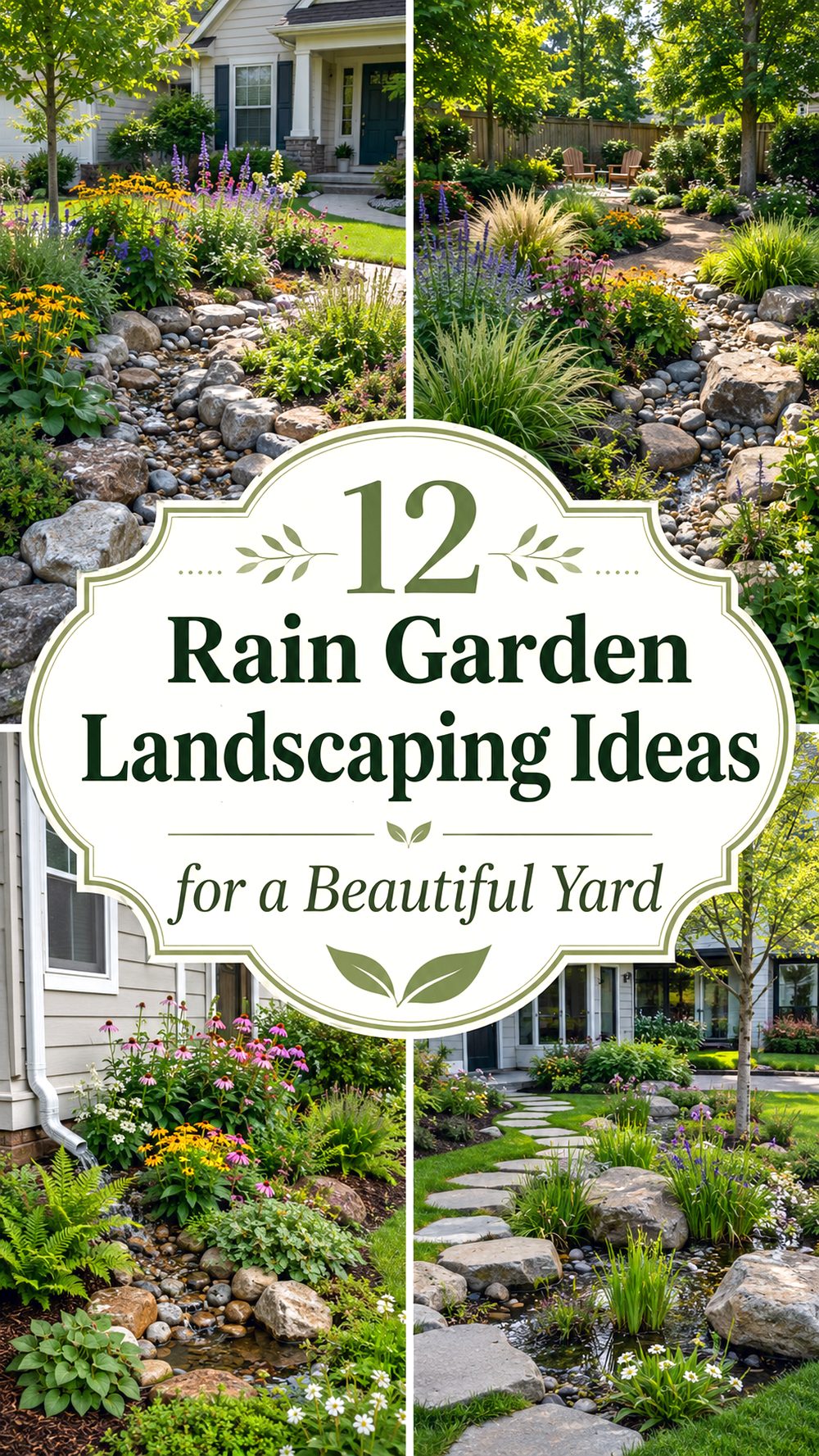

Rain garden landscaping is a smart way to make your yard look pretty while helping rainwater soak into the ground. These garden areas can catch runoff from roofs, paths, or lawns and turn it into a useful planting space. With the right plants, stones, mulch, and shape, a rain garden can become a beautiful feature instead of a wet problem area.
Why You’ll Love These Ideas
These rain garden ideas are useful, budget-friendly, and great for adding natural beauty to your yard. They can help manage water, soften hard edges, support pollinators, and make small or awkward spaces feel more planned. Most of these ideas are simple enough to fit front yards, backyards, side yards, and garden corners.
Quick List
- Curved Rain Garden Bed
- Stone Border Rain Garden
- Downspout Rain Garden
- Native Flower Rain Garden
- Small Yard Rain Garden
- River Rock Rain Garden
- Front Walk Rain Garden
- Mulched Rain Garden Bowl
- Rain Garden With Ornamental Grasses
- Corner Rain Garden
- Rain Garden With Wooden Edge
- Pollinator Rain Garden
Curved Rain Garden Bed
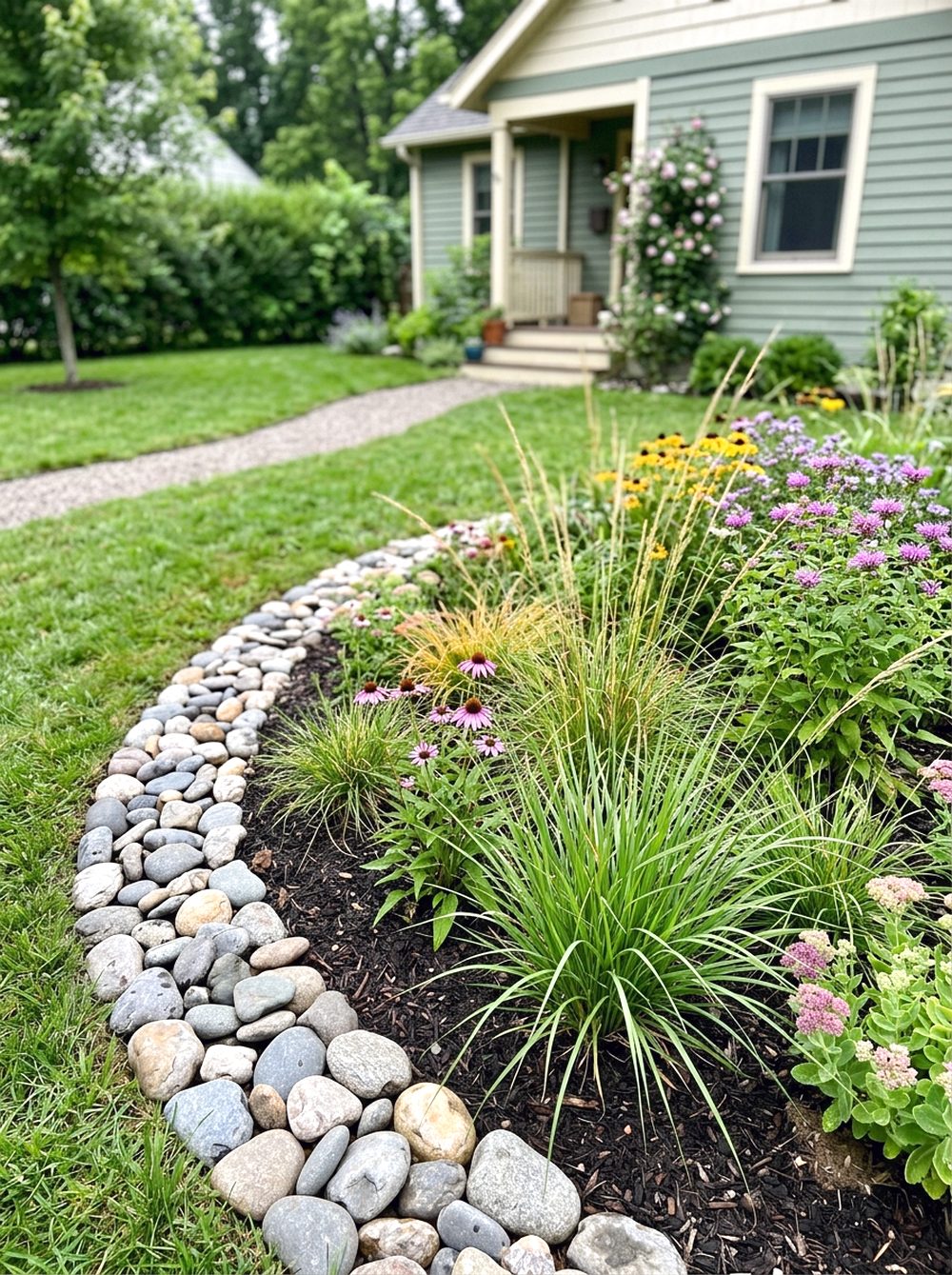
A curved rain garden bed adds a soft, natural shape to the yard while giving rainwater a place to settle. It works well in front yards, open lawns, or near driveways. Use native grasses and small flowers for texture, then finish the edge with mulch or stones to keep the shape neat.
Stone Border Rain Garden
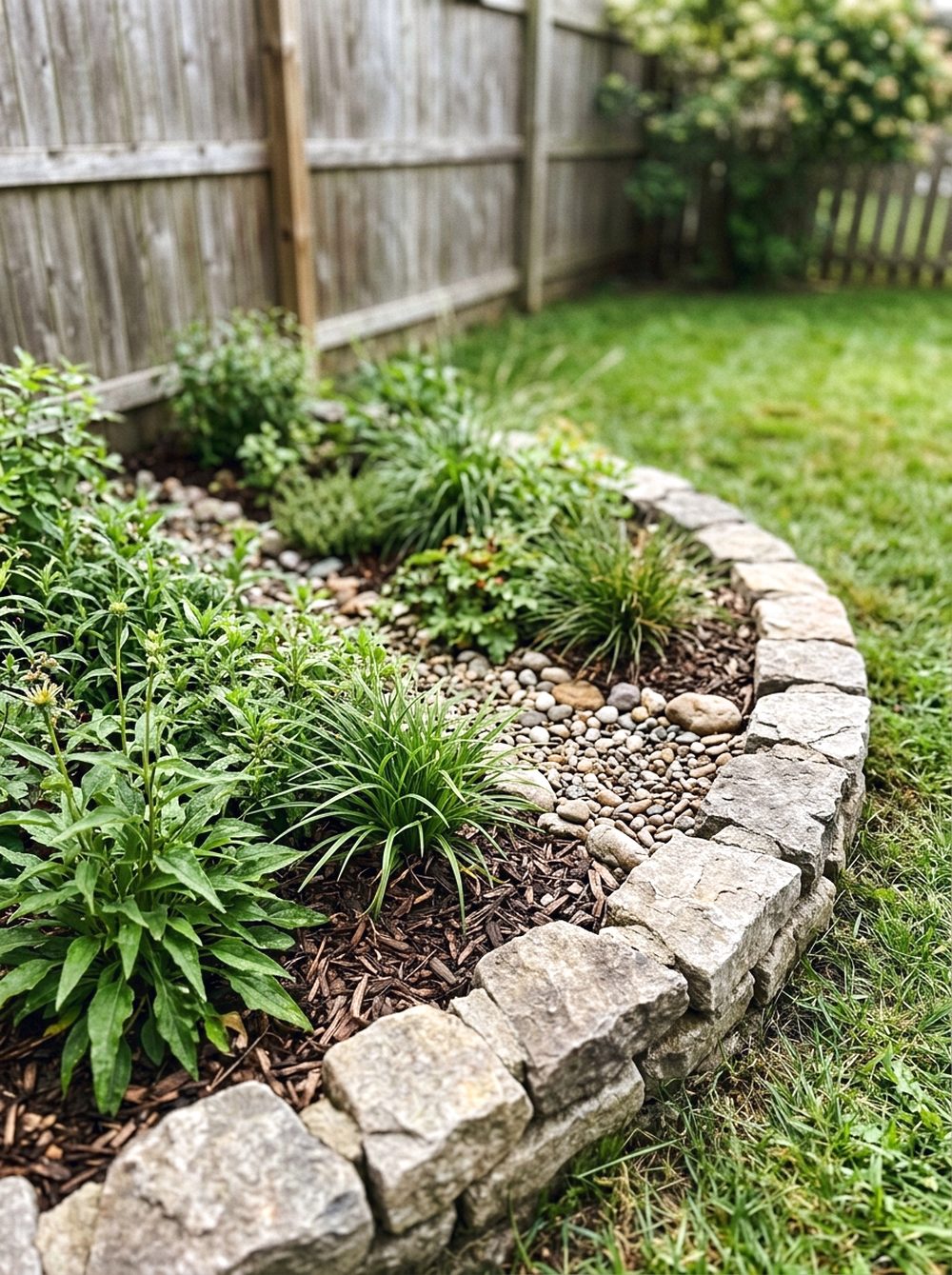
Stone borders make a rain garden look finished without feeling too formal. This idea is perfect for a backyard corner or along the side of a lawn. The stones help define the garden area, while mulch and water-loving plants keep it practical. Mix stone sizes for a more natural look.
Downspout Rain Garden
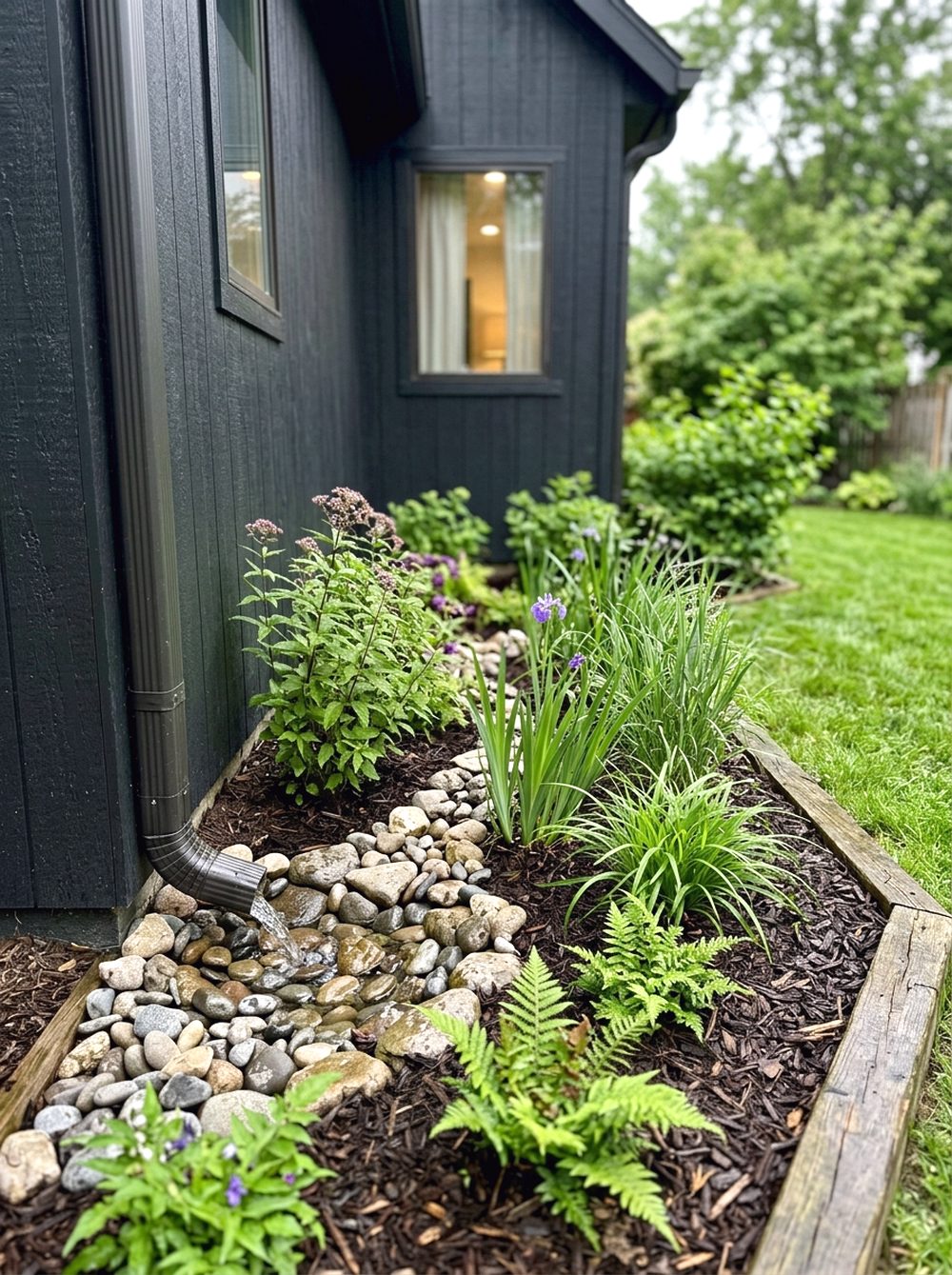
Near a downspout, a rain garden can turn roof runoff into a pretty planted area. It helps guide water away from the house while adding life to a plain wall. Add river rocks where water enters the garden, then plant moisture-loving perennials around the basin for a clean, useful design.
Native Flower Rain Garden
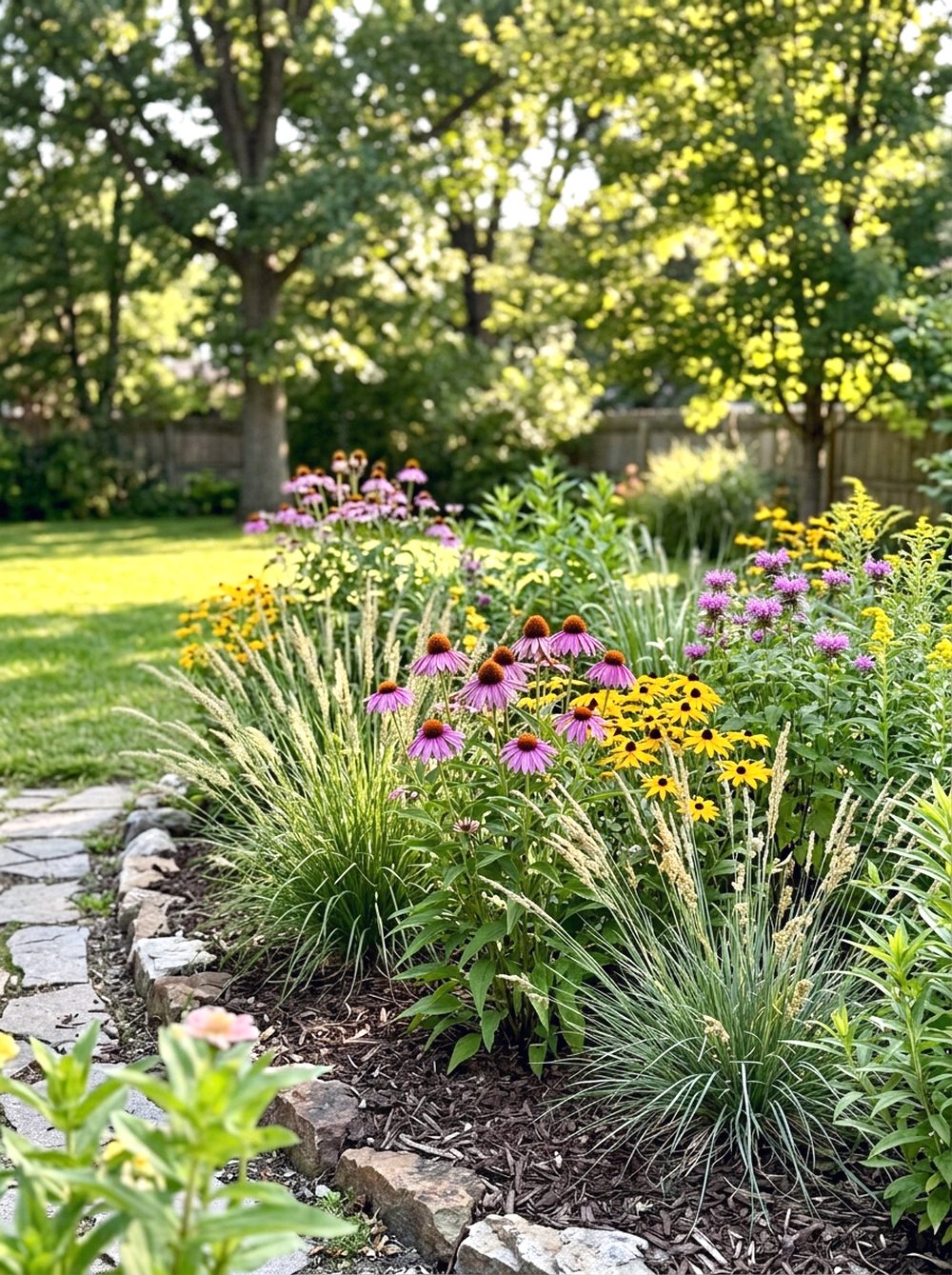
Bright native flowers can make a rain garden feel cheerful and full of movement. This works beautifully in sunny yards, garden borders, or open lawn spaces. Choose flowers that handle both wet and dry days. Add a few grasses between blooms to give the garden height, texture, and a relaxed natural style.
Small Yard Rain Garden
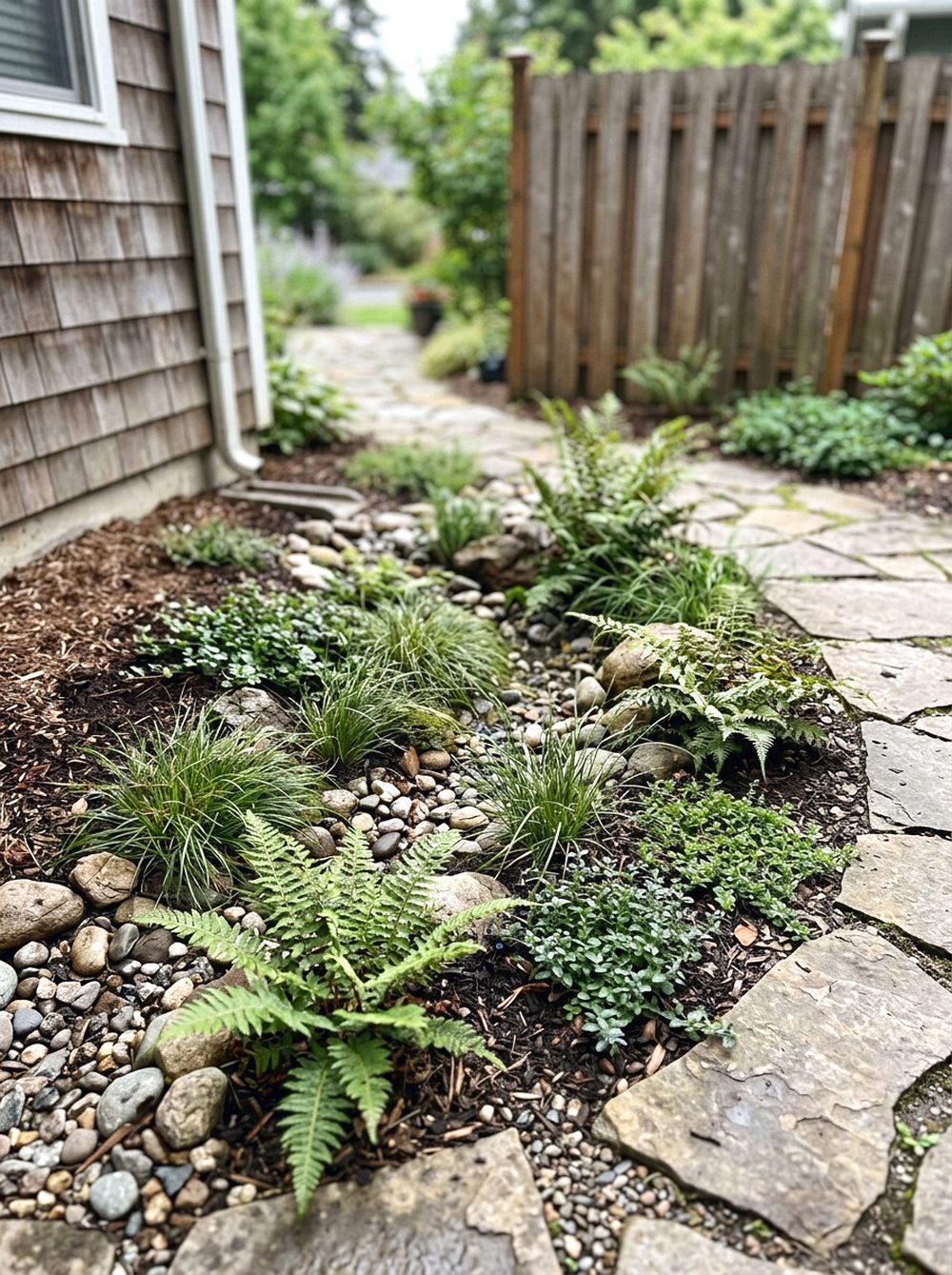
Small yards can still have a useful rain garden with the right shape and plant choices. A compact basin with ferns, short grasses, and ground cover can fit beside a path or fence. Keep the planting simple and low so the space feels open, tidy, and easy to maintain.
River Rock Rain Garden
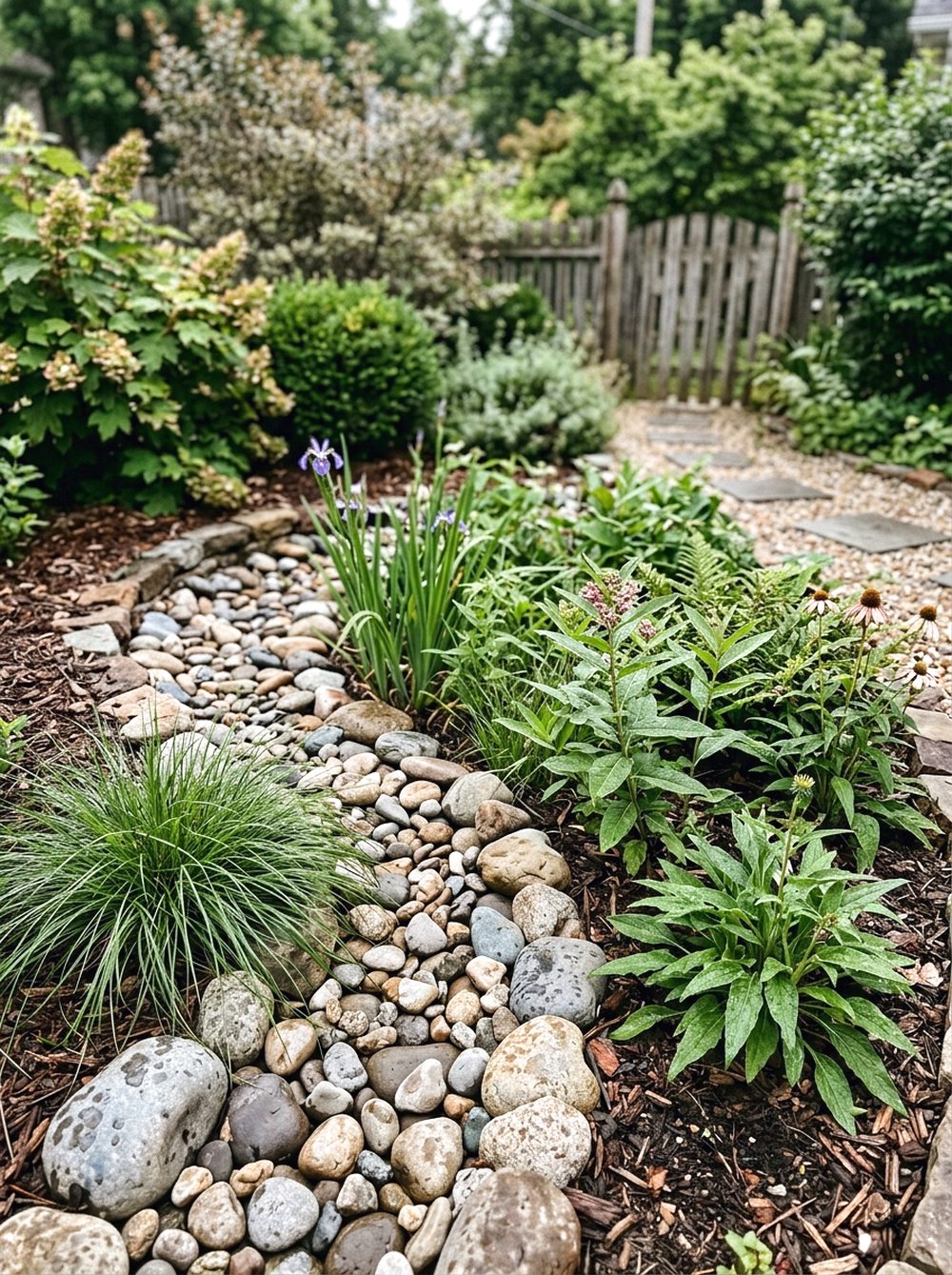
River rocks give a rain garden a natural creek-like look, even when it is dry. This idea is great for areas where water flows across the yard after rain. Use rocks to guide the runoff into the garden, then soften the edges with plants so the design feels built into the landscape.
Front Walk Rain Garden
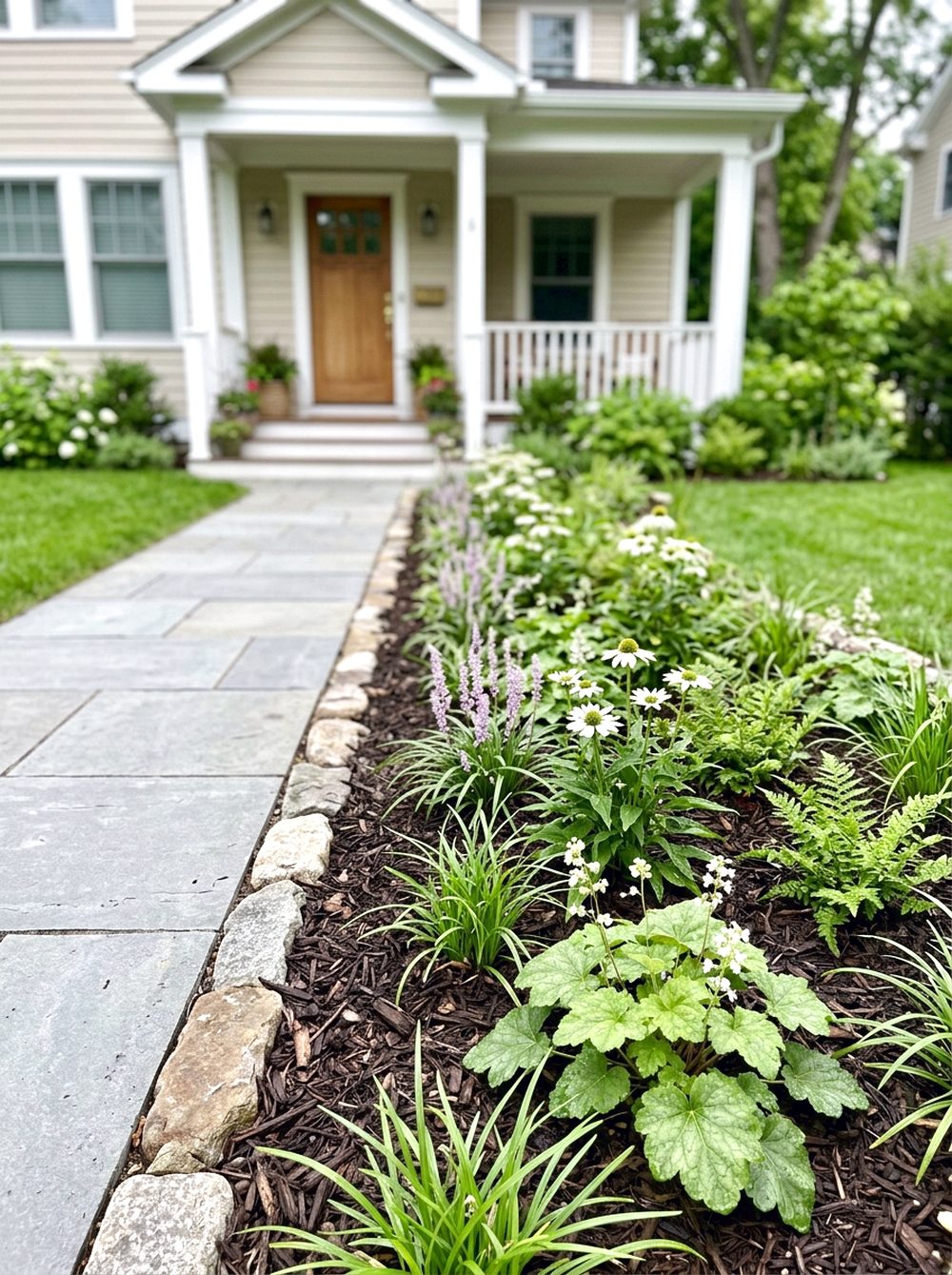
Beside a front walkway, a rain garden can improve curb appeal and help manage water near the path. Low flowers, grasses, and mulch keep the area welcoming without blocking the walkway. Choose plants with neat shapes, and leave a clean border so the entry feels cared for and easy to walk through.
Mulched Rain Garden Bowl
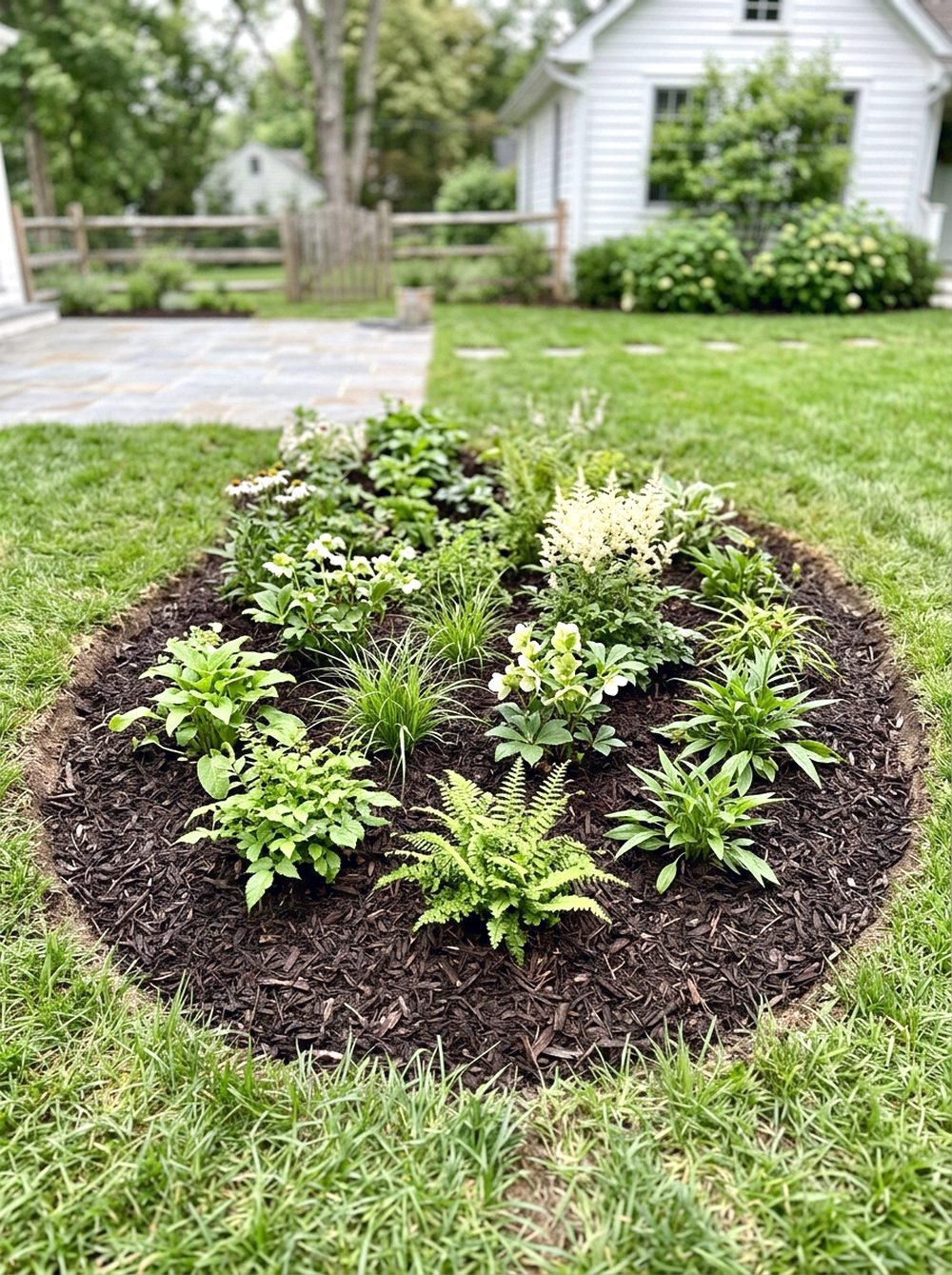
A shallow mulched bowl is one of the simplest rain garden looks. It can sit in a low spot in the lawn and hold water long enough for it to soak in. Dark mulch gives the area a clean finish, while shrubs and perennials make the basin look like planned landscaping.
Rain Garden With Ornamental Grasses
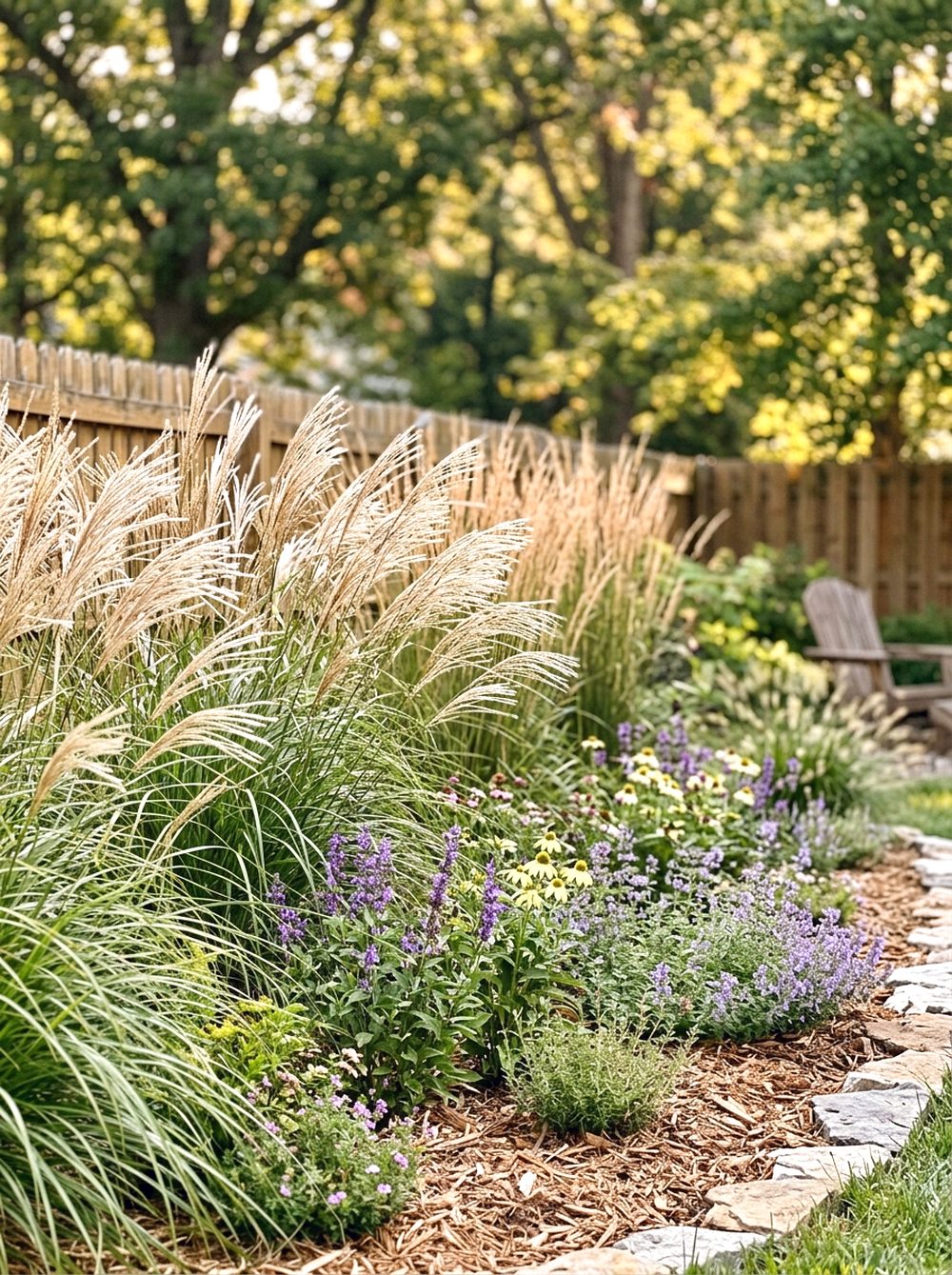
Ornamental grasses bring softness, height, and movement to a rain garden. They look especially nice along backyard borders, fences, or open garden edges. Pair tall grasses with smaller flowering plants so the garden feels layered. Leave enough space between plants so water can move through the area naturally.
Corner Rain Garden
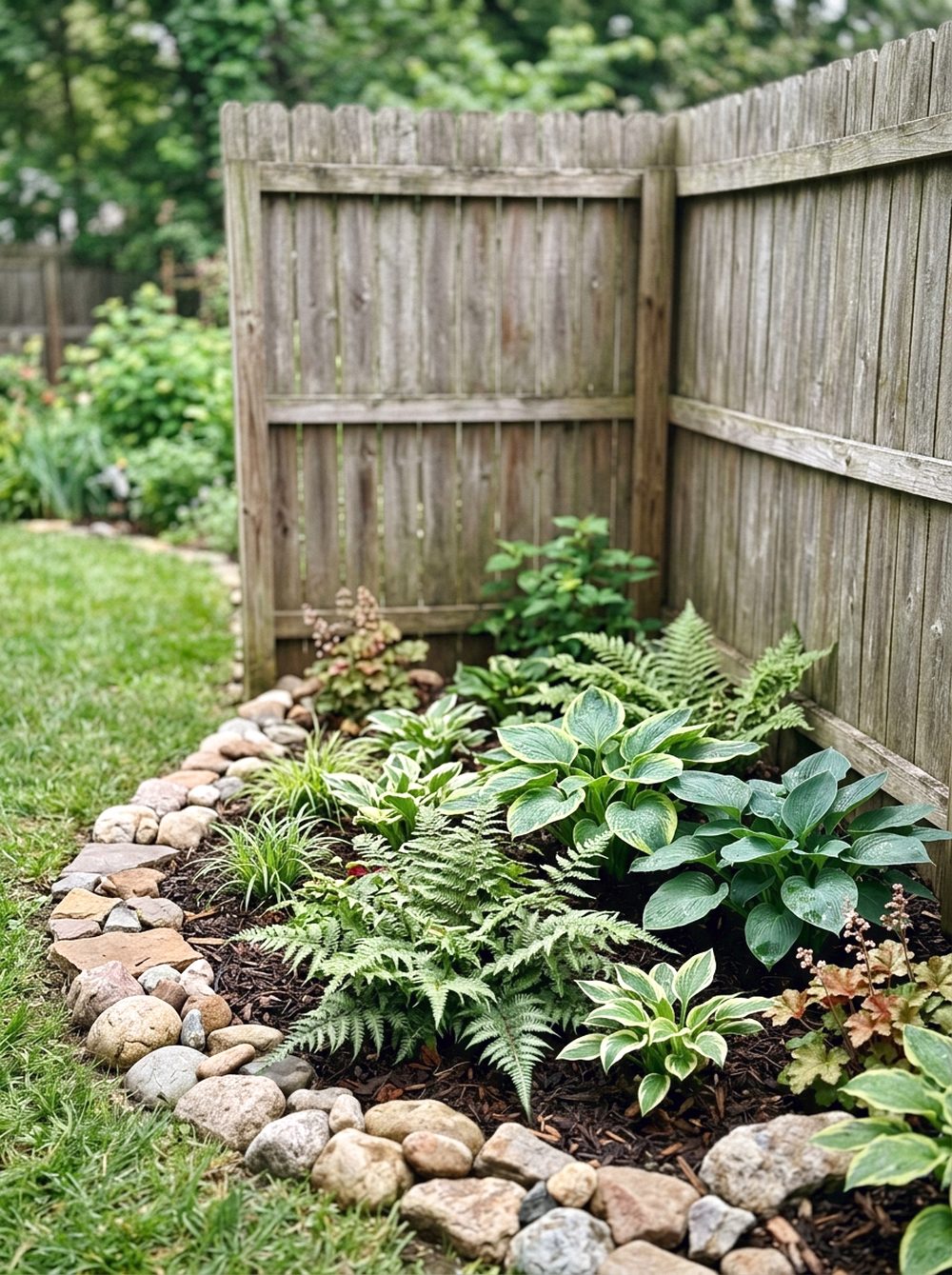
A corner rain garden is a smart way to use an empty or damp spot near a fence. Ferns, hostas, grasses, and stones can make the corner look calm and finished. Keep taller plants at the back and lower plants in front to create depth without making the area feel crowded.
Rain Garden With Wooden Edge
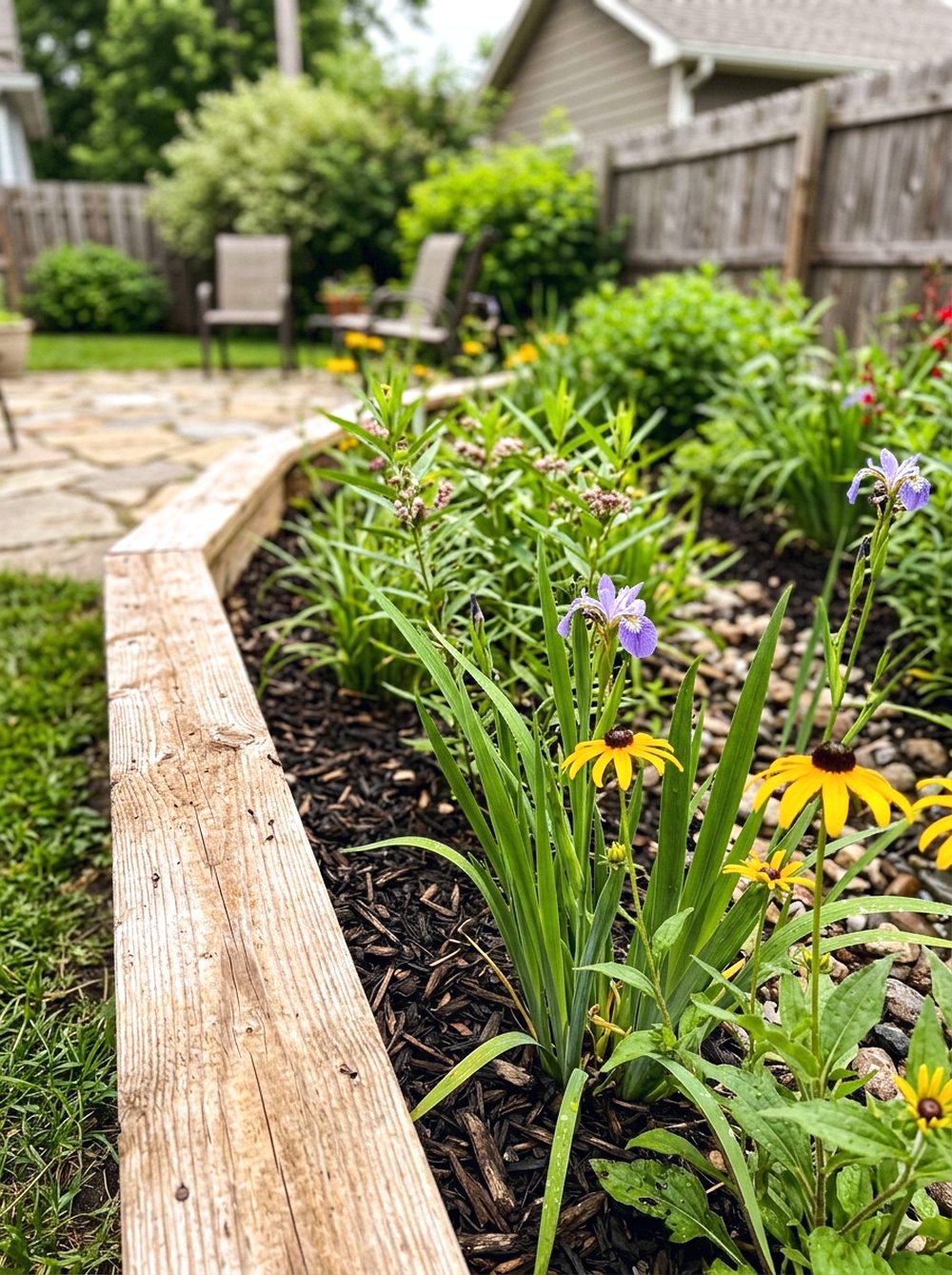
Wooden edging gives a rain garden a warm, handmade look. It works well in backyards, near patios, or along garden beds where you want a cleaner border. Use the wood to frame the garden shape, then add mulch and native plants inside for a simple mix of structure and natural texture.
Pollinator Rain Garden
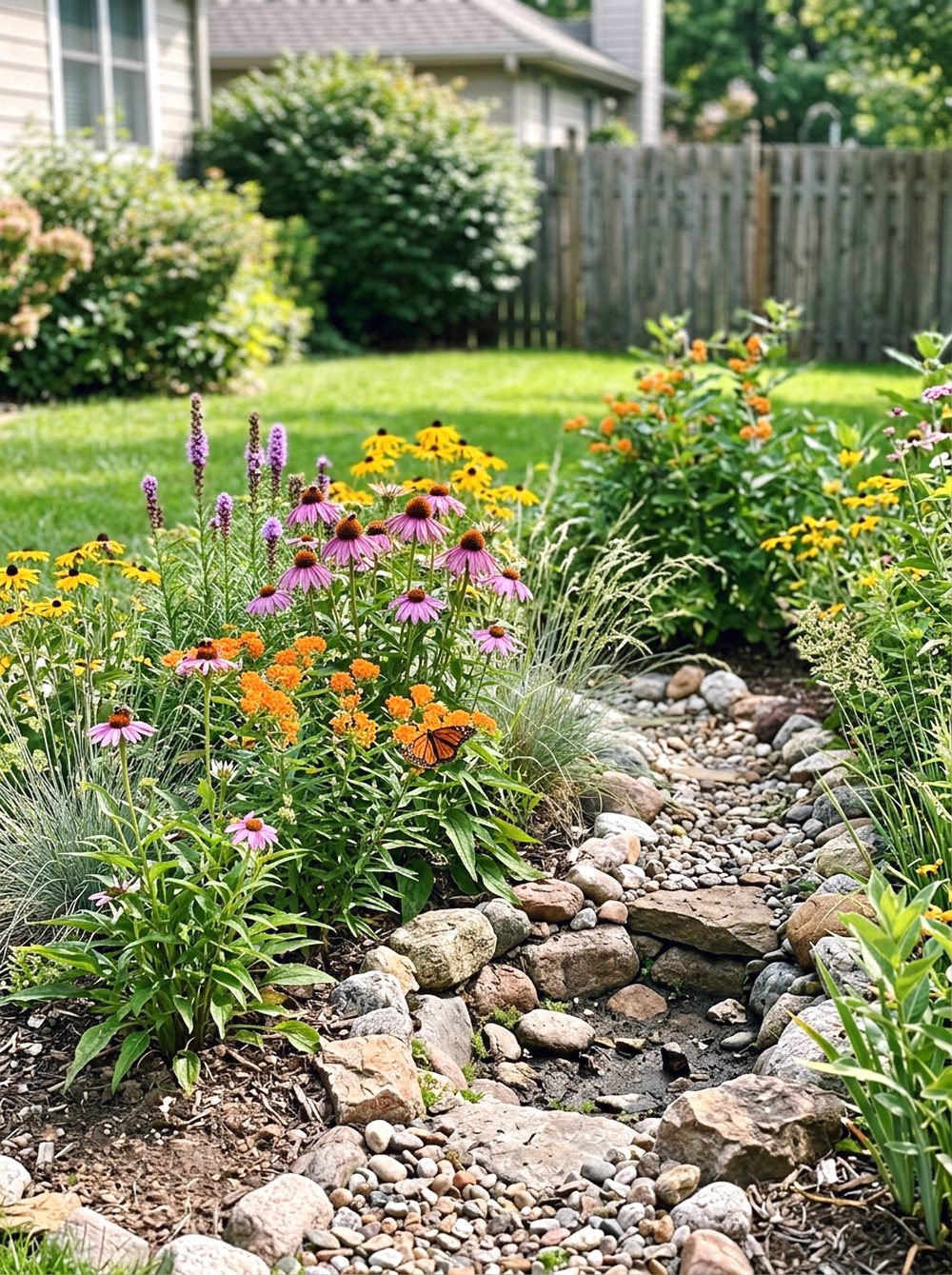
Pollinator rain gardens are both pretty and useful for bees and butterflies. Plant native flowers, milkweed, and grasses in a sunny spot where water naturally collects. Add a few stones around the edge for definition. This type of garden brings color, movement, and wildlife-friendly beauty to the yard.
Conclusion
Rain garden landscaping is a practical way to handle rainwater while making your yard more beautiful. With simple shapes, native plants, stones, mulch, and thoughtful placement, you can turn wet areas into useful garden features. Start with one small space and build a design that fits your home naturally.
FAQs
1. What is a rain garden?
A rain garden is a planted area that collects rainwater runoff and helps it soak into the ground naturally.
2. Where should I place a rain garden?
Place it in a low area that catches runoff, but keep it away from the house foundation.
3. What plants are best for rain gardens?
Native plants, grasses, ferns, and moisture-tolerant flowers are usually good choices.
4. Are rain gardens hard to maintain?
No, most rain gardens are easy to maintain once the plants are established. Mulch, weeding, and light trimming help keep them neat.